
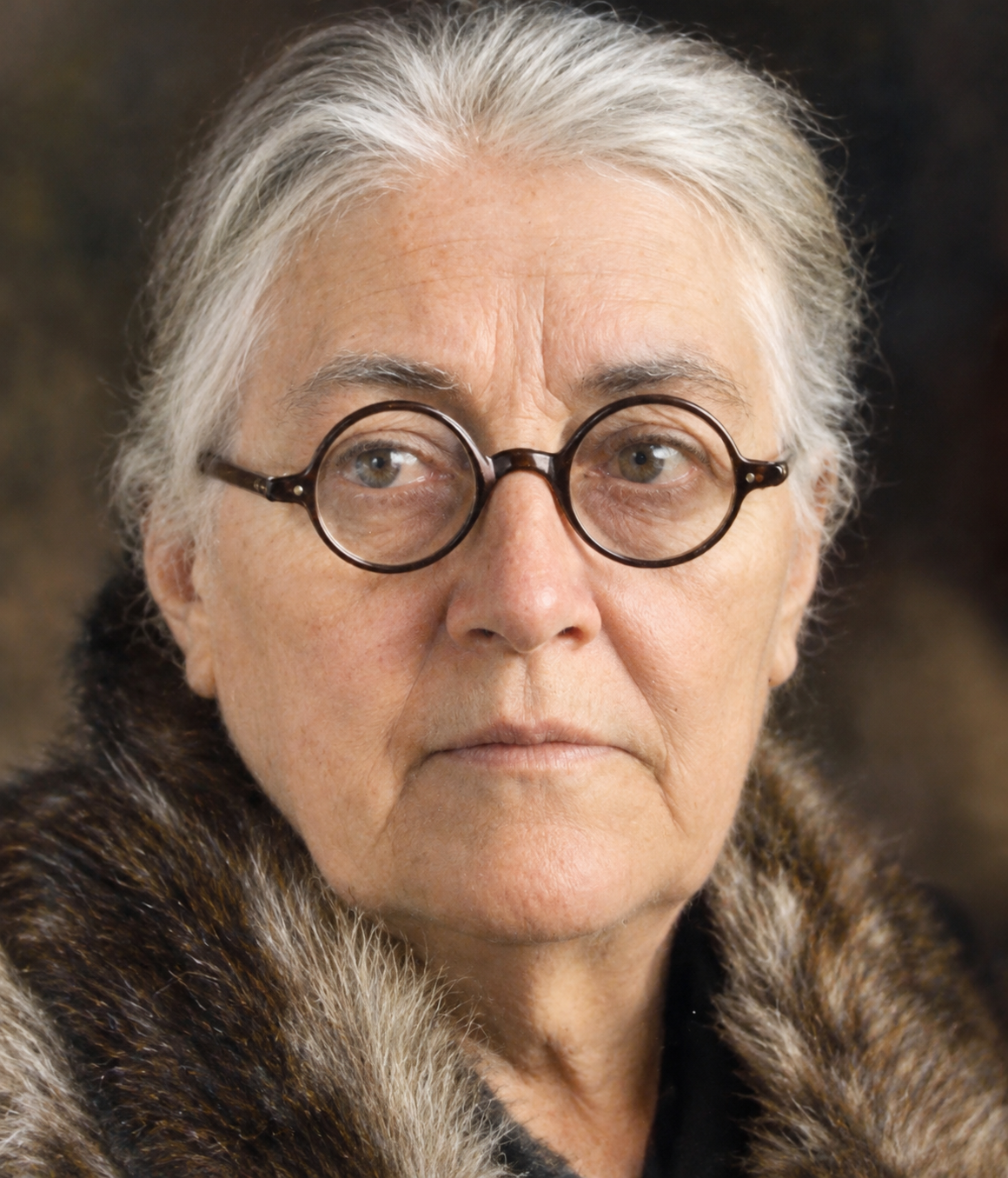
On this website we have several times spoken very positively of the English Theosophist Alice Leighton Cleather (1854-1938, some sources say she was born in 1846 but this is incorrect) and will continue to do so, for she was one of the twelve specially chosen members of H. P. Blavatsky’s “Inner Group” of esoteric students during HPB’s final years of life in London, and she was one of the most prominent defenders and promoters of HPB and her work and teachings during the time (1920s and 1930s) that these were being the most subverted, distorted, and suppressed, by high profile Theosophical leaders such as Annie Besant, C. W. Leadbeater, and Alice Bailey.
Cleather’s main books, written in collaboration with her friend Basil Crump – namely “H. P. Blavatsky – As I Knew Her,” “H. P. Blavatsky – Her Life and Work for Humanity,” “H. P. Blavatsky – A Great Betrayal,” and “The Pseudo-Occultism of Mrs. A. Bailey” – all served as both promotion of HPB and necessary criticism and warning about Besant, Leadbeater, Bailey, their highly Christianised and anti-Theosophical teachings, and “The Theosophical Society – Adyar” in general. She also established (with William Kingsland and others) a relatively short-lived “Blavatsky Association” in London during this time and was instrumental in the “Back to Blavatsky” movement that exerted a strong and beneficent influence across the whole of the Theosophical Movement.
However, she arrived nonetheless at a rather negative, critical, and misleading opinion of William Q. Judge, several years after he had passed away. She was initially one of his most ardent supporters and when the original Theosophical Society split into two in 1895, she remained part of the new Judge-led Society headquartered in New York, USA (rather than the Olcott/Besant Society headquartered in Adyar, India) and was one of its most active workers in the United Kingdom.
But after following Katherine Tingley after Judge’s passing, and soon realising that Tingley was far from being a reliable or legitimate Theosophical leader, she left the Society and blamed Judge for having appointed Tingley as his “occult successor.” Yet there is to this day no clear evidence available of Mr. Judge ever having chosen or appointed Tingley or anyone else as his “Successor.” The subject is not entirely straightforward, however, and the lengthy article Katherine Tingley and William Q. Judge explores this crucial and still relevant aspect of Theosophical history far more extensively than we can here.
Cleather also published some assertions about Judge which seriously misrepresent the facts about his character, actions, and status as an Occultist. We believe she was sincere in her errors and had no bad or questionable motives at all but had merely arrived at some rash and mistaken conclusions. For her, Crump, and the Blavatsky Association in general, the only reliable and trustworthy sources of Theosophical teaching and philosophy were the writings of H. P. Blavatsky and “The Mahatma Letters.” But HPB’s many repeated statements of her supreme trust and confidence in WQJ, and her assertions of his high occult status, were either conveniently ignored by Cleather or sweepingly denied as to their value and importance.
Since Theosophists of today – some of whom read and understandably appreciate Cleather’s books – deserve to hear from both sides of any controversy, we are here making public the text of a letter written in 1915 by Robert Crosbie (1849-1919, who founded the United Lodge of Theosophists in 1909) to Alice Leighton Cleather, challenging her about some of her remarks. In his letter, Crosbie makes some very good points and it deserves careful and reflective reading. The letter is from the archives of the Parent Lodge of the ULT in Los Angeles, California, USA.
~ * ~
FROM THE ARCHIVES OF THE UNITED LODGE OF THEOSOPHISTS,
LOS ANGELES, CALIFORNIA, USA
Los Angeles, Cal, June 3rd 1915
My dear Mrs. Cleather: –
. . . As to Wm. Q. Judge. You think you know him and all about him and that you are perfectly competent to judge his status, yet your acquaintance with him was small and brief. How would your competency compare with one [i.e. Crosbie is here referring to himself] who knew him from 1886 until the day of his death; who was taught by him; who had demonstrated to him W.Q.J.’s possession of powers similar to those of H.P.B.; one who was shown in advance the schisms and the moving causes and persons in them during that period.
You speak of the dual Headship of the E.S. [i.e. Esoteric School, the Esoteric Section within the Theosophical Society; this E.S. was led jointly by William Q. Judge and Annie Besant after H. P. Blavatsky’s passing in 1891, until Judge deposed Besant in November 1894 in the document titled “By Master’s Direction,” due to her having taken the orthodox Hindu Brahmin G. N. Chakravarti as her Guru and the myriad problems which flowed from that; Besant did not accept this and the Esoteric Section split accordingly; the exoteric Theosophical Society itself split around six months later] as if it were due to W.Q.J.; it was not. He had to make the best of conditions as He found them and no one regretted more than He those conditions; he knew from the first that the dual headship was a makeshift; it was done to hold Annie straight if possible, together with the people who regarded her as next to H.P.B. The dual headship was due to the blindness and folly of the people in England who with all their opportunities had gained no discrimination; this applies with particular force to the Inner Group. If this sounds harsh, ask yourself if that Group remained united in thought, will and feeling; as a Group, where is it now? [Note: The answer is that it had disintegrated within just a year or two of HPB’s passing.]
You pass judgement on W.Q.J. because of Tingley. After travelling about this country in her behalf, giving Wagner recitals and interpretations, you came to see that she was impossible as a theosophic leader; and as you had accepted her because you believed the statements of E.T.H. [i.e. Ernest Temple Hargrove], [Emil August] Neresheimer, Griscomb [i.e. Clement A. Griscom, Jr.], et al, that W.Q.J. had appointed Tingley as his occult successor, you felt constrained to question his wisdom.
Were you right or wrong when in June 1896, over five years after the passing of H.P.B., you had published in “Theosophy” (Path) the article entitled “In England and America”? If you were right then, how grievously mistaken you are now according to what you lately wrote, namely, that H.P.B.’s statement in regard to W.Q.J. as a part of herself for aeons was true only as long as She lived; that that was withdrawn at her passing and W.Q.J. was left prey to such obsession as you state. Setting aside for the moment the statement that “Ingratitude is not one of our vices”, how could you or anyone conceive that one who had worked in season and out of season for the Movement for twenty years and had shown the wisdom that he did, should suddenly become the puppet of a designing woman.
Read all his writings from 1891 to the time of his death and point out if you can where he failed in any respect. Show one scrap of evidence that he ever thought of a successor in an occult sense, or that he ever wrote the name of Tingley as such. E.T.H., Neresheimer and others in N.Y. are the ones who made the grievous error of mistaking some entries in W.Q.J.’s diary and succeeded in foisting upon the unsuspecting Society an “occult successor”. W.Q.J. was not to blame for their shortsightedness or their desire to have an occult successor. When H.P.B. passed, W.Q.J. was asked “Who will be H.P.B.’s successor”; his reply was “She was sui generis; she can have no successor”.
H.P.B. never appointed a successor; neither did W.Q.J. These two were contemporaries in the Movement. We talk of Karma and occult laws; we should be able to apply them when we find two such personages appearing as Co-Founders in the world and remaining constant in their entente from beginning until the end, each true as steel to the other.
W.Q.J. was no more deceived or obsessed by Tingley than H.P.B. was by the Coulombs, Solovyoffs and others. All these were given their opportunity under Karma, as also were the prominent students and members of the Society. How these opportunities were lost, is a matter of history.
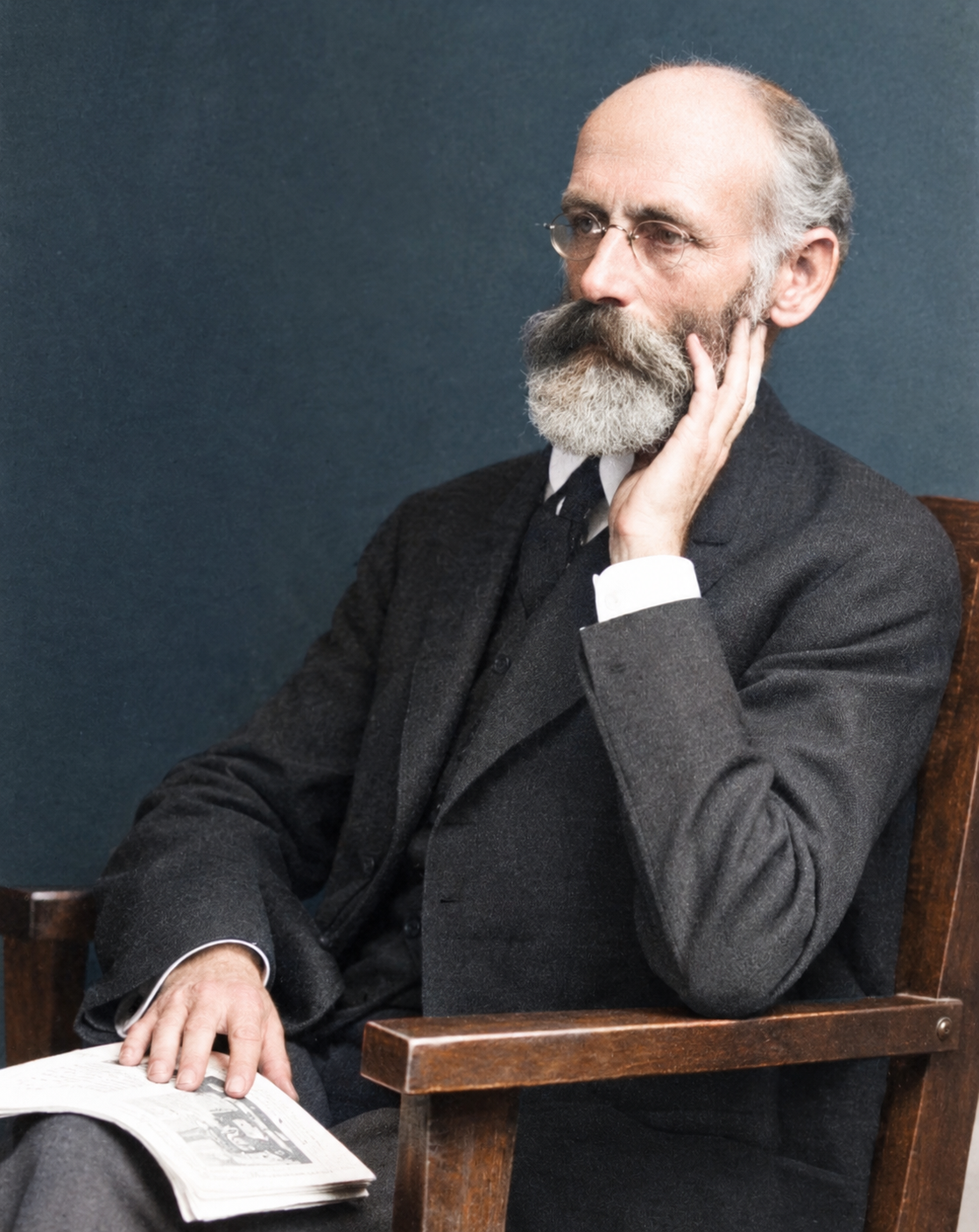
When H.P.B. was leaving her body she said: “Keep the link unbroken”. What link? She was the link between the Lodge and the Society. She wrote that W.Q.J. was the Antaskarana (the bridge or link) between the two Manas(es) – the American thought, and the Indian – or rather, the trans-Himalayan Esoteric knowledge.
The evidence is as plain as can be that the suggestion made in our editorial articles for the student to study Theosophy and the history of the T.S. from the view-point that H.P.B. and W.Q.J. were initiates is the best that can be given, and that if the course is followed each one so doing will see for himself and will get a survey of the field that will clear away all difficulties in comprehending the doubts, suspicions and mistaken moves of persons more or less prominent. And above all, it will make such an one a portion of the Link.
. . . We know you to be sincere and devoted, but we see that your position is not consonant with all the facts. Some of these facts we have presented to you in this communication; we trust you will give them full consideration and that you will ask for further information on any point which remains obscure; not that we have any desire to change your mind, but that you may be as fully conversant as possible with our basis of thought and action.
We hold ourselves in readiness to give and receive instruction, and look upon you as one who stands in a similar position.
With best of success to you and to those whom you are teaching.
~
NOTE: The . . . that appears twice in this letter is reproduced exactly from the typewritten original document. We ourselves have not omitted anything. It is probable that the document to which we have access today was in reality only a partial copy of Crosbie’s actual letter, which would have been sent in its complete form to Cleather, and is thus not itself in the archives.
~ * ~
“H. P. Blavatsky and William Q. Judge, in their capacity of Messengers, cannot be separated; They stand or fall together. Those who are found belittling one, will be found belittling the other. Their writings are mutually corroborative and complementary. Studied together, they embody the noblest religious ideal, the highest all-inclusive philosophy, the most practical application; giving the science of life, the art of living, the very knowledge that humanity stands in crying need of.
“Let those then who would understand the Theosophical Movement, Theosophy, and its Messengers, consider that it might be true that the persons known to the world as H. P. Blavatsky and William Q. Judge, were but the mortal garments assumed by beings of a higher order; let Their writings be studied from this point of view, and it is certain that a great light will dawn, where before, there was darkness and confusion.” (Robert Crosbie, “William Q. Judge and The Theosophical Movement,” “Theosophy” Magazine, November 1912)
For more information, the articles Who was William Quan Judge?, William Q. Judge and The Masters of Wisdom, William Q. Judge – In The Words of Some Who Knew Him Best, William Q. Judge and The New Western Occultism, Katherine Tingley and William Q. Judge, Who are you, Madame Blavatsky? and ULT: Embodying the Spirit of The Theosophical Movement, amongst others listed on the Articles page may be found useful as well as inspiring.
~ BlavatskyTheosophy.com ~

