
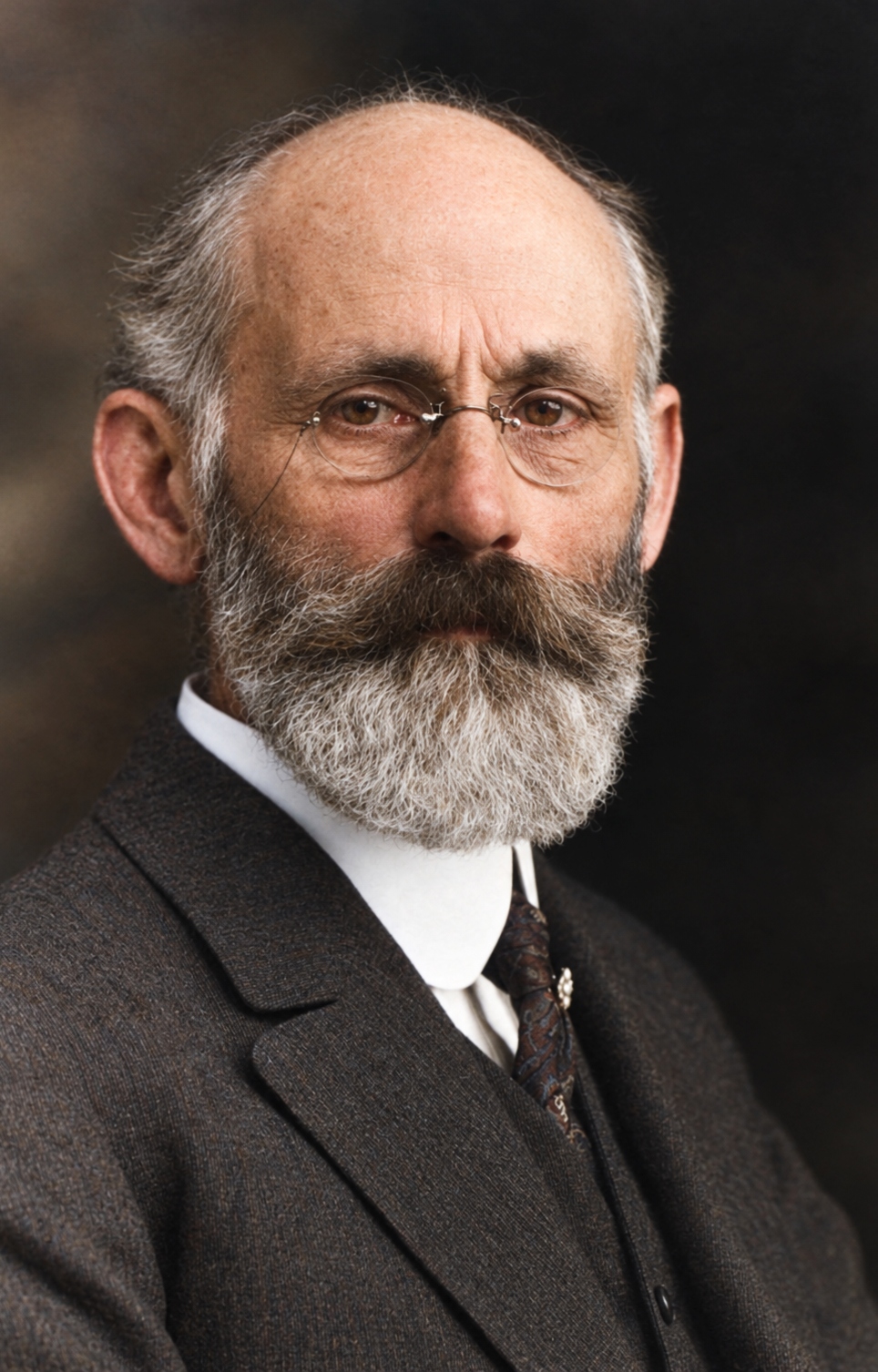
On the introductory page titled The United Lodge of Theosophists we answered the question of “What is the mission and purpose of the United Lodge of Theosophists?” as follows:
“Its expressed mission statement is “To spread broadcast the Teachings of Theosophy as recorded in the Writings of H. P. Blavatsky and William Q. Judge.” In short, it exists to preserve, present, promote, and practise, the teachings of Theosophy – or the Esoteric Philosophy of the Masters of Wisdom – in the way they were originally given to the world.
“It’s important to understand that the ULT does not claim to be either a Theosophical Society or the Theosophical Society. It recognises that its aim and purpose is, in one sense, far less broad and open than how the Theosophical Society was established. The Theosophical Society was set up as an extremely broad and open platform at the Masters’ wishes, and HPB and WQJ always made clear that the Society cannot and should not be officially identified as being the vehicle of any one specific religion or philosophy, not even the Philosophy of the Masters.
“By the time the ULT was established, however, the authentic Philosophy of the Masters that Blavatsky had given to humanity, assisted by Judge, had become eclipsed and neglected to various degrees in all the numerous different organisations that were calling themselves “The Theosophical Society.” In a few, those teachings had been deliberately rejected and totally distorted, replaced by very different teachings originating with later Theosophical students. Each justified this by citing to their own advantage the Society’s official basis of tolerance, non-dogmatism, and the shunning of orthodoxy. The ULT therefore came about as a new and different type of Theosophical “organisation” and with a much more precise and distinct focus, as expressed in the above mission statement. In this sense, the ULT is, on a public level, something quite similar to what the Theosophical Society’s Esoteric Section was intended to be on a private level. For this and other reasons, some ULT associates have described the ULT as “semi-esoteric.”
“Part of its original purpose was also to attempt to foster unity among Theosophists belonging to the numerous different Theosophical Societies by inspiring them to follow the example of restoring focus to the original aim, purpose, and teaching of HPB and her Adept-Teachers, believing that no other method can be an adequate centre around which to restore Theosophical unity. The ULT therefore is not attempting to replace or abolish the Theosophical Society; it merely views its own mission as somewhat different and more “esoteric,” though still an integral part of the wider Theosophical Movement of our era.”
To expand on this would be beneficial for enquirers as well as for those who are already associates of the ULT. Some ULT associates have thought that Crosbie merely wanted to establish a non-sectarian Theosophical study group where Theosophists of all types could come together and bask in mutual tolerance. Of course, there is a degree of truth to that but the reality goes much deeper and is far more significant.
~ * ~
All Theosophical groups worldwide share the same Three Objects:
(1) To form the nucleus of a Universal Brotherhood of Humanity, without distinction of race, creed, sex, caste or colour.
(2) The study of ancient and modern religions, philosophies and sciences, and the demonstration of the importance of such study.
(3) The investigation of the unexplained laws of nature and the psychical powers latent in man.
William Judge (co-founder of the original Theosophical Society in 1875 with H. P. Blavatsky, Col. Henry S. Olcott, and several others) once explained:
“The Society as a body has no belief save in universal brotherhood, and from that it gets its strength. The moment it [i.e. the Theosophical Society itself, as an organisation] should declare a creed or dogma, that moment its strength would begin to leave it, for division would arise and sides would be taken. Hence, also, it includes in its ranks men of all religions: Brahmins, Buddhists, Christians, Mahommedans and every other variety, as they all know that the T. S. furnishes them a common ground on which to work. The bigoted dogmatist cannot feel moved to join the body, because its freedom is opposed to bigotry, and the member who is a Buddhist is just as good as the Christian or the Agnostic. Many times have persons asked that the society formulate some doctrines as authoritative, but that has always been refused, and, indeed, would be its death-knell.” (“The T.S. and Its Basis”)
Similarly, HPB in “What Are The Theosophists?” states:
“If asked what [the Theosophical Society] believes in, the reply will be: “As a body — Nothing.” The Society, as a body, has no creed, as creeds are but the shells around spiritual knowledge; and Theosophy in its fruition is spiritual knowledge itself — the very essence of philosophical and theistic enquiry. Visible representative of Universal Theosophy, it can be no more sectarian than a Geographical Society, which represents universal geographical exploration without caring whether the explorers be of one creed or another. The religion of the Society is an algebraical equation, in which so long as the sign = of equality is not omitted, each member is allowed to substitute quantities of his own, which better accord with climatic and other exigencies of his native land, with the idiosyncrasies of his people, or even with his own. Having no accepted creed, our Society is very ready to give and take, to learn and teach, by practical experimentation, as opposed to mere passive and credulous acceptance of enforced dogma.”
In her book “The Key to Theosophy” she elaborates:
“We hold to no religion, as to no philosophy in particular: we cull the good we find in each. But here, again, it must be stated that, like all other ancient systems, Theosophy is divided into Exoteric and Esoteric Sections. . . . The members of the Theosophical Society at large are free to profess whatever religion or philosophy they like, or none if they so prefer, provided they are in sympathy with, and ready to carry out one or more of the three objects of the Association. The Society is a philanthropic and scientific body for the propagation of the idea of brotherhood on practical instead of theoretical lines.” (p. 19-20)
The United Lodge of Theosophists, on the other hand, does not usually speak in such terms, although naturally it promotes Universal Brotherhood and emphasises its opposition to dogmatism, bigotry, and sectarianism, just as the original Theosophical Society did. But the ULT’s much more distinct approach has sometimes been characterised as dogmatic, sectarian, fundamentalist, etc. by members of the Theosophical Society organisations. If the ULT was claiming to be a Theosophical Society, or to be established on the same basis and framework as the Theosophical Society, such criticisms would sometimes be perfectly justified. But it is not and we will explain why.
Of the Three Objects which we enumerated, the first was the only binding one among members of the original Theosophical Society, though many members preferred to focus on either the second or third, often to the neglect – or even the exclusion in practice and conduct – of the first. HPB and the Mahatmas often lamented this and knew that the First Object was by far the most important, the primary “end in view” for which the Society was established, and the only one of the Three Objects which in itself has the power to change the world and transform humanity. The second and third objects can and should support it but the study of world religions and the exploration of psychic forces and phenomena do not in themselves have the capacity to bring about fundamental, practical change, on an ethical, social, and philosophical level, for the lasting good and benefit of mankind. The Brotherhood of Masters, which we may also call the Brotherhood of Bodhisattvas – the Esoteric Fraternity of Love and Compassion – seeks this above all.
And what do the Masters indicate as the main way to help bring about the actualisation of that First Object? For them, it is to be attained through an approach which many would view as far more “narrow” and “restrictive” – even “sectarian” – than the official, exoteric basis conventionally promoted by and within the Theosophical Society:
“That the world is in such a bad condition, morally, is a conclusive evidence that none of its religions and philosophies – those of the civilized races less than any other – has ever possessed the TRUTH. The right and logical explanations on the subject of the problems of the great dual principles, right and wrong, good and evil, liberty and despotism, pain and pleasure, egotism and altruism, are as impossible to them now as they were 1880 years ago. They are as far from the solution as they ever were; but to these problems there must be somewhere a consistent solution, and if our doctrines will show their competence to offer it, then the world will be the first to confess that ours must be the true philosophy, the true religion, the true light, which gives truth and nothing but the TRUTH.” (The Maha Chohan, Head of the Trans-Himalayan Brotherhood, “The Great Master’s Letter” ULT Pamphlet No. 33, p. 5-6)
The above is not an isolated occurrence. We find all throughout the original Theosophical literature that while the Theosophical Society as an exoteric, public organisation adopted from the start an official position and policy which refused to identify with any particular form of religion, philosophy, or doctrine, there was nonetheless always an esoteric undercurrent very active just below the surface, or just out of public sight, and this undercurrent made no qualms about maintaining that the Masters are the real Founders of the Society, that They do possess a definite body of knowledge, a specific system of teaching, or distinct esoteric philosophy – i.e. Their Secret Doctrine – and that in Their view this is by far the most important and effective thing that can save humanity from itself before it’s too late.
Although Colonel Olcott knew from repeated personal experience that the Masters – those “living, human Mahatmas” – really exist in this world and really were the true instigators of the modern Theosophical Movement, he was very much an exotericist and promoted and explained Theosophy and the Theosophical Society solely in such terms as found in those first two quotes from Judge and Blavatsky that we shared earlier. For Olcott, the Second Object was by far the most appealing and valuable. Meanwhile, after HPB left Adyar (the international headquarters of the Society) for good, in 1885, and eventually settled down in London, England, she became even more open and unapologetic in taking an almost exclusively esoteric stance and approach. She felt no opposition to the exoteric, Olcott-style approach (although he and his supporters increasingly felt opposition towards her) but she had always known full well that this was not her mission and purpose, nor the deeper, underlying goal, role, and nature of the Society of which she had been the chief founder.
When in late 1888 she announced that she was founding the Esoteric Section or Esoteric School of Theosophy, as a channel or vehicle through which she would be able to teach her Masters’ higher esoteric doctrines free from any restraints, criticism, or disapproving supervision, Olcott’s antipathy towards both her and esotericism grew, and he refused to join the Esoteric Section and expressed his wish to know nothing about it, as he considered it completely opposed to the Society’s aims and character. This almost inevitable dichotomy would later be described in the ULT’s “Theosophy” magazine as “the conflict between the esoteric and the exoteric nature of the Movement.”
Let’s see some other revealing statements from the pen of H. P. Blavatsky:
“In its [i.e. “Lucifer” Magazine’s] pages, month by month, I give such public teaching as is possible on Theosophical doctrines and so carry on the most important of our Theosophical work.” (“Five Messages from H. P. Blavatsky to The American Theosophists” p. 30)
So according to HPB, this is in fact “the most important” aspect of all Theosophical work!
“There’s our salvation. To overflood the world with occult publications and our doctrines so far as allowable and so bring conviction to their hearts. K.H. and M. will help of course.” (“The Letters of H. P. Blavatsky to A. P. Sinnett” p. 25)
“ENQUIRER. Then what is the good of joining the so-called Theosophical Society in that case? Where is the incentive?
“THEOSOPHIST. None, except the advantage of getting esoteric instructions, the genuine doctrines of the “Wisdom-Religion,” and if the real programme is carried out, deriving much help from mutual aid and sympathy.” (“The Key to Theosophy” p. 21)
“Now is the time for action by all who see the sterility and foolishness of an existence blinded by materialism and so ferociously indifferent to the fate of others. It is for them to devote their best energies, all their courage and all their efforts to bring about an intellectual reform. This reform cannot be accomplished except through Theosophy, and, let us say it, Occultism, or the Wisdom of the East.” (“The New Cycle”)
“The Ethics of Theosophy are more important than any divulgement of psychic laws and facts. The latter relate wholly to the material and evanescent part of the septenary man, but the Ethics sink into and take hold of the real man – the reincarnating Ego. We are outwardly creatures of but a day; within we are eternal. Learn, then, well the doctrines of Karma and Reincarnation, and teach, practise, promulgate that system of life and thought which alone can save the coming races.” (“Five Messages from H. P. Blavatsky to The American Theosophists” p. 26)
“If Theosophy prevailing in the struggle, its all-embracing philosophy strikes deep root into the minds and hearts of men, if its doctrines of Reincarnation and Karma, in other words, of Hope and Responsibility, find a home in the lives of the new generations, then, indeed, will dawn the day of joy and gladness for all who now suffer and are outcast. . . . Then, the GOLDEN AGE will be there, indeed. But if not, then the storm will burst, and our boasted western civilization and enlightenment will sink in such a sea of horror that its parallel History has never yet recorded.” (“Our Cycle and the Next”)
“Although Theosophical ideas have entered into every development or form which awakening spirituality has assumed, yet Theosophy pure and simple has still a severe battle to fight for recognition. . . . The faint-hearted have asked in all ages for signs and wonders, and when these failed to be granted, they refused to believe. Such are not those who will ever comprehend Theosophy pure and simple. But there are others among us who realize intuitionally that the recognition of pure Theosophy – the philosophy of the rational explanation of things and not the tenets – is of the most vital importance in the Society, inasmuch as it alone can furnish the beacon-light needed to guide humanity on its true path.” (“Five Messages from H. P. Blavatsky to The American Theosophists” p. 4-5)
The definiteness of the character and content of the Masters’ Esoteric Philosophy is highlighted in such remarks as these:
“Well; if in the different spheres contradictory doctrines are propounded, these doctrines cannot contain the Truth, for Truth is One, and cannot admit of diametrically opposite views.” (Master K.H., “The Mahatma Letters” p. 49)
“Our doctrine knows no compromises.” (Master K.H., “The Mahatma Letters” p. 52)
“We have no two beliefs or hypotheses on the same subject.” (HPB, “The Key to Theosophy” p. 87)
“Occult Science has its changeless traditions from prehistoric times.” (HPB, “The Secret Doctrine” Vol. 1, p. 516)
Here it seems necessary to add that it would be very foolish or naïve to think that the whole of THEOSOPHY – Divine Wisdom itself – is contained in our comparatively minuscule array of Theosophical literature. HPB repeatedly clarifies that she can only give out a few “portions” and “fragments” of the Secret Doctrine itself. It is also the case that Truth is by nature multifaceted and extraordinarily deep, hence why WQJ speaks of “the Ocean of Theosophy.” This being so, one cannot reasonably insist that one’s own unavoidably very limited and imperfect understanding of Theosophical doctrines is itself the One Truth which can know no compromises. Truth is something which we grow into over time and indeed over multiple lives. Nonetheless, we are well within our rights to point out that the Masters are emphatic about the distinctive and unitary nature of Their philosophy. As for how They arrived at such a systematic embodiment of occult knowledge in the first place, please see the revealing compilation titled How Do The Masters of Wisdom Discover the Truth?
~ * ~
Now we come on to the work of Robert Crosbie, who founded the United Lodge of Theosophists in Los Angeles, California, USA in 1909, after over two decades of Theosophical experience beginning during the time of H. P. Blavatsky and William Q. Judge, the latter of whom he knew and worked with personally. It is sometimes said that he also knew HPB personally, through written correspondence, but details of this are very hazy.
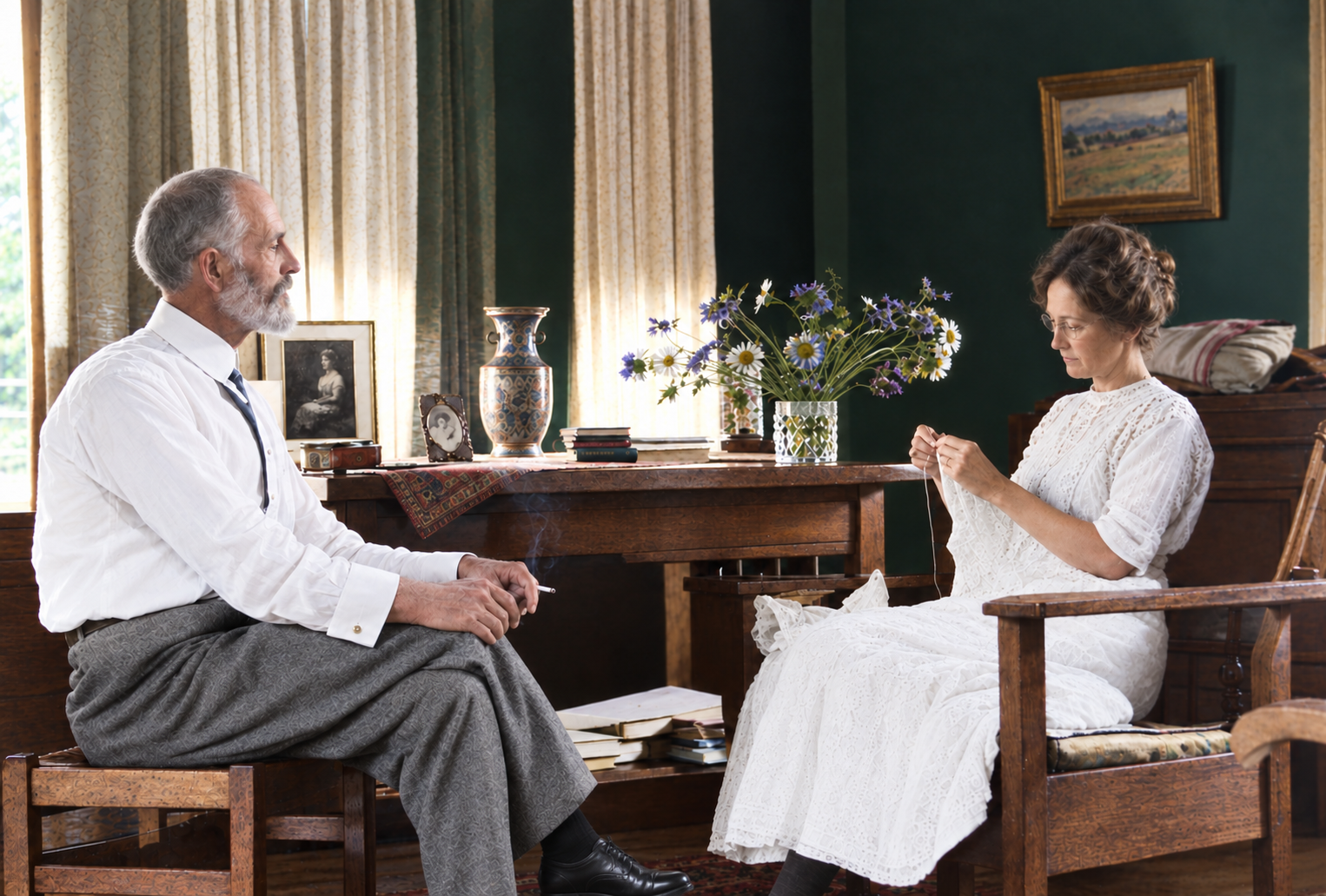
The majority of Crosbie’s statements about Theosophy, the Theosophical Movement, and the ULT, are contained in the book “The Friendly Philosopher” (“Letters and Talks on Theosophy and the Theosophical Life”) published by Theosophy Company in 1934, 15 years after his passing. There, we find him saying:
“I think that the word “Theosophy” has power: if it had not, there would not be so many misusing the name. In spite of all these, Theosophy itself is untouched. Our work is to keep it pure as it was delivered to us, for the sake of those who can be helped — and we are finding some all the time. In better days we will be able to do more — and all the better because of present difficulties. Theosophy pure and simple is the standard by which efforts may be applied and errors combated, so it must always be kept in evidence as the source of all right effort.
“When the Parent theosophical society was established [i.e. in New York in 1875, by Blavatsky, Olcott, Judge, and others], it was necessary to give it the form that would be best understood by the people of the time. It was known that many would cling to the form rather than to the spirit of the Theosophical Movement, and would imagine that the spirit could not exist in any other form. But also it was known that some would perceive the spirit and care only for that. Events have justified all this, so that we stand at another point in the cycle. Perfection in action is not possible; so, while showing forth the spirit of the Movement only, we yet present a visible basis necessary in any exoteric work. “U. L. T.” is a name given to certain principles and ideas; . . .” (p. 366)
Thus, Crosbie considered the ULT to be an embodiment of the original spirit or inner heart of the Theosophical Movement, this spirit no longer being truly present in the Theosophical Society.
The original Society had a particular form, i.e. an outer, exoteric aspect, structure, and character, which was necessary and beneficial for it to have at that point in time. There is certainly nothing “bad” about this but many clung and still cling to that, rather than to its esoteric heart.
For Crosbie, the ULT was to be a “showing forth [of] the spirit of the Movement only” – but for this to actually be done in the world in any public way necessitated at least some degree of exterior form, otherwise no-one would ever even know about it. The most minimalistic “visible basis” possible was selected, so that the Movement’s spirit – its deepest, central, most meaningful and occult aspect – might remain predominant and as little obscured and hindered as possible.
The possibility of such a course of events as Crosbie was describing had been dramatically foreshadowed two decades or so earlier by HPB in the article “A Puzzle from Adyar”:
“It is pure nonsense to say that “H.P.B. . . . is loyal to the Theosophical Society and to Adyar” [i.e. the form taken by the Theosophical Movement at a particular time] (!?). H.P.B. is loyal to death to the Theosophical CAUSE [i.e. the spirit of the Movement], and those great Teachers whose philosophy can alone bind the whole of Humanity into one Brotherhood. Together with Col. Olcott, she is the chief Founder and Builder of the Society [form] which was and is meant to represent that CAUSE [spirit]; . . . Therefore the degree of her sympathies with the “Theosophical Society and Adyar” depends upon the degree of the loyalty of that Society to the CAUSE. Let it break away from the original lines and show disloyalty in its policy to the CAUSE and the original programme of the Society, and H.P.B., calling the T. S. disloyal, will shake it off like dust from her feet.“
More from “The Friendly Philosopher”:
“”Masters never cease working, but they cease at times from such public efforts as were made at the establishment of the Theosophical Society; before that They were working with individuals.” Mr. Judge made this statement at a crucial time, repeating what the Master had written years before to Mr. Sinnett, and what H. P. B. had more than once put of record.
“Applying this, it would seem to mean that They are not now working directly with any theosophical bodies as such, as They at one time were working with the Parent society, but that They continue to work with individuals. Those who thought or think that any organization carries the Masters with it have taken the shadow for the substance, have mistaken the tool for the Workman.” (p. 398)
“The Theosophical Movement is greater than any society or organization. The latter are but temporal, changing with the nature and understanding of those who constitute them and influence their policies and ideals; they correspond to our physical bodies, whereas the Movement corresponds to the Soul. There are many kinds of bodies, and work has to be done in each, in accordance with the possibilities afforded by its nature. Those who pin their faith to any body are choosing a transitory guide, a frail support; most of them are looking for “authority.” . . .
“The Theosophical Society was founded by Masters as an organization for the promulgation of the Wisdom Religion. That organization has split into fragments. . . . The average person makes much of organization, form, method, authority — what not, and crystallization of idea defeats understanding. Thus the attacks, splits, controversies and other follies that have been perpetrated during the history of the Movement in this generation. . . .
“There are other dangers menacing such a body as the T. S. besides the “personal-following” one. Sometimes self-appointed conservators of the body arise, with hard and fast conclusions as to men, things and methods. These seek to impose their ideas as the only true ones . . . forgetting that no method is the true method; that the true method must be a combination of all methods. All these things are lessons — initiations in occultism — if we read them aright. . . .
“Into each fragment of the original T. S., there have entered many attracted by the philosophy. The right or wrong of the splits does not affect them. In each fragment [i.e. in every Theosophical organisation, no matter how distorted it may have become in general] there must be those who are good and true disciples of Masters. As far as my knowledge goes, I would say that Masters are working in many ways, and through many organizations as well as with individuals. There are no barriers to Their assistance, except such as personalities impose upon themselves. Their work is universal; let our view be as much in that direction as possible.” (p. 4-5)
This next excerpt begins with a valuable reminder for ULT associates that although the Teaching may often be spoken of as Truth, Truth is in reality something that transcends all words and books. This does not mean that good books are devoid of spiritual value. On the contrary, they can serve as essential guides and educators that instruct and lead us towards Truth. But Truth – or divine Reality, in other words – is not something that can ever be contained by or delimited within any book or any one human being.
“Truth is not a man, nor a book, nor a statement. The nature of Truth is universal; its possessors in any degree will be found to be appliers of universality in thought, speech and action. Their efforts will be for humanity regardless of sex, creed, caste or color. They will never be found among those claiming to be the chosen spokesman of the Deity — and exacting homage from their fellow-men: true Brotherhood includes the least developed as well as the very highest. We must seek to give aid to all in search of truth.
“. . . in our zeal it is well to consider what the Masters have done, and do year after year, age after age. They do what They can, when They can, and as They can — in accordance with cyclic law. They conserve the knowledge gained — and wait. Knowing this, and doing thus, there can be no room in us for doubt or discouragement. Theosophy is for those who want it. We are to hold, wait, and work for those few earnest souls who will grasp the plan and further the Cause. Many have their ears so dulled, or their attention so diverted, that no number of repetitions can reach them — yet Theosophy must be held out continually for all who will listen.
“That is our self-assumed work; we have our example in H. P. B. and W. Q. J. — as to means, method and manner: let us imitate them, and so do their work in their spirit.” (p. 363-364)
“Many hear, but few heed the Message, and of those who heed, few are they who take to heart the warnings of the Teachers. Some think, evidently, that all warnings are a sort of scarecrow to test their courage. They forget or ignore that the real test is not of our courage but of our discrimination. If the philosophy is true and Masters are behind it, then what They say is meant. They have said other things besides warnings, and these also are meant, as fully and as truly as their warnings.
“Theosophy is not in conflict with any form of religion, any society, any man, any opinion — however much these may be in conflict with Theosophy. What Theosophy is engaged in, through those who believe in it, as we do, without any mental reservations whatsoever, is a battle for recognition. Theosophy serves to explain the hidden side, the real and inner meaning of all things, for it is a friend to understanding, an aid to knowledge. By it a man may come to know himself through and through.” (p. 384)
“The “U. L. T.” Declaration [Note: See the bottom of this page for the text of the Declaration] should turn the attention of every open-minded Theosophist from forms to principles. It provides a real basis for study and work. . . .
“As the years go on, and “U. L. T.” becomes better known by its fruits, it will be more and more difficult for those who have an axe to grind to label us anything but straight-line Theosophists, resolutely declining any connection with any theosophical organization, but always in full sympathy with our fellow-Theosophists [i.e. as individuals, not the organisations and societies to which those individuals may belong, as the ULT cannot be “in full sympathy” nor official/formal connection with any of these, without being unfaithful to its own purpose and modus operandi] of all organizations or of none. Yet we must be watchful to correct the impression wherever it exists that “U. L. T.” is a secession or succession, or anything but an Association to study and apply Theosophy pure and simple. Can any sincere student observe the things taught and done in the name of Theosophy and fail to see the crying need for just such an Association as “U. L. T.”?
“Some otherwise loyal Theosophists think that the Movement has failed for this cycle, because of the dissensions and false doctrines so much in evidence. They ought to remember that Masters never cease working, and that it is always possible for even the humblest Theosophist who is clear-eyed and humanity-loving to aid Their endeavor. The way to know the truth is to get back to what the Teachers themselves gave, both in philosophy and in right work. If that is done, it will be found that there is neither “variableness nor the shadow of turning” in the “U. L. T.” from the lines laid down by those Teachers. . . . To think that the effort had failed and that it was no use to try further, would show lack of faith in the Masters and a misunderstanding of the great occult laws that govern such a Movement as this.” (p. 388-389)
“To All Open-Minded Theosophists” was Robert Crosbie’s title for a circular letter dated 17th November 1908, which he sent out (anonymously, as was his custom) to as many Theosophists as possible as a proposal for the establishment of the ULT. Here are some extracts relevant to the present article:
“To give this spirit expression requires a declaration, and a name by which those making the declaration may be known.
“To call it The Theosophical Society would be to take the name now in use by at least two opposing organizations. To even call it a Society has the color of an “organization” — one of many, and would act as a barrier. The phrase used by one of the Messengers is significant, and avoids all conflict with organizations, being capable of including all without detriment to any. That phrase is:
THE UNITED LODGE OF THEOSOPHISTS
[Note: This is actually an amalgamation derived from two different expressions found in the writings of William Q. Judge.]
“Members of any organization or unattached, old and new students, could belong to it without disturbing their affiliations, for the sole condition necessary would be the acceptance of the principle of similarity of aim, purpose, and teaching. The binding spiritual force of this principle of brotherhood needs no such adventitious aids as Constitution or By-Laws — or Officers to administer them. With it as basis for union, no possible cause for differences could arise; no room is found here for leader or authority, for dogma or superstition, and yet — as there are stores of knowledge left for all — the right spirit must bring forth from “Those who never fail” all necessary assistance. . . . Any considerable number, living, thinking, acting, upon this basis, must form a spiritual focus, from which all things are possible.
“Local Lodges could be formed using the name and promulgating the basis of union, recognizing Theosophists as such, regardless of organization; open meetings; public work, keeping Theosophy and Brotherhood prominent; intercommunication between Lodges, free and frequent; comparing methods of work of local Lodges; mutual assistance; furtherance of the Great Movement in all directions possible; the motto: “Be Theosophists; work for Theosophy [i.e. as emphatically urged by HPB in her “Five Messages to The American Theosophists”].” (“The Friendly Philosopher” p. 410-411)
The following are from the explanatory statement sent out to announce the foundation of the ULT, dated 18th February 1909:
“The United Lodge of Theosophists is an integral part of the Theosophical Movement . . . It is — as the name implies — an Association of Theosophists irrespective of organization, who are bound together by the tie of common aim, purpose and teaching, in the cause of Theosophy.
“Theosophy, being the origin, basis and genius of every Theosophical organization, forms in itself a common ground of interest and effort, above and beyond all differences of opinion as to persons or methods; and being the philosophy of Unity, it calls for the essential union of those who profess and promulgate it.
“This Union does not mean a sameness of organization or method, but a friendly recognition, mutual assistance and encouragement among all engaged in the furtherance of Theosophy. . . .
“There are a number of Theosophical organizations in existence today, all of them drawing their inspiration from Theosophy, existing only because of Theosophy, yet remaining disunited. The nature of each organization is such, that unity cannot be had on the basis of any one of them; hence a common basis should be taken if the success originally purposed is to be attained.
“The need of such a basis with a broader view of the Movement, is the cause for the present Association — the United Lodge of Theosophists — composed of Theosophists of different organizations, as well as those belonging to none. This Lodge, having no constitution, by-laws, officers or leader, affords in its Declaration a common basis of Unity for all who see the great need of it, and seeks their co-operation. . . .
“While she [i.e. HPB] lived there was one Society. After her departure, dissensions arose, resulting in several separate organizations. The basic cause of these divisions is to be found in differences of opinion as to “successorship,” even where other causes were in evidence. No such question should ever have arisen, for it is abundantly clear that H. P. Blavatsky could no more pass on to another her knowledge and attainments, than could Shakespeare, Milton or Beethoven pass on theirs. . . .
“H. P. Blavatsky departed from the body in 1891; William Q. Judge some five years later. He never claimed to be her successor; on the contrary, when asked the question, he said: “She is sui generis — she can have no successor;” the fact being that both he and she were contemporaneous in the work, he retaining his body for some five years longer in order to complete the work he had to do.
“The work of these two cannot be separated if the Movement is to be understood. The evidence of the greatness and fitness of William Q. Judge, as a Teacher, is to be found in his writings — a large and valuable part of which has become obscured through the organizational dissensions before spoken of. These writings should be sought for, and studied, in connection with those of H. P. Blavatsky. That study will lead to the conviction that both were great Teachers — each with a particular mission — that each was sui generis, that their work was complementary, and that neither of them had, nor could have, any successor.” (“The Friendly Philosopher” p. 412-414)
~ * ~
Hopefully the reasons behind the existence of the ULT and also for its differences from the Theosophical Society will now be more comprehensible. As has been shown, they are too deep to be easily or adequately summed up in just a brief sentence or two. Even this article has not gone into the matter as deeply as it could. Those who would like to explore and reflect on it further are encouraged to get a copy of “The Friendly Philosopher” or read it online. (See Books on Theosophy for details.)
The basis of such an approach as that of the ULT does bring with it a risk of potentially lapsing into at least some degree of dogmatism, fundamentalism, or sectarianism. Wherever there is great devotion, zeal, an emphasis on a distinct and specific Teaching or Philosophy, and an awareness of the distortion and damage done to the latter by other groups/organisations, the field is ripe for such unhelpful traits to arise. We therefore have to be on our guard to be truly Theosophical in character and conduct, while at the same time not compromising on our position.
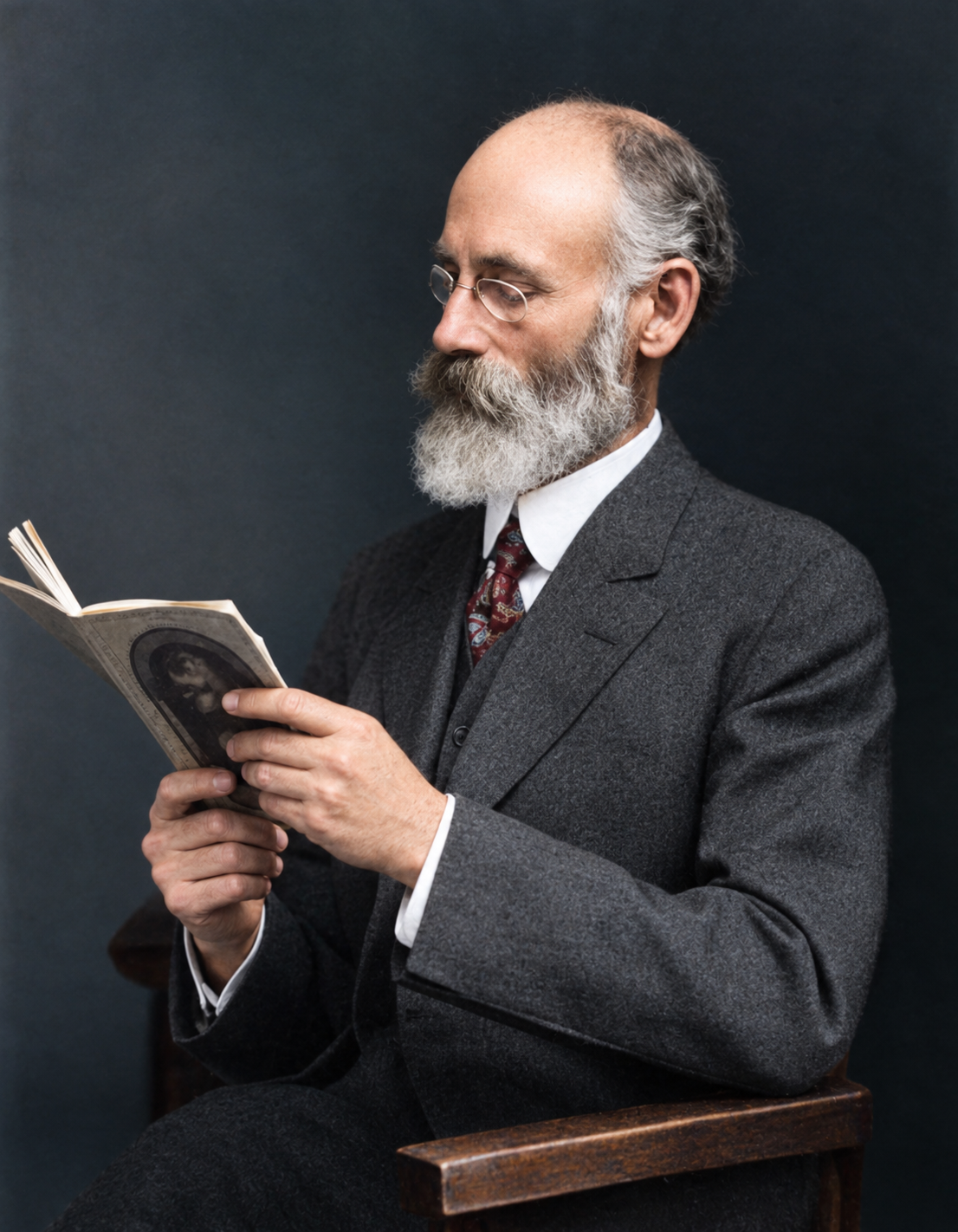
Not everyone will feel an affinity or attraction for the United Lodge of Theosophists and that’s perfectly fine. Also, those who have never familiarised themselves with the writings of H. P. Blavatsky or with HPB’s many statements of esoteric significance about her “only friend” William Q. Judge, will in most cases simply not understand why the ULT takes the stance that it does and are likely to feel bemused.
But they may at least comprehend better why we said that “The ULT therefore came about as a new and different type of Theosophical “organisation” and with a much more precise and distinct focus, as expressed in the above mission statement. In this sense, the ULT is, on a public level, something quite similar to what the Theosophical Society’s Esoteric Section was intended to be on a private level. For this and other reasons, some ULT associates have described the ULT as “semi-esoteric.””
“”That power which the Disciple shall covet is that which shall make him appear as nothing in the eyes of men.” This was the power which Robert Crosbie gained, this the power that enabled him to keep in touch with the great Teachers after They had cast off the mortal coil; that guided his steps in following the Path They showed, the MASTERS who are behind; that sustained him during the long years when all that could be done was “to work, watch — and wait,” until the propitious hour should come when, under Karma, recruits might be gathered from among the generation following the great Mission and the great Message of his Teachers.” (“The Friendly Philosopher,” Preface, p. vi)
~ * ~
To see answers to frequently asked questions about the ULT, please read The United Lodge of Theosophists. For a listing and contact details of all current ULT centres around the world, please go to Theosophy Around The World. On Anonymity and Impersonality clears up confusion about one of the most characteristic and unique methods of the ULT.
Our complete listing of over 400 articles on all aspects of Theosophy and the Theosophical Movement can be found on the Articles page.
~ BlavatskyTheosophy.com ~
“It is my belief that the true T. S. is not contained in any one organization, but that its members exist in many organizations.”
(Robert Crosbie, Autobiographical Notes, 24th March 1907)

