
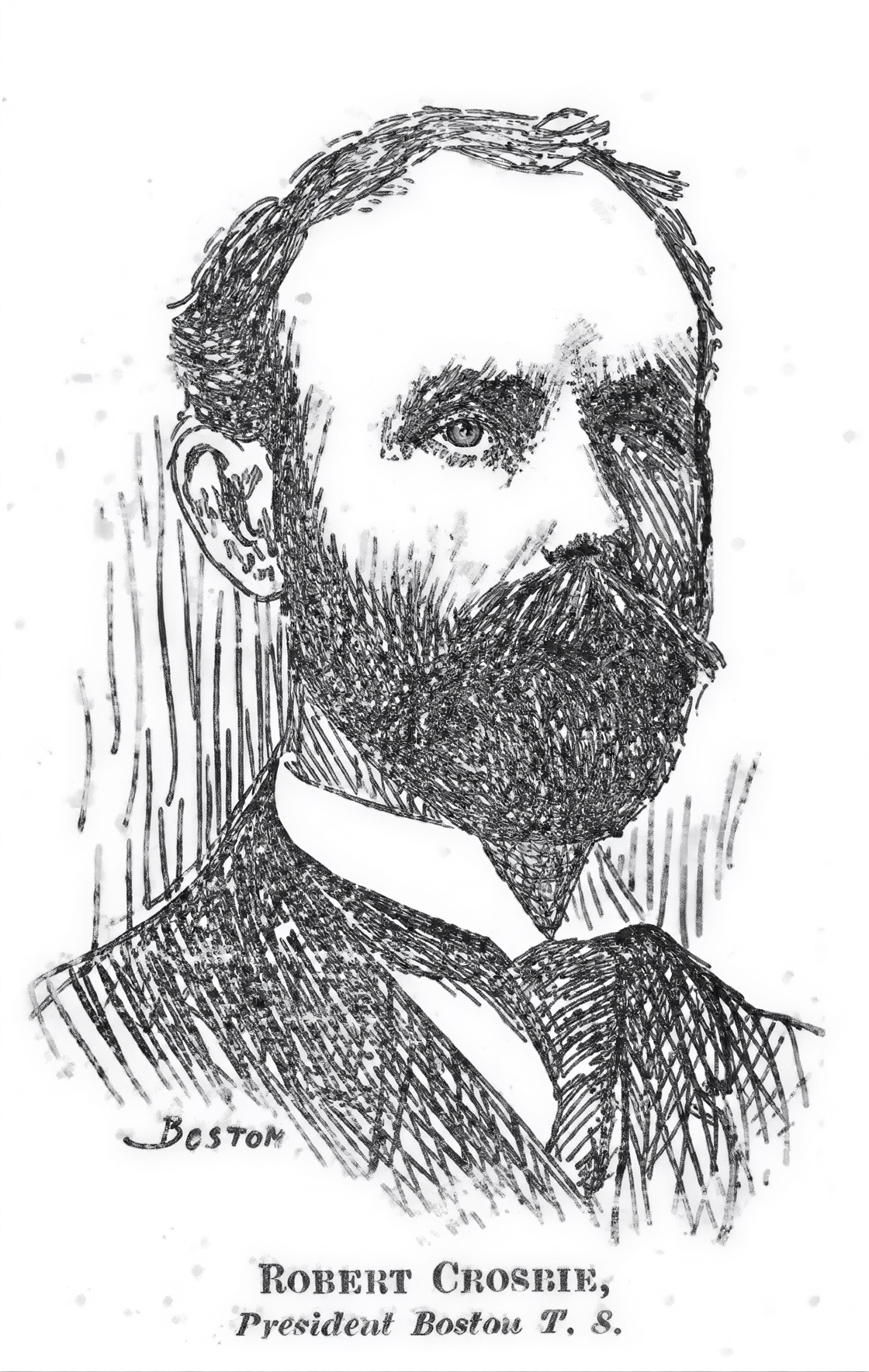
It is sometimes wondered what evidence there is for the claim made in the United Lodge of Theosophists that Robert Crosbie (the ULT’s founder, who lived 1849-1919) was a “direct pupil” of both William Q. Judge and H. P. Blavatsky.
If we are expecting wholly independent evidence, from non-ULT sources, we are not likely to find anything, other than the universally accepted historical fact that Crosbie undeniably personally knew and spent much time with Judge over a period of about a decade, was trusted by him sufficiently to be placed in a role of responsibility in the Esoteric Section covering all the New England states, and was President of the Boston Lodge, the second largest and thus second most influential branch of the American Theosophical Society after New York, where Judge presided. As far as distances go in the USA, Boston is reasonably close to New York.
Although none of this in itself confirms that Crosbie was a direct, personal “occult pupil” of WQJ, nor that he had a special inner connection with him, it does provide grounds for the very real possibility of such a thing being the case.
We are on far hazier and vaguer ground when it comes to Crosbie also being a direct, personal “occult pupil” of HPB, who by this time was not based in, nor visited, the USA, but was living far away in London, England.
We will see it stated, however, by no less than H. P. Blavatsky herself, that she did have a few private esoteric pupils in the USA, who she communicated with confidentially by letter. She does not name or identify them but there is no reason at all why Crosbie should not have been one of them.
The majority of the quotes we have compiled are from Robert Crosbie himself. Those taken from the Los Angeles ULT’s “Theosophy” Magazine – of which Crosbie was the editor from its inception in 1912 until his passing in 1919 – appeared therein absolutely anonymously, as was the policy of the magazine. One cannot therefore suppose that he was attempting to gain prestige, power, fame, or a personal following by making such remarks. The vast majority of readers would have had no idea who the writer was. Other excerpts are from his private letters to colleagues, only published after his death, first in “Theosophy” and later in the book “The Friendly Philosopher.”
Since Crosbie was well known for his earnestness, honesty, sincerity, and integrity, it seems extremely unlikely that any of such quotes have a deceptive basis or character. Why would he do such a thing? Since he tried to keep himself as unknown and in the background as possible after starting the ULT (see an article here explaining the ULT’s approach to anonymity and impersonality in Theosophical work) he would have had nothing to gain from making up stories.
A few of the quotes relate to him having some type of metaphysical inner contact with HPB and WQJ after their departure from the physical plane. This is stated very briefly and very cautiously, since anyone who has had genuine contact with Masters or great Initiates knows to stay almost entirely silent and reticent about it, not least because it is such a serious and sacred thing.
Whether this was truly so in Crosbie’s case is by its nature something beyond possibility of proving or disproving by the vast majority of us at the current stage of our spiritual journey. No-one is, or has ever been, under any obligation or expectation whatsoever to believe or accept it. It is also only extremely rarely mentioned in ULT Lodges and meetings; almost never, in fact. We also have no idea of what the communications Crosbie apparently received from “HPB” and “WQJ” (as they were known during Earth life) actually consisted of. There is thus no way of quoting from them or pointing anyone towards them, even if we wanted to.
If there is any evidence surviving today of Crosbie’s inner contact, this is never mentioned by anyone who may possibly have access to it, although we have encountered one or two longtime ULT associates who implied that such evidence is held at the Parent Lodge in Los Angeles.
We do know that in the early 1920s, when B. P. Wadia was on the verge of his resignation from The Theosophical Society – Adyar and considering joining the ULT, John Garrigues and Grace Clough (Crosbie’s two closest co-workers) showed Wadia certain documents which completely persuaded him that Robert Crosbie had indeed formed a sacred occult link with WQJ and HPB and was trusted by them in life as well as after their “death.” What precisely he was shown we have no idea, and the document in which we read about this – an internal New York ULT document, undated, unsigned, and seemingly from sometime around the 1930s to 1950s – is so obscure as to be unknown to even most longtime ULT associates.
Some associates today are not keen on any of this being talked about and believe that it lowers the ULT to the level of the same type of claims made by the various Theosophical Society organisations regarding the apparent occult status of their past leaders and their alleged contacts with the Masters. This is the very thing which the ULT has historically strongly criticised in other groups.
We understand this concern but there seem to be some distinctions that ought to be made, such as the fact that whereas some Theosophical organisations build their very existence upon their most prominent leaders’ claims to personal connection with the Masters – whether that be the claims and assertions made by or regarding Tingley, Purucker, Besant, Leadbeater, La Due, Bailey, or Roerich, etc. – it is entirely irrelevant to the ULT whether or not Crosbie had genuine occult contact with anyone. For the ULT revolves around the teachings and work of H. P. Blavatsky and William Q. Judge, and not around Crosbie, nor is he viewed as a new “Messenger” from the Masters, nor as an “Occult Successor” rivalling the better known self-proclaimed “Occult Successors” in the Theosophical Movement.
As Crosbie wrote:
“In answer to H______ [i.e. Ernest Hargrove, of the now long defunct Theosophical Society that was headquartered in New York] I am glad that you made it plain — and it cannot be made too plain — that there is absolutely no one in U. L. T. who “instructs and informs other members of what he or she gets as coming from Masters.” This is the safest way for all: point to the records [i.e. the writings of HPB and WQJ, considered by the ULT to be a record of knowledge; this phrasing is derived from HPB’s dedication at the start of “The Secret Doctrine” where she speaks of the book’s content as having been “recorded“] and advise an open mind and an eager intellect as well as an unveiled spiritual perception.” (“The Friendly Philosopher” p. 163)
“Let “U. L. T.” flourish on its moral worth alone. The work we have to do, the knowledge we have to give out, depends on no other names than those of the true Teachers, H. P. B. and W. Q. J. Associates must learn to look to Them, to point to Them and to the Masters whom They served. Nothing else will restore the Movement. Unity is the key note of our attempt, and living persons, if made prominent, will detract from that attempt, will be attacked, to the injury of the Movement. So we will keep their names out of consideration. Let the curious and the antagonistic surmise all they want to — the really earnest will then judge by the fruits, not by persons. Theosophy does not emanate from any society nor from any living persons. So far as the world and all Theosophists are concerned, Theosophy comes from H. P. B. and W. Q. J., or rather, through them. So, to avoid misconceptions, we get back of living persons to the Message and the Messengers.” (“The Friendly Philosopher” p. 368-369)
“What are our claims? — it will be asked. We make none: we point to the Message, the Messengers, and Their enunciation of the Work — and carry on the latter in accordance; we have no “revelation” to offer, we only hand on that which was known before. The position is unique and unassailable in that it makes no claim to any other authority than the Message and the Messengers.” (“The Friendly Philosopher” p. 372)
“No room is found here for leader or authority, for dogma or superstition, and yet — as there are stores of knowledge left for all — the right spirit must bring forth from “Those who never fail” all necessary assistance.” (“The Friendly Philosopher” p. 411)
Ernest Hargrove was just mentioned. He is the source of the claim (which recently resurfaced in the October 2026 issue of the “Theosophical History” journal) that William Judge actually had a negative opinion of Crosbie, and that Crosbie caused him much sorrow due to being an uncontrolled and delusional “psychic” who Judge had great difficulty in keeping on track. Hargrove was Judge’s personal secretary and one of his closest and most trusted co-workers during the final year or so of his life. However, he was also at that time a very young man, had only come into the Society and active Theosophical work six or seven years after Crosbie, and was also prone to making conceited assertions with an air of arrogant authority. This does not negate the good work which Hargrove may have done but, coupled with Crosbie’s decade or so of close co-operation with Judge – the vast majority of this being before Hargrove even arrived on the scene – and being approved by Judge for positions of trust and responsibility, and also Judge giving Crosbie an important role in the 1895 Convention (held significantly at Boston, not New York) where Judge and his many supporters throughout the USA and other countries declared complete organisational autonomy and independence from Olcott and Besant’s Adyar-headquartered Society . . . coupled with all this, it seems likely that whatever Crosbie’s personal defects and flaws may have been (and no doubt he had some, as we all do), Hargrove’s remarks – made in the 1930s, almost 40 years after the events – can be dismissed as largely unreliable and heavily biased.
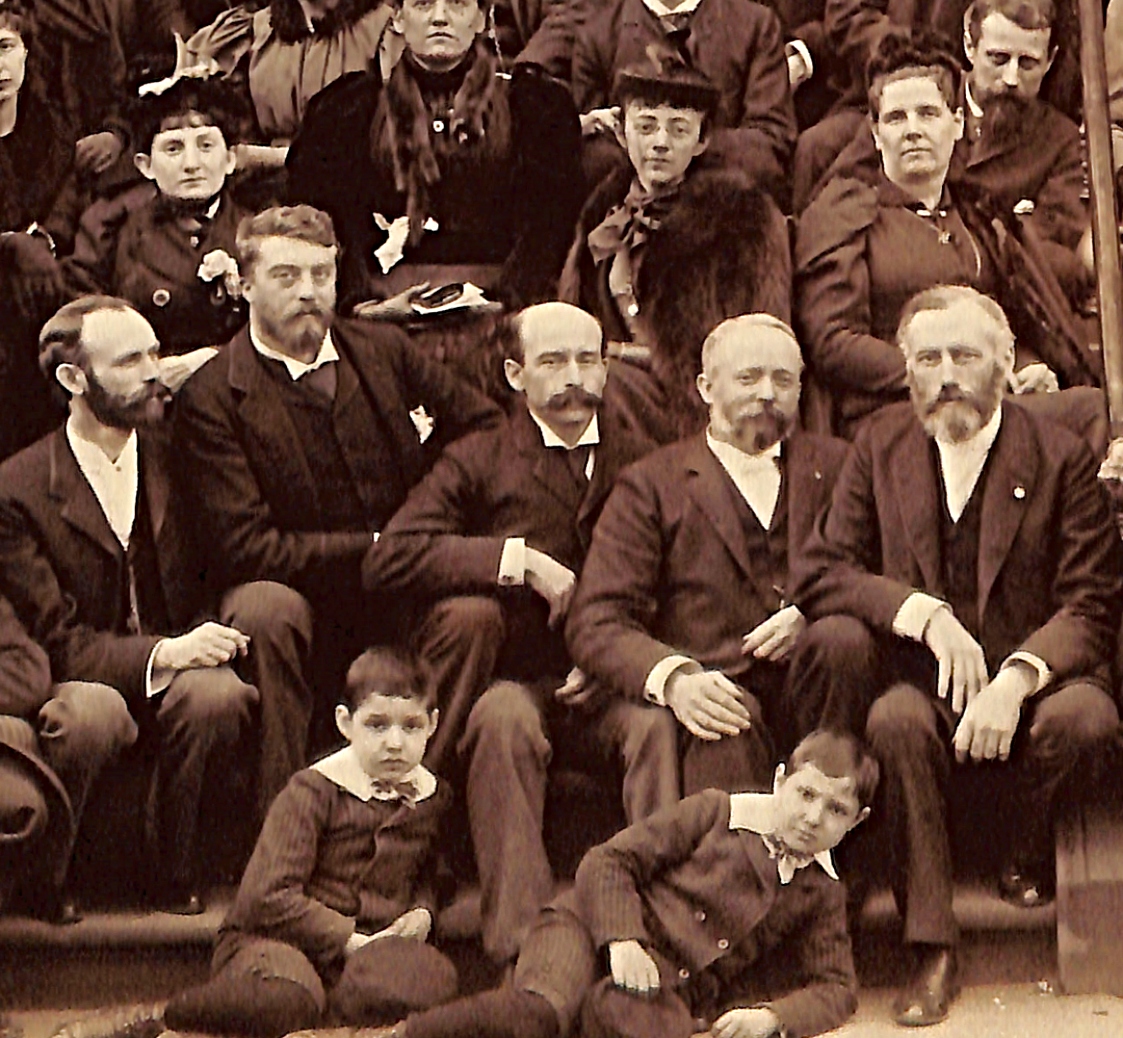
And now, let’s see some of the main publicly accessible traces and hints from ULT literature which support the notions of Robert Crosbie’s connection – physical and even metaphysical – with both his primary teacher and mentor William Q. Judge, and the great H. P. Blavatsky.
~ * ~
“It was while in this line of thought [i.e. focusing on hypnotism and psychic research and experimentation] that my [business] partner brought word to me of the formation of a branch of the T.S. in Boston. The word Theo-Sophia suggested much, so I went to the first meeting. I knew at once, even from the meager presentation of that time, that here was what I had been in search of. I joined the Society that evening and was shortly after elected its Secretary.
“Judge came to Boston soon after; I was introduced to him together with other members, and had no other notice from him until after the meeting when we had parted at the door, he, going with some members to his hotel, and I another direction. We had got some distance apart when I heard him call out “good night Crosbie, I’ve got you on my list”, I said “good night” but was much exercised at the rest of his remark. Something however happened then; a veil was lifted. A tie was formed which has never since been broken.
“He frequently came to Boston and stayed at my house, and I frequently went to N.Y. [i.e. where Judge was based] I was made President of the T.S. in Boston.
“Subsequently, when the Esoteric Section was formed [in 1888] by H.P.B. and W.Q.J., I was admitted and afterwards became — was appointed — its President [i.e. of the Boston Group of the E.S.]. These positions I held until I left Boston [for Point Loma] in April 1900. . . .
“I think that I have told you that my connection with Judge was intimate on inner lines [i.e. an occult, metaphysical connection]; these cannot be explained [i.e. not because Crosbie did not understand the situation but because he knew that some things are too sacred and profoundly personal to divulge to others], but to me they are the only real ones. . . .
“I should have known by other means the true state of affairs [i.e. regarding Katherine Tingley not being a Successor selected by Judge to lead the Society in any sense after his death], — but this had happened — when Judge passed out of life, I lost touch with him; doubtless I relied on him too much, and had not exercised my own intuition; from later events my comprehension is, that this loss of touch was purposely done in order that I might strengthen my weakness in that direction.
“I went to Point Loma at Mrs. Tingley’s urgent request to assist in the proposed work, and was there for two years, helping to prepare the way for the expected developments, before I began to get back the touch I had lost [i.e. so this would have been in or around 1902]. I am slow to turn back from any task I have set myself, and am prone to excuse inconsistencies and deviation in others, so that although I had begun to doubt, and to see, it was more than a year afterwards before I saw so clearly and unmistakably that I took occasion to tell Mrs. T. the facts as I saw them, and to state my intention to withdraw from all connection with her. She tried of course in every way to change my determination, but finding me unchangeable, she let me go, and as I afterwards heard, gave out that she had sent me away for “bad conduct” — just what I do not know.” (Robert Crosbie, Autobiographical Notes, dated 24th March 1907)
“[The book’s] purpose is the furtherance of that Cause in which was hid the mortal existence of Robert Crosbie no less than the earthly careers of those great Captains whom he revered and under whom he served: H. P. Blavatsky and Wm. Q. Judge.
“”That power which the Disciple shall covet is that which shall make him appear as nothing in the eyes of men.” This was the power which Robert Crosbie gained, this the power that enabled him to keep in touch with the great Teachers after They had cast off the mortal coil.” (“The Friendly Philosopher” Preface, p. v-vi, dated 25th June 1934)
“The remark by _______ in regard to Mr. Judge was utterly beyond his knowledge and probably a parrot-like repeating of what he had heard, as is the case of those who take their Theosophy from Mrs. Besant, or from other than the true teachers.
“Sometime you may say to _______ for me, that I was very, very frequently with Mr. Judge for ten years, entertained him and was entertained by him, and that I know the statement to be an ignorant and malicious libel, for which, however, I do not blame him. Only, a Theosophist ought to know better than to make statements on hearsay.” (Robert Crosbie, “The Friendly Philosopher” p. 47)
“As to Wm. Q. Judge. You think you know him and all about him and that you are perfectly competent to judge his status, yet your acquaintance with him was small and brief. How would your competency compare with one who knew him from 1886 until the day of his death; who was taught by him; who had demonstrated to him W.Q.J.’s possession of powers similar to those of H.P.B.; one who was shown in advance the schisms and the moving causes and persons in them during that period.” (Robert Crosbie’s Letter to Alice Leighton Cleather, dated 3rd June 1915)
“In the case of H. P. B., extraordinary means had to be used to keep the body together as long as it was kept. A couple of weeks before leaving the body [i.e. so this was in April 1891, as also confirmed below] She wrote to one in Boston, “Even will and yoga cannot keep this old rag of a body together much longer.” This does not abrogate her power, but it does show that the bodies of the present race are not able to stand such a strain as the occupancy of such a being entails. The nervous force in our own bodies if intensified will destroy the body’s capacity; imagine a force a hundred times higher than that, and it is not difficult to understand why bodies so occupied go to pieces.” (Robert Crosbie, “The Friendly Philosopher” p. 188)
“In April 1891, a month before she left the body, she wrote a friend [i.e. a friend of hers] in this country that “even Will and Yoga cannot keep this old rag of a body together much longer”. It was not a question of bodily existence with her, it was making the body serve the mission she came to perform.” (Robert Crosbie, “Answers to Correspondents,” “Theosophy” Magazine, March 1919; we believe the “one in Boston” to whom HPB wrote as “a friend” was Crosbie himself and that he is referring to himself with his usual modesty and humility.)
“Commencing with the next number, THEOSOPHY will publish a series of Studies in the Secret Doctrine, in elaboration and application of the Fundamental Propositions of Theosophy. . . . The first article will be entitled “The Monad,” and will be the work of a student whose twenty-five years of theosophic life [i.e. since 1887] began and was long continued in personal touch with H. P. Blavatsky and William Q. Judge.” (Robert Crosbie, “Studies in The Secret Doctrine,” “Theosophy” Magazine, November 1912)
“A friend of old time and of the future — as such does William Q. Judge appear to me, as doubtless he does to many others in this and other lands. . . . my first meeting with him changed the whole current of my life. I trusted him then, as I trust him now, . . . And this trust he called forth was not allowed to remain a blind trust, for as time went on, as the energy, steadfastness and devotion of the student became more marked, the “real W. Q. J.” was more and more revealed, until the power that radiated through him became in each an ever-present help in the work. . . . Having been engaged in active T. S. work in Boston for over seven years, it has been my Karma to be brought in touch with him under many different circumstances, the various crises, local and general, through which the Society has safely passed.” (Robert Crosbie, Tribute to William Q. Judge upon his death in March 1896, today published in “Letters That Have Helped Me” p. 291-292)
“”Well, I’ll tell you a true incident”, answered Mentor [i.e. Robert Crosbie; in the series of articles from which this quote comes, early ULT associates are anonymised by pseudonyms, just as all writers for ULT publications – Crosbie himself included – wrote anonymously, for reasons explained here; this is still the case today with extremely few exceptions], with a reminiscent smile, “and you can draw your own deductions from it. I was myself present at the meeting I will describe, together with Mr. Judge and a half dozen or more students — their names do not matter. The place was Chicago; the year 1894, or thereabouts.
“”A prominent member in Chicago”, Mentor continued, “had received a ‘message’, and at the meeting I am speaking of asked Mr. Judge if he would say whether it was a genuine Master’s message or not. Mr. Judge, after examining the paper, handed it to a lady sitting near him and asked her to state if the message were genuine. This lady was a very prominent theosophical worker whose writings had helped thousands of students and who was considered by many as very ‘far advanced’ in an occult way [i.e. from this description, this is almost certain to be Julia Keightley, who prominently used the pen name Jasper Niemand]. She took the paper, held it against her solar plexus for a few moments, looking very intently off into space — quite with the air of a seeress — emerging from ‘the silence’ with an audible sigh and declaring the message ‘genuine’.
“”Mr. Judge then handed the paper to another student — a professional man of high standing who was devoting his life and fortune to theosophical work, was widely known as a lecturer, and who was considered by many a deeply versed ‘esotericist’. This student placed the paper against his forehead, closed his eyes, looking very solemn and impressive for quite a few moments. He then declared the message not ‘genuine’.
“”Several other students were then asked to pronounce upon the matter; and each of them went through some sort of performance like those I have mentioned: one held the paper behind his back against his spine, I remember — please understand, Family, I am not romancing, but describing what went on before my own eyes — and Mr. Judge was as grave and serious through it all as you can imagine.
“”Well, opinions were conflicting and about equally divided in regard to the paper, when Mr. Judge handed it to another student — this one a man of no pretentions but considerable common-sense. I remember he had a high, thin, piping voice, and I can hear him now as clearly as if he were presently speaking. He took the paper, read it, and handed it back to Mr. Judge. ‘What do you say?’ asked the latter. ‘Why, I don’t know’, was the answer, ‘but the advice in it seems excellent’. His thin piping voice fairly shrilled through the room.
“”That’s good, Louie’, said Mr. Judge — and went on talking about other matters, as if the question of the message were at last settled. He had been serious and unsmiling through all the psychic ‘flip-flaps’ and posturings of the students present, but I caught the glint of a twinkle in his eye now and then. A little later some of the students asked him if the message were indeed genuine. ‘What difference does it make’, was his answer, ‘it may be or may not be: but as Louie has said, the advice in it seems excellent’; and with this remark the incident closed.”
“”I wonder how many of those students got the lesson”, chuckled Doctor.
“”Did Mr. Judge ask you, Mentor, to pass upon the genuineness of the message?” Mother enquired innocently.
“Mentor laughed delightedly. “No, he did not, Mother — but ‘Louie’ had been doing theosophical work under my direction for some five or six years“, he added, “if that information helps you any.”” [Note: This would have been Louis Wade, who was one of the leading Boston Theosophists.] (“Around The Table,” “Theosophy” Magazine, July 1918)
“He investigated mesmerism, hypnotism, spiritualism, mystical writings and philosophies until he came in contact with Theosophy after the return of Madame Blavatsky to England in 1887. By her instruction he placed himself under the direction of William Q. Judge. Mr. Crosbie was one of the earliest American members of the E.S.T.S. [i.e. Esoteric Section of the Theosophical Society] His connection made and the link regained, Mr. Crosbie worked unceasingly for the Movement in its exoteric and esoteric channels. He was for many years the mainstay of the Lodge in Boston, Mass.; was by Mr. Judge placed in charge of the E.S. members in Boston, and ultimately of New England.
“His connection with both H.P.B. and Mr. Judge was close and intimate, but so carefully guarded that few ever suspected the relation to be more than casual and incident to the routine of Theosophical propagandum. During all the troublous period 1893-96 Mr. Crosbie shared to an extent unknown and undreamt of by others in the burdens and the confidence of Mr. Judge. At the Convention in April 1895, which was held at Boston, Mr. Crosbie’s quiet but effective work was largely instrumental in the results achieved — the formation of The Theosophical Society in America to replace the former American Section, and the adoption of a programme of pure Theosophical endeavour.” (“The United Lodge of Theosophists: Its Mission and Its Future” 2016 Indian reprint of original 1923 edition, p. 9-10)
Regarding the above quote, it ought to be known that as far as accessible historical evidence and records go, it was actually the Griscoms (Clement Acton Griscom, Jr. and his wife Genevieve Ludlow Griscom, who would go on to use the pen name Cavé), Ernest Hargrove, Julia Keightley, and for a time Katherine Tingley, who fulfilled, during “the troublous period 1893-96,” the roles in relation to William Judge which the ULT would claim for Crosbie. As we commented regarding this elsewhere: “Of course, it could be true that Crosbie shared “to an extent unknown and undreamt of by others in the burdens and the confidence of Mr. Judge” but if it was “unknown and undreamt of by others” we will not find anyone from that era attesting to it.”
“Robert Crosbie enlisted in the ranks of the Theosophical Movement in 1887. From that time until his death in 1919 Theosophy permeated his nature as the living power in all his relations and activities.
“His contact with Mr. Judge began with his first attendance at a Theosophical meeting in Boston, at which Mr. Judge gave an address. On Mr. Judge’s suggestion he wrote direct to H. P. Blavatsky [Note: In the preceding excerpt, this is described the other way round.], and until the departure of the two Teachers the connection thus established was unbrokenly maintained.
“In time Mr. Crosbie became Secretary and then President of the Boston T.S. When the E.S.T. was formed late in 1888, Mr. Crosbie became one of its earliest members, was first Secretary, then President of the Boston Group, and, after the death of H. P. B., was placed by Mr. Judge in charge of all the New England Groups.” (“Theosophists and Robert Crosbie,” “Theosophy” Magazine, June 1936)
“Robert Crosbie, pupil of H. P. Blavatsky, friend and Companion of William Q. Judge, is no more a person: he has gone to his own place. . . . Robert Crosbie preserved unbroken the link of the Second Section [i.e. the inner, esoteric, private side] of the Theosophical Movement from the passing of Mr. Judge in 1896, and in 1907 — just eleven years later — made that link once more Four Square amongst men. In the year 1909 the Third Section [i.e. the outer, exoteric, public side] was restored by the formation of the United Lodge of Theosophists. In 1912 he founded the magazine THEOSOPHY. Of all these activities connected with the Theosophical Movement he has been the inspiration and the sustainer from the beginning. . . .
“There is always one Witness on the scene. After the death of Mr. Judge, Robert Crosbie kept the link unbroken. “Crosbie,” said Mr. Judge at their first meeting in this life, “you are on my list.”
“None at the time suspected, and none has to this day suspected, that the quiet, earnest, steadfast man whose heart and soul were assimilated to the nature of H. P. B. and W. Q. J. was to be in fact the agent for the regeneration of the Theosophical Movement on the lines laid down from the beginning by the Masters. H. P. B. was the Creator, W. Q. J. was the Preserver, and Robert Crosbie was the Regenerator of pure Theosophy.
““Ask Crosbie; he thinks and acts as I do,” Mr. Judge used to say to the New England Esotericists when they came to him for advice and instruction. “Go to W. Q. J.; he is my alter Ego,” used to say H. P. B. when importuned by American students for directions.
“The hints she gave in relation to Mr. Judge were not grasped by the ambitious, the greedy for occult preferment, the careless and the non-discriminating. The hints Mr. Judge gave in regard to Mr. Crosbie were not perceived by those whose only thought was their own advancement or their own position. After the death of H. P. B., Mr. Judge gave out such statements in regard to her nature and mission as, if taken, would have shown the students where to find the link of the Dzyan. So, in like manner, after the death of Mr. Judge, Robert Crosbie gave out such statements in respect of Mr. Judge as, if taken, would have preserved the unity of all the student body of Theosophists.” (“Robert Crosbie – Their Colleague Passes,” “Theosophy” Magazine, August 1919)
The above-quoted obituary article is certainly, to a large degree, a work of hagiography and hyperbole, though written from a position of sincere devotion and deep gratitude on the part of its anonymous author, known to be John Garrigues. Garrigues was also the author of most, if not all, of the other post-Crosbie quotes included in the present article.
Only coming in contact with Crosbie a couple of years prior to the founding of the ULT, Garrigues was possibly genuinely unaware of how wholly and zealously devoted Crosbie had been to Katherine Tingley during his years at Point Loma and indeed ever since 1896, and how he had initially completely supported and openly endorsed all of her decisions and actions, even those that were the most destructive for the Movement in the USA. Once one is acquainted with those undeniable historical facts (some of which are briefly summarised in the article Katherine Tingley and William Q. Judge, and which it should be noted Crosbie himself never attempted to deny, even though for the most part he perfectly understandably preferred not to focus or dwell on his past mistakes) it becomes almost impossible to conceive that Robert Crosbie “kept the link unbroken” (HPB’s famous final words being “Keep the link unbroken; do not let my last incarnation be a failure!”) all the way through from the passing of William Q. Judge in 1896 to the establishing of the United Lodge of Theosophists in 1909, or the early formation of its esoteric nucleus in 1907. Crosbie’s own words which we quoted earlier acknowledge that he “lost touch” for a few years but eventually “began to get back the touch I had lost.” Our personal opinion is that it would be more accurate to say that he re-established the link.
“He was born in Montreal, Canada, January 10, 1849, became an American citizen, was from his earliest years deeply interested in religious, philosophical and occult subjects, identified himself with the DZYAN Section of the Theosophical Movement and the Theosophical Society; and was for many years the devoted friend and close Companion of William Q. Judge, and an occult pupil of H. P. Blavatsky.” (Obituary Notice at the end of “Theosophy” Magazine, August 1919; note that “Companion” is an esoteric term, signifying a deep inner affiliation or fraternity; it is commonly used among Masons and was always used in the Theosophical Society’s Esoteric Section.)
“In the United States, Mr. Robert Crosbie who entered the Movement coincidently with the foundation of [WQJ’s monthly magazine] The Path, and who for many years had the benefit of direct training and instruction from both H.P.B. and Mr. Judge, established in 1909 at Los Angeles, California, the parent United Lodge of Theosophists, after witnessing the final dissolution of the work left at Mr. Judge’s death. . . . he labored to restore the calumniated reputations of H.P.B. and Mr. Judge, convinced that until their unique status was recognized by Theosophists at large, no return to the Source of the Movement and no continuity of the original effort could succeed. From the very beginning Mr. Crosbie and his associates made no distinctions of organization and recognized as Theosophists all who are engaged in the true service of Humanity, “regardless of dissensions or differences of individual opinion.”” (“The Theosophical Movement 1875-1925,” p. 702-703)
As we mentioned earlier, there is evidence in regard to others being trained, taught, and communicated with at a distance by both HPB and WQJ. The most well known and documented case is that of Julia Keightley (nee Verplanck) who used the pseudonym of Jasper Niemand for most of her Theosophical writing. She was in contact with both of these Teachers at the same time, both by letter and by metaphysical means. Her communications with WQJ are well known and some were published in the book “Letters That Have Helped Me,” whilst her contact and “visits at a distance” from HPB – both during HPB’s lifetime and after her departure from the physical plane – can be found related towards the end of the book “Reminiscences of H. P. Blavatsky and The Secret Doctrine” and are partially quoted from in our article Who are you, Madame Blavatsky?
Julia Keightley was not the only Theosophist thus favoured or karmically deserving. “The Theosophical Movement 1875-1925” also speaks on p. 702 of “the venerable Mrs. Julia Scott, a survivor of the parent Society and a faithful friend and pupil of H.P.B. and Mr. Judge, [who] has labored for many years to assist and instruct a few in the teachings and practises originally ensouling the Third Section. First in England, then in Italy, and in recent years in Switzerland, her work has been carried on in the midst of many obstacles and despite ill-health and advancing years. Many owe to her their first Theosophical light in this incarnation, and many others their restoration to the lines that had been lost in the confusions following the death of H.P.B. and Mr Judge.”
Now, nothing is known today of this Mrs Julia Scott, least of all about her having been “a faithful friend and pupil of H.P.B. and Mr Judge,” but we may safely assume that she was indeed what the book says, as neither Garrigues nor others in the early ULT would have no need or motive to make up stories about such a person. And if Julia Keightley and Julia Scott, why not Robert Crosbie too? All who knew him described him as a humble, earnest, and gentle soul, wholly devoted to the Theosophical Cause. As this was so, and if his Karma was suitable, there is no reason why he should not have “had the benefit of direct training and instruction from both H.P.B. and Mr. Judge.”
On an occasion in 1890, H. P. Blavatsky happened to mention in a letter to William Judge, “those [members of the Esoteric School] who receive extras in private & confidential letters from me, – (tho’ so far in America there are only two who have received such) . . . There are in America half a dozen or perhaps a little more whom I will not abandon [i.e. if the Esoteric School or Section were to close down] . . . I will go on teaching them in private letters & that’s all.”
“Those who represented the Masters of the Great Lodge were not casual students attracted to a philosophy, nor mere tyros in occultism, but Initiates – masquerading in the mortal garments known as H. P. Blavatsky and William Q. Judge. This is a matter of knowledge to living persons to-day.” (Robert Crosbie, “Masters and Their Message,” “Theosophy” Magazine, April 1915)
“Names are things. The actual names of the Masters have never been given out and are not known to any but Themselves and Their pledged Disciples. To be a pledged Disciple of the School of the Masters is quite another matter from being a member of the Esoteric Section, which is probationary and whose members are lay chelas. The actual names of H.P.B. and W.Q.J. and of pledged Disciples are unknown and have never been given out, nor is the actual name of the School of the Masters used by any of the so-called esoteric sections of the now numerous Theosophical Societies. . . . Like the numberless religions and religious off-shoots throughout all time, and like the numberless schools of the mysteries, secret societies, occult orders, of the past and of the present, the various theosophical societies and esoteric sections of the day are in no sense representative of the School of the Masters or the Theosophical Movement. They represent merely claimants to the mantle of the prophet and those who accept those claims. They rest upon personal assumptions, personal claims and followings, personal psychological experiences of one kind and another. . . . [but] The Anciently universal Wisdom-Religion, the School of the Masters and the Theosophical Movement are in unbroken continuity of existence to-day as always. . . . Now, as always, they have their representatives and agents among men, who cannot be found out by any but those who have earned the right to know them.” (Robert Crosbie, “Masters and Their Message,” “Theosophy” Magazine, February 1915)
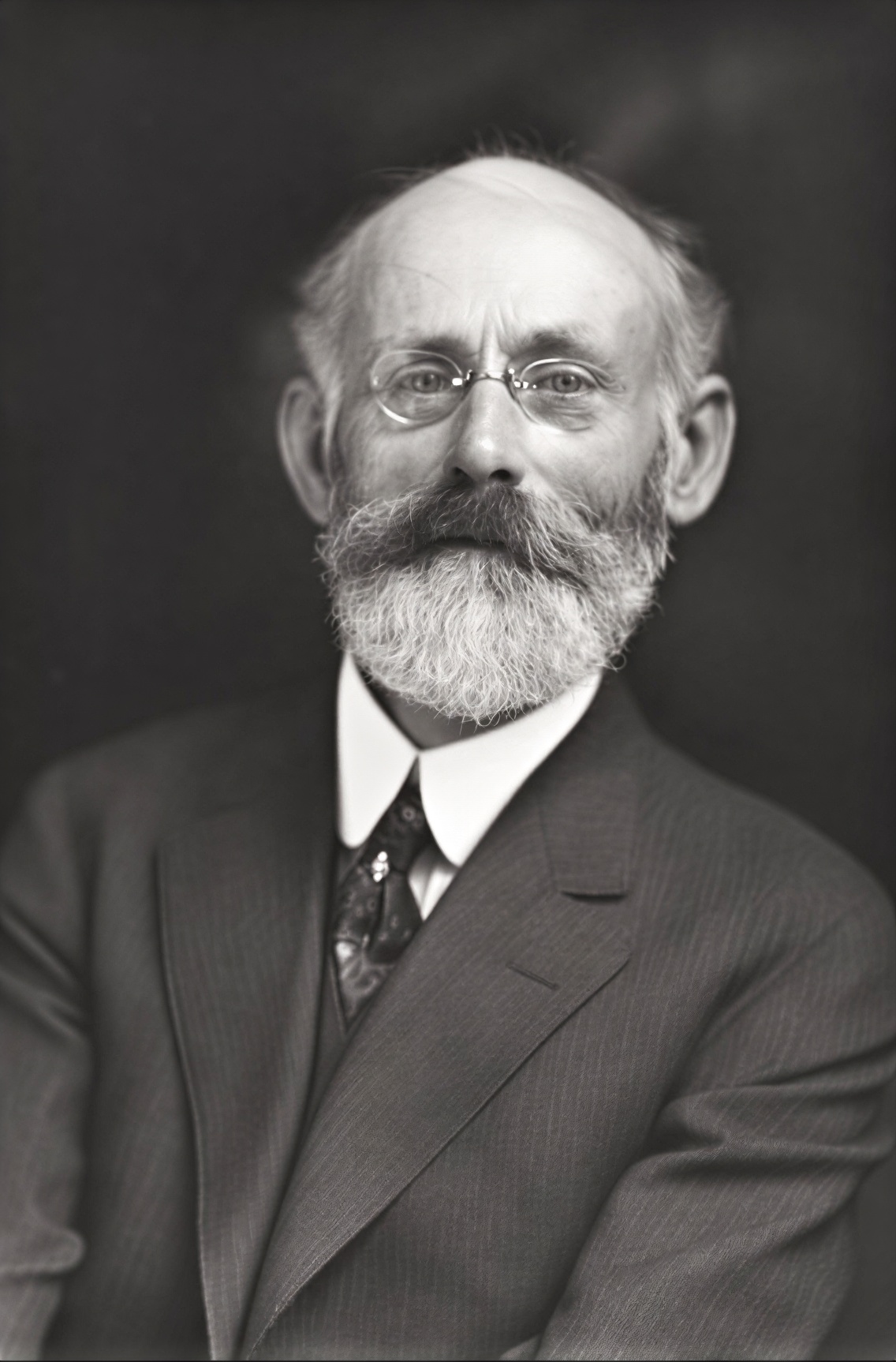
“About W. Q. J.: William Q. Judge, as you know, was a great being; but many, while they admired him as a man, never had his greatness revealed to them. The few who had this good fortune have many times felt like Arjuna in the eleventh chapter of The Bhagavad-Gita — the writer [i.e. Crosbie is referring to himself] among them — who, while he tries to express him, never forgets that he is but a pupil of a beloved, revered and great Teacher. Following in his steps as best he can, he endeavors to lead others along the path he knows, that they in turn may realize and profit by the inestimable privilege, and become teachers in their turn to others, all links in the great chain of “saviours of men.” So, the “oneness” exists as far as it may be expressed, all along the line, each for all, and all for each — non-separateness.
“W. Q. J. knew the path that all would have to tread, and balm, advice, warning and encouragement will be found in his writings at every turn and for every circumstance of life. The closer one gets into the current that flows from Him — “the greatest of the exiles” — the more readily will those things which harass and distress fall away and become as nothing. That you have done so — that is, got into the current — is the best Karma for you.” (Robert Crosbie, “The Friendly Philosopher” p. 20)
~ * ~
This article may have raised more questions about various things. Please make use of the site search function (the magnifying glass symbol at the top of the page) and visit the Articles page to see the complete list of over 400 articles covering all aspects of Theosophy and the Theosophical Movement. Some which relate closely to this one include:
The United Lodge of Theosophists, ULT: Embodying the Spirit of The Theosophical Movement, Theosophy Around The World (website and contact details for ULT Lodges and groups internationally), On Anonymity and Impersonality, Robert Crosbie’s Letter to Alice Leighton Cleather, Who Was William Quan Judge?, William Q. Judge and The Masters of Wisdom, Understanding The Importance of William Q. Judge, William Q. Judge – In The Words of Some Who Knew Him Best, Chelas and Chelaship, The Centennial Effort of The Masters of Wisdom, and The Occult Life of B. P. Wadia.
~ BlavatskyTheosophy.com ~

