
A CRUCIAL AND CONTROVERSIAL CHAPTER IN THE DEVELOPMENT OF THE MODERN THEOSOPHICAL MOVEMENT
On 15th September 1887, H. P. Blavatsky – then living in London, where she remained until her death in 1891 – wrote to her closest colleague and friend William Q. Judge in New York, who had been one of the main co-founders of the Theosophical Society in 1875 alongside HPB and Colonel Henry S. Olcott. HPB wrote:
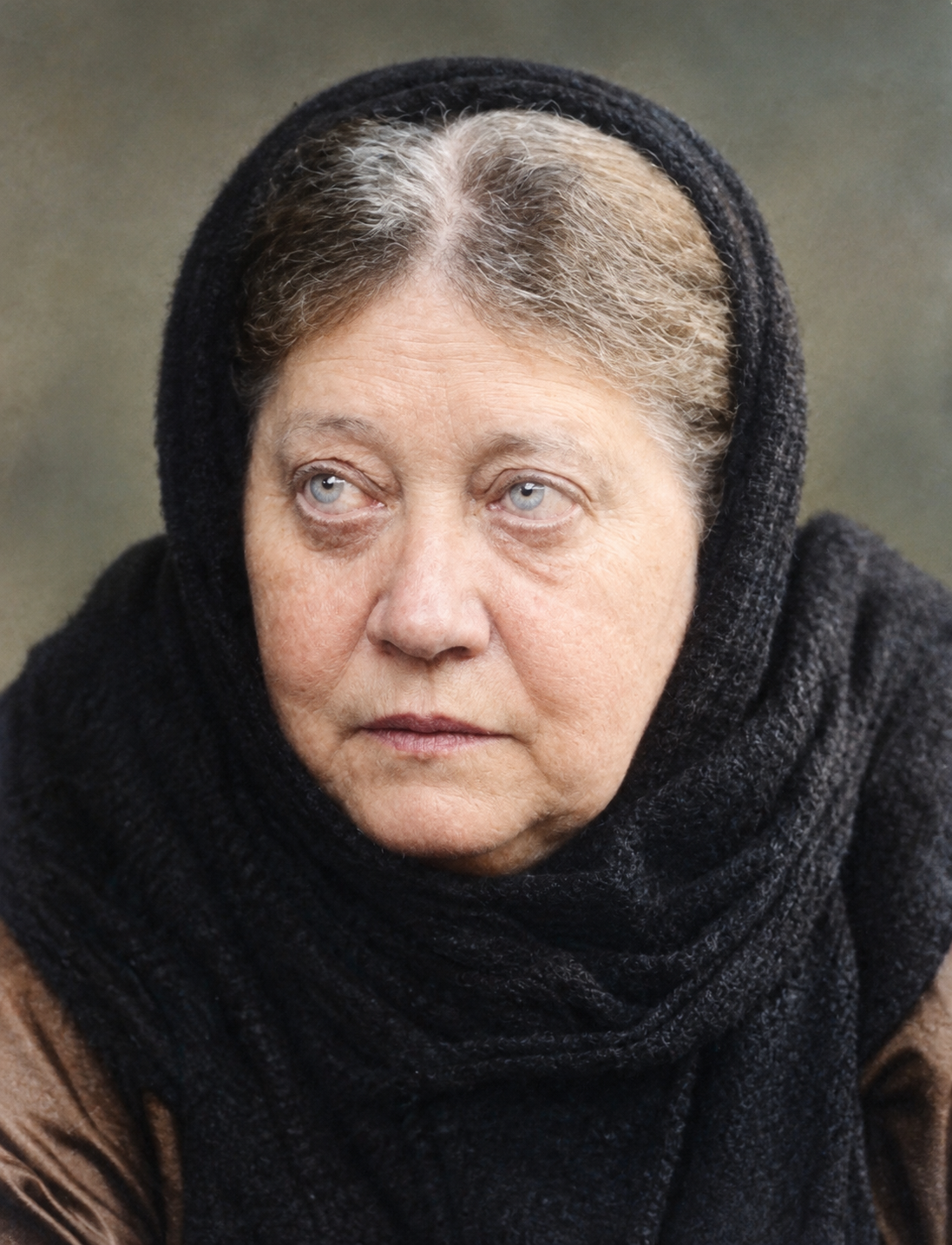
“Master [i.e. the Master M. or Mahatma Morya, the Guru of HPB and also of WQJ] has suggested . . . & therefore ordered (me alone) to telegraph to you . . . & ask you are you ready, or willing, or prepared to be elected for life [i.e. as President of the American Section of the Theosophical Society, a position Judge already held but not yet as “leader for life“]. This does not mean that you should be elected right away & to begin with. . . . Begin by being elected . . . for a year, and then . . . affairs & events may be turned off by unseen powers into such a groove that you will be unanimously elected for life – just as Olcott & I were – to go on with the work after our deaths [i.e. and thereby becoming official Leader of the whole of the Theosophical Society internationally; that this was HPB’s meaning and intention is confirmed in other letters, such as where she writes, “Judge is one of the Founders and a man who has ever been true to the Masters. . . . And Judge will be the President of the T.S. after our death or the T.S. will die with us,” and requests of Judge, “Take my place in America now & after I am gone – at Adyar.”].
“Do you understand what it means? It means that unless you consent, you will force me to a miserable life & a miserable death with the idea preying on my mind that there is an end of theosophy. That for several years I will not be able to help it on & stir its course, because I will have to act in a body which will have to be assimilated to the nirmanakaya; because even in Occultism there are such things as a failure, & a retardment, and a misfit. But you don’t understand me, I see. Judge, try to.”
In this last paragraph, HPB indicates that she intended to continue “helping on” and “stirring the course” of the Theosophical Society even after physical death, by “acting in a body” which would, however, first need “to be assimilated to the Nirmanakaya,” i.e. the mental-astral entity of the real, inner, ever-living “HPB,” a great Adept and Initiate in her, or his, own right. She envisioned this as taking “several years” to accomplish but acknowledged that even then, the attempt or process of occult assimilation may not succeed but could end up as a “failure” due to a “misfit” between her Nirmanakayic entity and the chosen vehicle. If WQJ were not to remain as Leader during those interim years, the whole Society could potentially collapse and the disembodied HPB would not be able to do much about it, until adequately and reliably assimilated with this as yet unnamed person.
What we have just referred to is not a “reincarnation” of HPB but rather an “overshadowing” by her, for want of a better expression. This would obviously only be efficacious if an adult were the selected vehicle. If she were to either reincarnate in, or overshadow, a new human personality from its birth, so many more years – decades, even – would be taken up during which she would be unable to directly assist the Movement to which she had already given her heart’s blood.
In the book “Letters That Have Helped Me,” we find that in the September 1891 issue of William Judge’s magazine “The Path,” what we have just referred to was discussed in the “Tea Table Talks” feature, a mere 4 months after H. P. Blavatsky’s passing. Written by Judge’s trusted and esoterically insightful co-worker Julia Keightley (who wrote mostly under the pen names of Jasper Niemand and Julius) and referring to Judge here simply as “X,” it states:
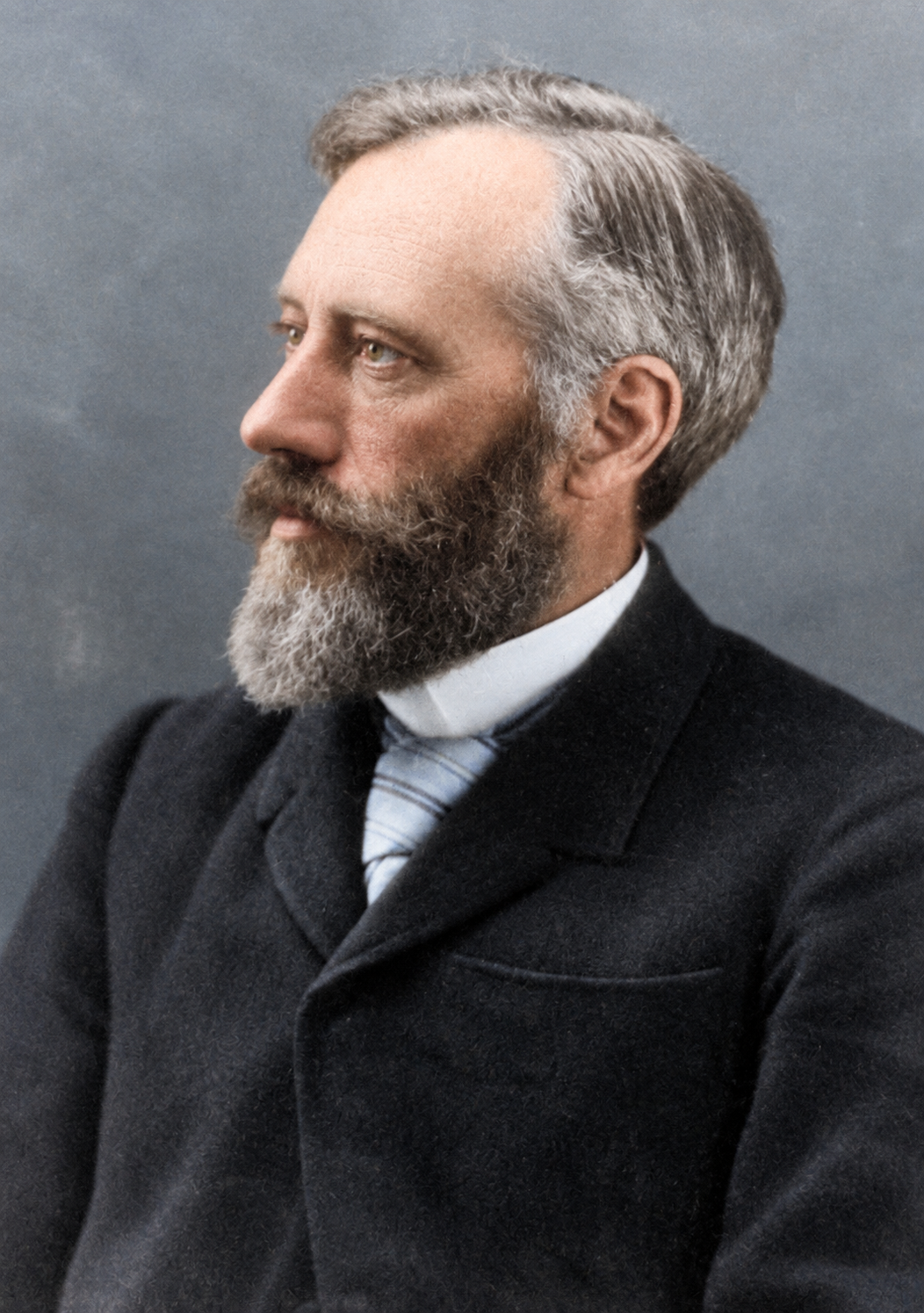
“We were talking about H. P. B., and he [i.e. WQJ, or “X”] said that, so far as he understood, she (the Adept) expended an immense amount of energy — vis viva, you know — in holding together a body whose every molecule tended to disruption. In effect, just think of the cohesive force thus employed! — of the immense friction in brain centers already worn by disease. X says they were so impaired that senility must soon have resulted, so that it seemed to her (?) better to let that body go to pieces as soon as a good opportunity should occur. . . . And we believe that H. P. B. will be for some time occupied in training a new instrument, and one not so young as to be useless at the present cyclic crisis. He does not pretend to speak with authority, but certain sayings of hers — and perhaps what I might call post-mortem facts — bear him out. Certainly she left everything in order. All things were planned out, and evidence was abundantly had to the effect that she knew her departure was near. Moreover, X said that looking upon her as an Adept, whose chief work was done outside of the objective body, it was reasonable to suppose that she is now enabled to use, upon higher (or inner) planes of being, the power previously expended in the maintenance of that body. . . . You see, he believes her attentions to be largely engaged with the new instrument. But, from his point of view, her co-adjutors and associates [i.e. the Masters and Their chelas or disciples] would naturally lend a helping hand in her absence, especially if the T.S., as a body, called down their help.”” (p. 155-156)
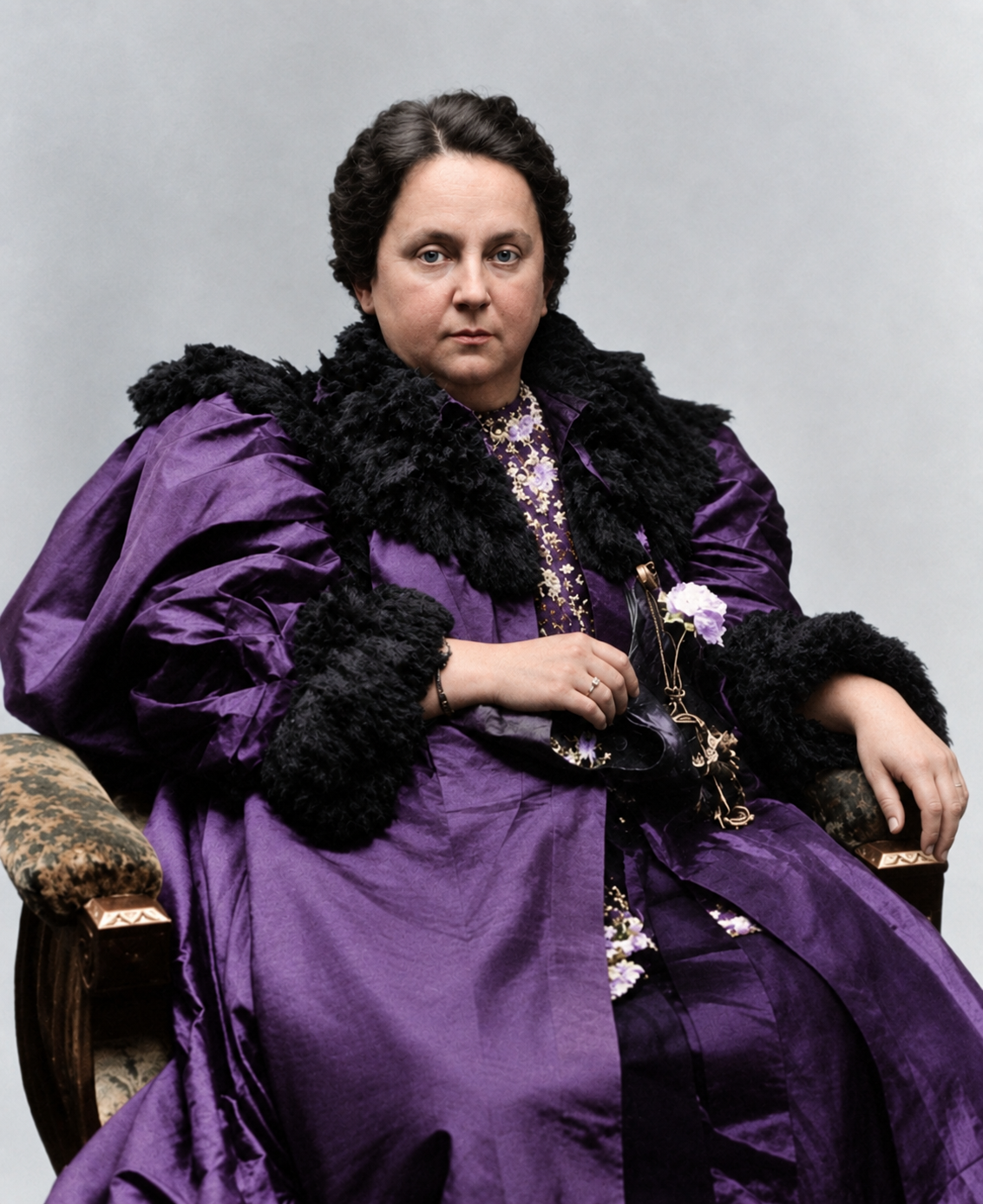
In 1893, Judge met Katherine Tingley. Most sources, based on deductions drawn from Tingley’s own assertions, indicate late 1894 as when they first met but Emil Neresheimer stated that Judge first introduced him to Tingley and her husband in the autumn of 1893. This seems to us the more likely date, especially as Neresheimer provides further details relating to 1893, which are unlikely to have been completely misremembered. Tingley was not then a member of the Theosophical Society and did not request to join it until October 1894.
Katherine Tingley was then moderately well known in New York Spiritualist circles as a trance medium. A powerful and rather domineering personality, she already had a rather troubling personal reputation and ethically dubious background. It thus may seem highly surprising and puzzling that William Judge – who always warned against or at least clearly criticised Spiritualism, mediumship, psychism, etc. and constantly emphasised the necessity for good ethics and moral purity in Occultism – could have such a positive view of Tingley, whereby she quite quickly became his esoteric confidante and someone who he was seemingly regularly putting to the test and attempting to train, with regard to receiving communications from HPB and the Masters, and having HPB speak through her while she (Tingley) was in a state of trance and unconscious of what was taking place. On such occasions, Judge transcribed the messages that came through.
While one’s personal character and conduct in life certainly do matter, it is surely the case that the Masters and Initiates see the very heart of things and the very souls of people. A troubling and troubled personality may at times unwittingly conceal a soul or Ego or spiritual Individuality which has been of great use to the Masters’ Lodge and reached special heights of inner attainment in former lives, even though they may now lie in the very distant past. Still, one who has previously devoted their whole being to the Masters and Their unceasing labours of Compassion for the welfare of humanity is known to Them. And anyone who is sincerely willing to serve Them has to be given – or re-given – the chance, even if the Masters see there is a strong likelihood that they may fail.
This may perhaps also explain why C. W. Leadbeater – who possessed a much worse character and nature than Katherine Tingley – was also given a chance by the Masters, when the Master K.H. or Mahatma Koot Hoomi responded in the mid-1880s to Leadbeater’s apparently earnest request to become his chela with two brief letters, delivered through the agency of HPB herself, in which the Master confirmed that Leadbeater was now beginning probationary chelaship and would have to prepare for the tests and trials inescapably faced by anyone who embarks on that most arduous yet most important of Paths. He received no further Mahatma Letters after that and history shows how quickly his true character showed itself. But our point is that we know now, thanks to the research by Gregory Tillett, that even before joining the Theosophical Society and when still a village priest in the Church of England, Leadbeater had behaved inappropriately with young boys. For the Masters to still give him such a chance, he must have been much better in some previous incarnations than in this one.
As for Tingley’s being a medium by both disposition and profession, HPB in her first book refers to two forms of mediumship, physical and spiritual:
“Physical mediumship depends on a peculiar organization of the physical system; spiritual mediumship, which is accompanied by a display of subjective, intellectual phenomena, depends upon a like peculiar organization of the spiritual nature of the medium. . . . the sentiments [of mediumistically received messages] may be of the very noblest character. The latter depend entirely on the moral state of the medium. It does not require that he should be educated, to write philosophical treatises worthy of Aristotle, nor a poet, to write verses that would reflect honor upon a Byron or a Lamartine; but it does require that the soul of the medium shall be pure enough to serve as a channel for spirits who are capable of giving utterance to such lofty sentiments.” (“Isis Unveiled” Vol. 1, p. 367)
While it is true that Theosophy is in general opposed to mediumship (which nowadays includes its more modern name of “channelling”) it recognises that there can be such thing as pure mediumship or spiritual mediumship – which HPB calls “the only harmless kind, and is often an elevating gift” – but it also recognises that this is very rarely encountered; the vast majority of all mediumship and channelling is impure because rather than being truly spiritual it is instead psychic, i.e. of an astral nature and character, and the mediums or channellers are usually entirely oblivious as to the distinction between psychic and spiritual.
It should be made clear that no-one living today knows very much at all of Judge’s connection with Tingley. He kept it almost entirely secret, to the extent that only perhaps ten of his most trusted colleagues knew of her and they were asked not to mention her to anyone else. A few of these – such as Julia Keightley, Claude Falls Wright, and Alice Leighton Cleather – were sent by Judge to have private meetings with Tingley, in which they would receive apparent messages from HPB and the Masters through her, and were then asked to report back to Judge to share their impressions and experience.
We do know that he never wrote anywhere that Tingley was the chosen “instrument” for the HPB Nirmanakaya to assimilate with. We also know that he never wrote that Tingley was to be his “Occult Successor” following his death. But there is strong evidence to back up the first notion. This is seen not only in the apparent HPB messages through the entranced Tingley, which Judge transcribed, – and his sending of excerpts of these to his closest inner circle in the Esoteric Section or School, in which he attributed them to the departed HPB, albeit without naming Tingley – but also in the communications from the Master M. which WQJ received inwardly and wrote down in what would later become known as his “Occult Diary.”
Later, Alice Leighton Cleather and a few others would claim that WQJ had lost touch with the Masters after HPB passed away and that his connection with Tingley was simply a desperate attempt to receive messages from Them and HPB through any means possible, so that he could feel that They hadn’t abandoned him after all. The “Occult Diary,” and the attestations from those who were far closer to him than Cleather was and who can thus be considered to know far better what they were talking about, show that this is an entirely erroneous and preposterous claim. Judge had no need of Tingley for himself but it would seem that his Teachers had need of Tingley – at least at that time – for the sake of the future of the Movement.
The “Occult Diary” spans a period of two and a half months, from the start of October to middle of December 1894. It must be only a tiny fragment of all that William Judge recorded of his occult life but it was virtually the only fragment to be found after his death in March 1896. We quote here a few entries, in order to give some idea of its contents and style. We have replaced symbols with the names for which they stand, to make it clearer:
“Oct. 1 – [Master M.] directs me to issue circular and order (No. 1) [i.e. the document titled “BY MASTER’S DIRECTION”] taking over entire control of ES [i.e. the Esoteric Section or Esoteric School within the Theosophical Society, which had been jointly led by WQJ and Annie Besant after HPB’s death in 1891] removing AB [i.e. Annie Besant] from headship. Began writing the same.”
“Nov. 2 – [Master M. said] In 15 years [i.e. in 1909] there will be great changes here & the TS [i.e. Theosophical Society] doctrines will subtly affect the people. After another US pres[iden]t has been assassinated [Note: This proved an accurate prophecy, in that President William McKinley was assassinated in 1901].”
“AB [i.e. Annie Besant] shown by [Master M.] before me nude. Stomach & right side black, eyes blindfold, heart round and white, 2 lights over head black and white fighting. Suspended in mid air. The feeling of one day one way & another another due to this black and white fighting [i.e. meaning here the forces of light and of darkness or the White Lodge and Black Lodge] it causes depression & slow circulation. You recognize her work, are pained for her state & the damage to TS [i.e. Theosophical Society]. If love in TS ask for her. She should meditate not by the rules given her by dark man [i.e. G. N. Chakravarti, who Besant had unwisely taken as her occult guide in 1893, whereupon she began to turn against both HPB and WQJ, and launched alongside Col. Olcott the protracted persecution that became known as “the Judge Case,” accusing him of creating and sending fraudulent Mahatma Letters since HPB’s passing, in order to further his own purposes or ambitions; “dark man” refers to his nature and influence rather than to skin colour, for the Master M. himself is also Indian and dark skinned]. Before 3 years [i.e. by the end of 1897] you & she will touch hands again as when H.P.B. was alive. Then the real work of her life will begin. That is if she lets the Higher rule. But if she follows ambition, the rules given by the dark man & her fancied sense of injustice rule, she will not have this opportunity.”
“Nov. 26 – [Master M. said] Leave for London early in May. If you go later all will be lost and confused. Do not let them know you are going so early. Make any sacrifice to go thus early. Work among the people there & get your true position before convention meets. Only tell your center of your coming. No one else.”
“Look out for anonymous and bogus Lodge letters [i.e. Mahatma Letters, letters claiming to be sent by the Lodge of Masters] to FTS [i.e. Fellows of the Theosophical Society]. Both will be sent. [Note: This proved to be an accurate prophecy a week later, as detailed in a subsequent entry, and was also repeated by the Master close to the time.]“
“[Katherine Tingley] best work through you. Power increased. In Feb. [1895] [Katherine Tingley] will pull you through a shadow of ill health. [Note: This proved to be an accurate prophecy, as due to worsening health in early 1895, Tingley took WQJ to Mineral Wells, Texas, for rest and recuperation.] . . . [Katherine Tingley] is closer to Sun both up
Blessed on top[,] enemies in the mire of their karma. 1895 Spring signs of domestic breakings for Blessed will walk off from it all not later than 1896. [Note: This relates to Katherine Tingley’s domestic situation and marriage; other sources confirm that “Blessed” was a name used for Tingley. It is also implied by her being mentioned by her familiar symbol in the immediately following sentence.] Then begins newer life & freedom [Katherine Tingley] will not cause this. It is a natural result of conditions already on.”
It may be asked how one can know that the aforementioned symbol – a left-angled diagonal line with three smaller horizontal lines through it – is a reference to Katherine Tingley. One big indication is that Judge sometimes addressed Tingley by this sign in his letters to her, also at times addressing her as “Purple.” Another is the attestation, after his death, by members of Judge’s inner circle, that they had known him to use this symbol when referring to Tingley in personal correspondence with them. The historical context and background also supports it. Curiously, almost exactly the same symbol, but with a straighter and shorter diagonal line, was used by Judge as his own signature at the end of his little known but occultly significant message written “by astral hand” when on the verge of death (from which he recovered) in 1894. This can be seen here.
William Judge’s only known records of messages apparently from the disembodied “HPB” – and which are generally understood to have been spoken through Katherine Tingley – date from shortly after the entries in the “Occult Diary,” namely from January 1895. Excerpts from that of 3rd January 1895 include:
“Yours is not a bootless [Note: Judge adds “fruitless” in brackets, when sending extracts from this on 4th January to Archibald Keightley to pass on confidentially to others of Judge’s closest supporters in England; WQJ refers to it as “what HPB said to me Jany 3, prematurely ended by a visitor – as usual & as results from European continual nagging at me. . . . You can let all worthy & devoted loyalists read this – It may be read in a proper group. Copies not to be made. This is to be kept with Council papers.”] errand. You have nobly sustained our cause in the crisis. Be encouraged. Well did Master know the staunch fearless attributes of your soul when he directed me to make you the leader of our craft [Note: Notice the usage of Masonic terminology here.] in America. . . . Mistakes have been made but you have not gone far from the lines laid down by Master. My desire is for you to be careful about sending out Instructions to the E.S. [i.e. Esoteric School or Section], for treacherous and unworthy persons are within the gates, and all new ideas will be appropriated by the other side after the split [i.e. the organisational split or separation between the devotedly pro-HPB Judge supporters and the rest of the Theosophical Society, led by the increasingly anti-HPB Besant, Olcott, and others, with Chakravarti as their inspiring genius, was already envisaged and accepted several months before it actually took place]. Our dear chela, you have at last found your fellow chela, who was one of ours years ago, consecrated to the work then, and now by the Master’s will brought face to face with you. . . . [Symbol representing Katherine Tingley] is Raavais, linked with you in our work. As your light shines into [Tingley’s] soul, fears will disappear as the dew before the sun. . . . [Tingley] should have been in place with us at the beginning [i.e. the founding of the Theosophical Society in 1875, in that same city of New York where WQJ and Tingley lived], but for your folly and his [i.e. Tingley is referred to by masculine pronouns in these messages] lack of trust in the Master. . . . I am, next to the American work, interested in Spain. Ireland can take care of itself. . . . Send [Tingley] out, but not yet; you can make what you will of [Tingley], for the truthfulness of spirit and devotion to us that are there will make it a good instrument. But keep it well in the background. In outer work [Tingley] is our mystery. . . . I will not permit you to resign nor will I permit you to submit to further investigation [i.e. in the so-called “Judge Case” which we referred to earlier]. Form your plans for American work, keep all your lines perfect with sustaining points and leave the rest to us. . . . I can do better in time here. I will not touch upon minor points; they will take care of themselves. Master is not after minor points. Let our eyes turn to the American future of Theosophy.”
Two days later, on 5th January, Judge writes a letter to Tingley, saying in part:
“Dear Purple, Now about this Spanish idea [i.e. a reference to what the departed HPB said about Spain in the communication from which the above is excerpted; we have not included the details about Spain]. It’s a good one – but. It will raise some jealousy. She [i.e. HPB] was right in saying, as she did today, that she did not mean to exclude the rest of Europe and that those now in the work in Spain had not used all efforts. . . . Now the prominent man there has not accepted the order [i.e. the Esoteric Section circular of November 1894, headed “BY MASTER’S DIRECTION,” in which Judge detailed the hold of Chakravarti and orthodox Hindu Brahmins over Besant and deposed her from her shared headship in the Section/School]. Would it be well to tell him what she has said? It looks to me like a good idea. He does believe in HPB . . . If you think well of this plan I will write to him from Chicago. . . . I shall have you in mind every day. Why don’t you put down briefly things you get [i.e. in terms of occult communications] & not have them all lost.”
We have put in bold some of the wording which quite clearly suggests that by this point, Judge already had a lot of confidence in Tingley. While he may still have been testing and training her in various ways, the words in bold suggest that it was not a simple teacher-pupil relationship but that Judge was actively consulting her on some of the most important inner workings of the Esoteric Section and affirming to her his trust or reliance on her opinion.
Just over a year later, in 1896, following Judge’s death, Julia Keightley wrote to members of the Esoteric Section that “It is well known to members of the Inner Council in America and Europe that the present Outer Head [i.e. of the Esoteric Section, namely Katherine Tingley, who was installed in that position after WQJ’s passing] has for two years past assisted Mr. Judge in the inner work of the School as his associate and equal. Some of these Councillors were doing important work under her directions, and by the order of Mr. Judge, for some time before he passed away. . . . For myself, I may say that as early as June, 1894, Mr. Judge told me of the standing of the present Outer Head in the school, and spoke of her work at that time and for the future. I am one among several to whom he so spoke himself.”
We are personally not convinced that her assistance of Judge continued unbroken during all that time from 1894-1896, but we will touch on that later. For now, here are excerpts from a message to WQJ from HPB on 9th (though perhaps more likely the 5th, if one compares the entire message with Judge’s letter of that date to Tingley) January 1895:
“Yes, a pledge had better be made. (This with [Tingley]. – W.Q.J.) There will be more to it than you now understand. No one I have met in the last five centuries has been qualified. As I said, [Tingley] is our mystery. [Tingley] is a mystery to [Tingley]. Judge, try a little more of it. Let [Tingley] say what ______ wants to. . . . I found after the last breath had left that old carcass I had used, I went to where are those crystallized forces that are only understood by _____. Then I took a deep rest – you know why – to prepare me for the work that has come. I then gravitated to Spain, and I found in that Lodge a Companion of mine . . . Through him I found that Spain as a people has that quality of devotion that is essential for the promulgation of our truth. . . . Then I knew that although there was not in the outer any evidence of our connection there, the seed of my thoughts and yours had entered Spain and some fallen into good ground. So here I said I will centre for a while and all that time the [Theosophical] body which I was a part in America missed me. Use all means possible to introduce our literature there. When we meet again I will give you the Instructions I spoke of that will carry your E.S. through a course that will be useful.”
The above relates in part to the “New Era of Western Occultism” repeatedly spoken of by William Judge from 1892 onwards and which is explored and explained in our article William Q. Judge and The New Western Occultism.
The last known record of this type of communication is apparently dated 3rd April 1895. It says: “B. [i.e. Blavatsky, or rather that Being who had previously been known as H. P. Blavatsky] How I yearn for the day when I can come myself and work. It is being put off by all this strife and bitterness [i.e. as directed against WQJ and his supporters and work, by Besant, Olcott, etc. and their supporters]. I will come, as I said, through [Katherine Tingley]. Everyday they keep this up is another day of delay for that event.”
It was at the very end of that month, at the annual Convention of the American Section of the Theosophical Society, held in Boston from 28th-29th April 1895, that William Q. Judge and his supporters (who constituted very nearly all of the thousands of American Theosophists) declared complete independence and autonomy from the Theosophical Society headquartered at Adyar, India and led by Olcott and Besant. The newly independent organisation named itself “The Theosophical Society in America” and Judge was elected its President for life, just as HPB had said almost a decade previously that he should be. Judge’s supporters (who were usually the most loyal students and defenders of HPB and her teachings) in other parts of the world followed suit, forming international Sections of the Judge-led “Theosophical Society in America.” This was the first split or schism within the modern Theosophical Movement but it appeared to be a necessary one.
Alice Cleather would later write (in the 1920s) that Judge introduced Katherine Tingley to her “at the Boston Convention of 1895, a year before his death, as a very special and mysterious person.” That may well be what actually happened. However, it should be read and considered alongside the following, from Ernest Hargrove, a USA-based English Theosophist who was far closer to Judge than Cleather had been and who knew him better as a person:
“For the benefit of those who think they know all about Mrs. Tingley, . . . and Judge as being “under her thumb”; . . . it is worth noting that she [i.e. Tingley] attended the Boston Convention; made a short speech; that Judge glared at her with deep displeasure while she spoke and after she resumed her seat; and that at the end of the session he called her to him and rebuked her so severely that she wept.” (“The Theosophical Quarterly” July 1932)
The evidence we have shared is indeed indicative that Judge considered her “a very special and mysterious person.” But in light of Hargrove’s account, it seems to us very unlikely that Judge viewed her as his “equal” in esoteric and Theosophical matters, even if some of his privately recorded statements and letters may occasionally tend towards giving that impression.
To this, we should add the fact that according to Emil Neresheimer and other Judge associates of that era, Judge had little to no contact or involvement with Tingley following that Convention in April 1895. There is no record or mention anywhere of him meeting with her, writing to her, speaking about her, or praising her to others, from after that date, i.e. for the remainder of his life, which came to an end on 21st March 1896. Some remarked on her complete absence and lack of visits or messages of support during Judge’s final weeks, in which it was very apparent that he was dying and had almost zero chance of recovery.
We may never know what actually happened but it seems apparent that something had happened and that WQJ had largely, if not entirely, severed his connection with Tingley. This suggests that she had done something or adopted some course of thought and action which amounted to an “occult failure,” disqualifying herself from the important role towards which she had been working. We do not state this for definite, since we do not know, but the signs seem to point in that direction, as does the sad history of her actions and conduct after being appointed Outer Head of the Esoteric School and Leader of the Theosophical Society in America following Judge’s demise.
We do know that by October 1895, Judge was already spending time and energy testing and examining the reliability of another mediumistic woman, a Mrs McKinstry, about whom nothing at all is known today. There would have been little to no reason or motive to do that, had his connection with Katherine Tingley continued unabated, which is maybe further evidence that it had not. He fairly soon arrived at a negative assessment of McKinstry’s capabilities, however, as confirmed in a letter to Ernest Hargrove on 26th October 1895.
Throughout the latter half of 1895, Judge had been away from New York, staying in a succession of warmer parts of the USA in a bid to improve his failing health. Accepting that this wasn’t working, he and his wife Ella moved back to New York at the start of February 1896.
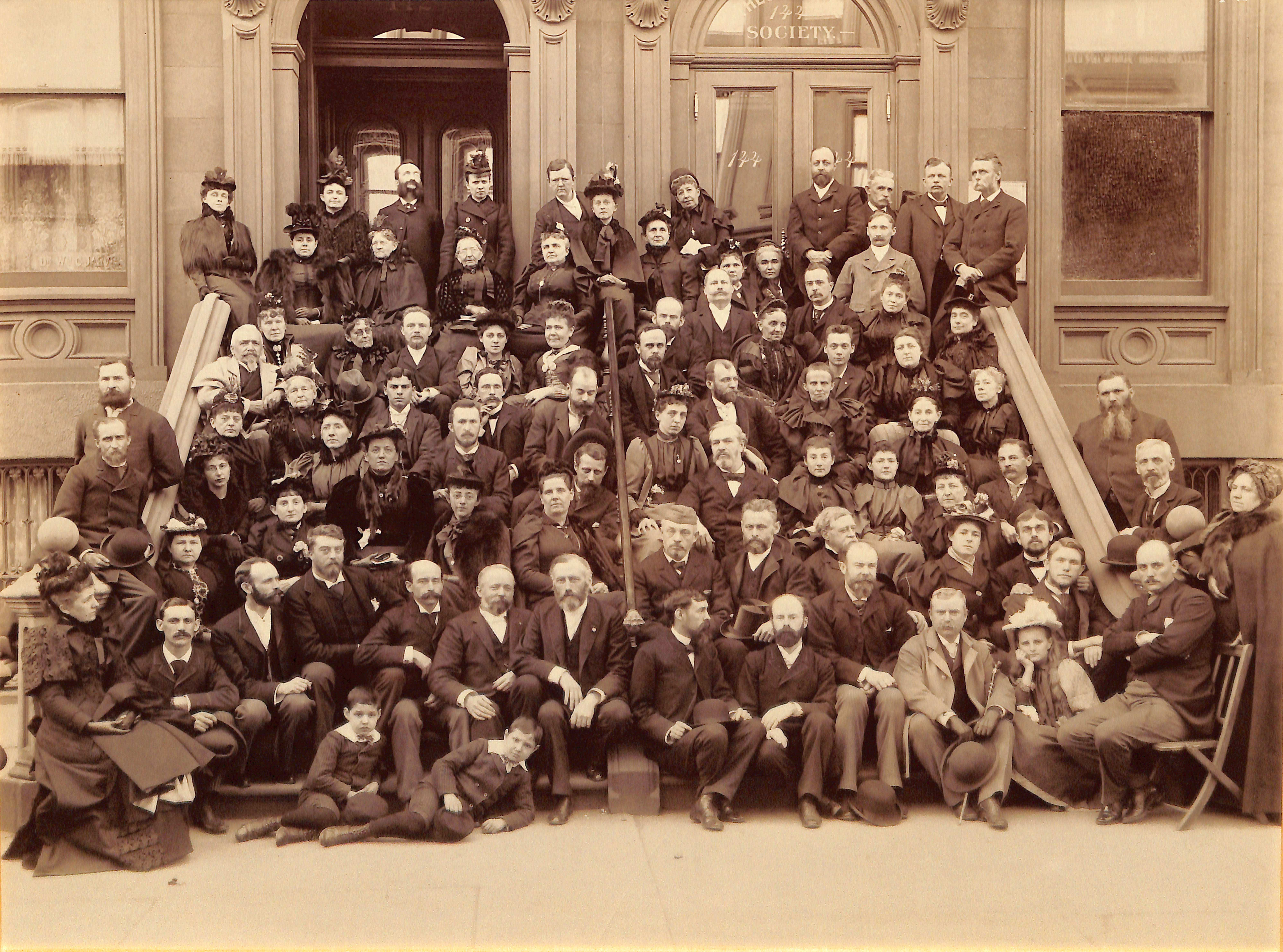
His closest Theosophical friends in New York – if not the whole of the country – were the Griscoms: Clement Acton Griscom, Jr. and his wife Genevieve Ludlow Griscom. It was Clement Griscom who wrote the following tribute for “The Path” (renamed “Theosophy”) magazine after Judge’s passing. An abbreviated version was included in Theosophy Company’s third volume of “Letters That Have Helped Me.” Writing under one of his pseudonyms (G. Hijo), Griscom relates:
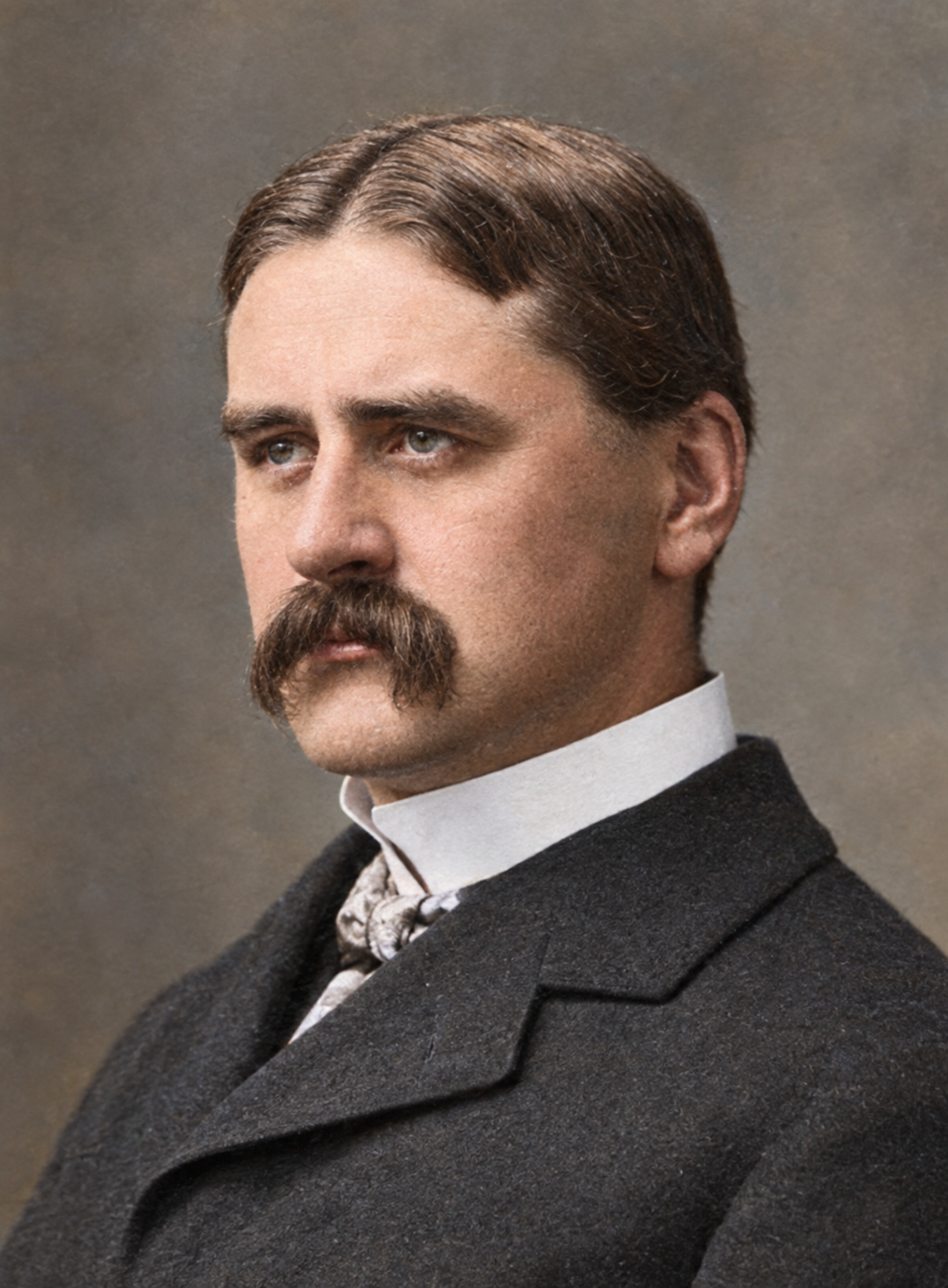
“In the summer of 1894 we were privileged to have him stay at our house for several weeks, and since then he spent at least one evening a week with us until his illness forced him to leave New York. . . . Day after day he would come back from the office utterly exhausted in mind and body, and night after night he would lie awake fighting the arrows of suspicion and doubt that would come at him from all over the world. He said they were like shafts of fire piercing him; and in the morning he would come downstairs wan and pale and unrested, and one step nearer the limit of his strength; but still with the same gentle and forgiving spirit. Truly they knew not what they did.
“Mr. Judge’s nearest friends care as little for phenomena and phenomenal happenings as he did, but for purposes of record an account of a few incidents may not be amiss. He would cautiously, but still quite frequently give evidence to the observant that he was, when he desired, quite aware of your thoughts, and of what happened at places where he was not.
“Perhaps the neatest little thing of the kind was once when my wife had been discussing with a friend the date of the invention of writing. Two or three hours later Mr. Judge came in, greeted them, took up a piece of paper and wrote on it: “Was writing known before Panini?” and handed it to my wife before he had said a word or been spoken to beyond greetings. This well known article in Five Years of Theosophy was found to cover just the obscure points of the discussion.
“While staying with us in the country in 1894 he would take me out for a 15 or 20 minutes’ walk just before bedtime and when in a talkative mood would describe to me the things he then saw interiorly; elementals of all kinds, pictures in the astral light, some trivial, some most interesting and in the nature of prophetic visions. I recollect a series of visions he described to me which represented the condition and future of a certain person prominent among those attacking him, and although this happened in August, 1894, long before the Convention in Boston, everything described has come true. He told me that the Master [i.e. the Master M., who, as already explained, was the Guru of Judge, as also of H. P. Blavatsky] quite frequently informed him of important matters by means of allegorical pictures, as one picture would contain as much information as pages of a letter or message, and he described how he could tell these pictures from those of an ordinary astral character.
“It seems so strange to me, who have known Mr. Judge for years, to think that any Theosophist could honestly doubt that he was in constant communication with the Masters, or that he himself was not an advanced occultist, for his whole life proved both these things. Perhaps the most striking evidence of his greatness was the wisdom with which he treated different people and the infinite knowledge of character shown by him in his guidance of his pupils. I do not believe he was the same to any two people. Looking back now over many years of intercourse, tracing my own growth and change, and the part Mr. Judge played in it, I am convinced that not only did he thoroughly understand me, both inside and out, but that during all those years he was working with a definite purpose in view, trying to guide me along a certain path in a definite direction, to attain a definite result. I believe it was the same with all his pupils. We play different parts in the world and the movement, and he knew it and allowed for it, and directed accordingly. His most lovable trait was his exquisite sympathy and gentleness. It has been said of him that no one ever touched a sore spot with such infinite tenderness, and I know many that would rather have been scolded and corrected by Mr. Judge than praised by anyone else.
“It was the good fortune of a few of us to know something of the real Ego who used the body known as Wm. Q. Judge. He once spent some hours describing to my wife and me the experience the Ego had in assuming control of the instrument it was to use for so many years. [Note: For more on this, see Who Was William Quan Judge?] The process was not a quick nor an easy one and, indeed, was never absolutely perfected, for to Mr. Judge’s dying day, the physical tendencies and heredity of the body he used would crop up and interfere with the full expression of the inner man’s thoughts and feelings. An occasional abruptness and coldness of manner was attributable to this lack of co-ordination. Of course Mr. Judge was perfectly aware of this and it would trouble him for fear his friends would be deceived as to his real feelings. He was always in absolute control of his thoughts and actions, but his body would sometimes slightly modify their expression. . . .
“Mr. Judge told me in December, 1894, that the Judge body was due by its Karma to die in the next year and that it would have to be tided over this period by extraordinary means. He then expected this process to be entirely successful, and that he would be able to use that body for many years, but he did not count upon the assaults from without, nor the strain and exhaustion due to the “Row.” This, and the body’s heredity, proved too much for even his will and power. Two months before his death he knew he was to die, but even then the indomitable will was hard to conquer and the poor exhausted, pain-racked body was dragged through a miserable two months in one final and supreme effort to stay with his friends. And when he did decide to go, those who loved him most were the most willing for the parting. I thank the Gods that I was privileged to know him. It was a benediction to call him friend.”
Writing under her initials of G. L. G., Genevieve Griscom wrote at the same time:
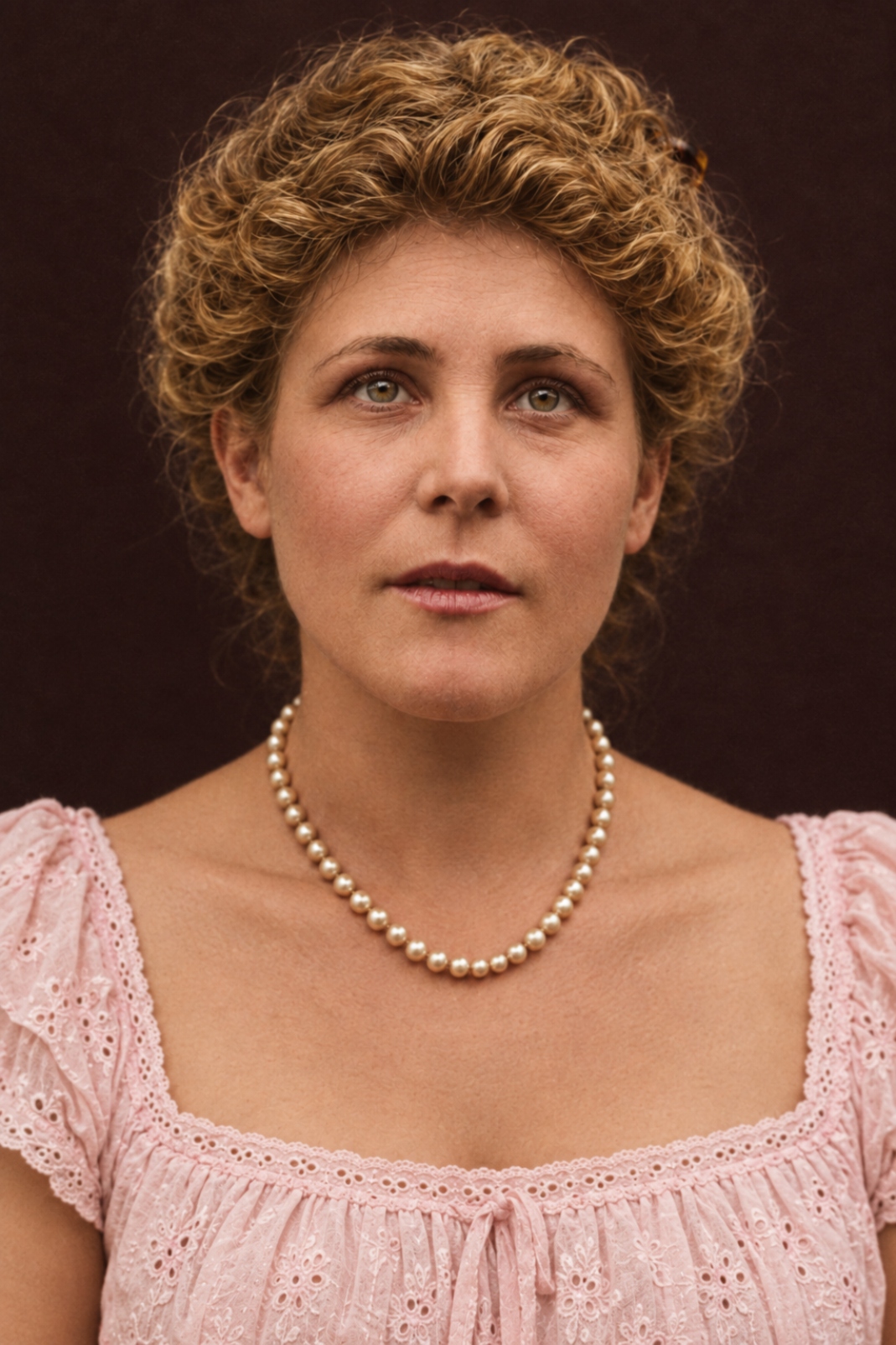
“What he was to one of his pupils, I believe he was to all – so wide-reaching was his sympathy, so deep his understanding of each heart – and I but voice the feeling of hundreds all over the world when I say that we mourn the tenderest of friends, the wisest of counsellors, the bravest and noblest of leaders. What a man was this, to have been such to people of so widely varying nationalities, opinions and beliefs – to have drawn them all to him by the power of his love – and, in so doing, to have brought them closer to each other. There was no difficulty he would not take infinite pains to unravel, no sore spot in the heart he did not sense and strive to heal.”
On 16th January 1896, shortly before arriving back in New York, Judge instructed by letter the young Ernest Hargrove – who all the available facts show to have been his protégé and his hope for the future exoteric leadership of the Society, and who was due to move in with Mr. and Mrs. Judge upon their return to New York, at Judge’s request – to remove various sacred and secret items from a private room used only by Judge, at the very top of the then-headquarters of the Theosophical Society in New York:
“There is a small room on the top story of 144 [Madison Avenue] which has a Yale lock. In it are the following: . . . [details omitted by Hargrove when publishing this letter in “Theosophical Quarterly” in the early 1930s] Now then: I want to give up the room to the Trustees. Take large sheets of wrapping paper and twine (Look out for ____’s curiosity). Do up the old robe and ask Griscoms (Mrs.) to take charge of it for me. Nobody knows what’s in the room, no matter what they may suspect; so don’t tell them.”
Shortly afterwards, on 29th, he would write regarding one of the mysterious items retrieved from that room:
“The yellow stone in the little filagree box is not to be handled. Tell the Gs [Griscoms] if they have it.”
For more on the “yellow stone,” see the article About The Mahatma Letters.
Hargrove reports that during the weeks after Judge’s return to New York, “No matter how ill, he always got up and dressed as usual, refusing to stay in bed; but, with rare exceptions, he could not receive visitors. He sent for Mrs. Griscom, wanting to see her, and he saw Mr. Griscom, so loyally devoted to him, several times.”
From these brief extracts, we can gain some inkling of the importance of and the great occult trust accorded by WQJ to the Griscoms, especially Genevieve Ludlow Griscom, as she was the one who he specified should “take charge of . . . the old robe,” whatever that may be, and he also arranged to meet and speak with her privately in the weeks leading up to his death.
In the January 1934 issue of “The Theosophical Quarterly,” Ernest Hargrove writes:
“On the morning of March 19th [1896], I had gone to the T.S. Headquarters at 144 Madison Avenue as usual, although much worried by Judge’s appearance (as already stated, I occupied one of the rooms in his apartment). In the early afternoon I received a telegram: “Go to Twenty-Ninth Street railroad office; get full particulars all Florida resorts, trains, tickets, sleepers; then come home. – W. Q. Judge.” When I returned, he whispered that if he could “only get to some place where he could sit in the midst of sunshine and flowers”, he might yet perhaps recover. Not long afterwards, while I was sitting by the sofa on which he half sat and half reclined, watching him as he dozed, the “Rajah” [i.e. the real, inner “WQJ,” said to be an Indian Initiate who had assumed occupancy of the Irish body in the latter’s childhood] suddenly came to the fore, and with his unmistakable force said, among other things: “There should be calmness. Hold fast. Go slow.”
“On Friday, the 20th, . . . In the afternoon he got some broken sleep. It was after this that he told me he was “away most of the time” – had I seen him “come back just then?” That night, Miss Emily Judge was obliged to go home, and as Mrs. Judge badly needed rest, it became my privilege to sit with him from about ten until about three o’clock on Saturday morning. During that time he dozed, though rousing himself every half hour regularly for his medicine. He was fighting to the last ditch: it was his duty. Unselfish to the end, he told me every time I gave him his medicine, to go to bed at once; what was I up so late for? – with that rare smile of his. Numerous excuses were invented, at which he again smiled his old smile. At about three, Mrs. Judge took my place, but at six she called me, saying that Judge wished to see me at once. When I went to him he whispered asking me to go immediately to fetch a doctor, a specialist, who had been called in previously to consult with his regular physician. I realized now, if I had not done so previously, that we were at the last ditch; so I tore through the streets to the home of this famous specialist, and, when no one answered the doorbell, rang it furiously for half an hour without ceasing, until at last he appeared, – only to refuse to see Judge on the ground that to do so in the absence of his regular physician would be contrary to professional etiquette. I pleaded, breathlessly; but the fact that a man’s life was at stake did not affect him.
“Hurrying back to the apartment, I found Judge in the same condition, sitting bolt upright on the sofa . . . now he refused to see any doctor. At about 8:30 I left his room to ask the nurse if she thought anything could be done, but at about ten minutes to nine Mrs. Judge rushed in, calling us to come at once. I found him still sitting upright, but with the clear mark of approaching death on his face. In three minutes he quietly breathed his last.
“Thus seemed to die “the greatest of the Exiles” [i.e. a name by which HPB apparently once spoke of him to Annie Besant], – a warrior of the Lodge. As I wrote at the time: “He passed from comparative inactivity into the full use of his powers; from constant physical pain into a state where that pain was only a memory. For him, death had no terrors, brought with it no separation. So we who loved him have no cause to mourn, but instead should rejoice that he is set free at last.”
“The truth is that Judge, “dead,” went out of his way to make it evident to some of us that he was very much alive. We could not have doubted it, but his generosity of love demanded expression, and found it.
“The debt we owe him is beyond calculation. . . . H.P.B. had hewn a track through primeval forest, and, to do so, had been obliged to use dynamite and axe. Judge turned her track into a paved road: he was the great consolidator. . . . Gratitude is never easy to express, but the least I can say is that I personally owe him, directly or indirectly, all that I value in life.”
Seemingly unlike Judge and several others, Emil Neresheimer had maintained regular contact and connection with Katherine Tingley, all the way through 1895 and into 1896. Somehow, Tingley had become aware of Judge’s death before the vast majority of his colleagues and it was she who alerted Neresheimer to the fact and called him to her home urgently. She informed him that the now disembodied WQJ or “Rajah” had visited her and wished to speak through her to his co-workers, as he was reportedly distressed that his life had ended before he had opportunity to clearly state his wishes for the future of the Theosophical work.
Tingley was apparently unaware of the “Occult Diary” but was very interested to see it after Neresheimer, Hargrove, and Clement Griscom discovered it among Judge’s possessions a few days later. As mentioned earlier, neither in that Diary nor anywhere else does Judge write – or record as being from the Masters or HPB – any statement naming Katherine Tingley, or anyone else, as a “Successor” to him. The expression “your successor” is, however, used once by the Master M. in those notes but the said successor is not named or indicated. Yet in light of everything we shared earlier, it does not seem unreasonable to conclude that Tingley was initially intended to serve as a type of Successor. The disembodied “HPB” virtually says as much – just not in those exact words – in messages which we know WQJ accepted as genuine. Reading all of those, it is hardly surprising that those Theosophists concluded that Tingley was supposed to be the new Leader of the Society, especially after Neresheimer told them of her deep concern following Judge’s death and her claim to continued inner contact with him.
Please note that we said “was initially intended to serve as a type of Successor,” etc. It does seem apparent that it was initially hoped that she would fit herself adequately for such a role and become suitable for real occult “assimilation” with HPB. But Neresheimer, Griscom, Hargrove, and others seem not to have been aware of Judge’s apparent distancing and seeming estrangement from Tingley during the last 10 months or so of his life. Had HPB’s fear, expressed in 1887, come true? – “. . . even in Occultism there are such things as a failure, & a retardment, and a misfit.”
Whatever the case may be – and we do not claim to know the answer as to the exact state of things at that time – it transpired that Tingley had meetings in her home over the next few days, with leading members of Judge’s inner circle. There, she informed them with bold self-assurance that she was the new Outer Head of the Esoteric School and that all important decisions affecting the whole Society would be made by her from now on. This was immediately and unquestioningly accepted by those who had gathered around her, who proceeded to request that she also assume the role of President of “The Theosophical Society in America.” She declined this but made clear that any President would ultimately follow her wishes.
In the ensuing weeks and months, Ernest Hargrove was elected as President of the Society and Tingley – until then a completely unknown name and figure to 99.9% of the Society’s members – was revealed as the new Outer Head, with excerpts from WQJ’s “Occult Diary” and the HPB messages being shared with the membership, to support these new developments. The vast majority of the Society’s membership across the USA and around the world accepted it, for they had no reason to question its legitimacy, besides which it filled them with hope and optimism for the future.
As the term “Outer Head” may be unfamiliar to some readers, we may explain that the Esoteric Section or Esoteric School of Theosophy – begun by HPB in 1888-1889, assisted by WQJ – was the largely hidden (though its existence was not a secret and any member could apply for entrance) “inner body” of the Theosophical Society, and intended be the “heart and soul” of that exoteric or outer or public Society. It was not supposed to be a type of “club” or “clique” but rather an extremely serious and actual outpost of the Trans-Himalayan Esoteric School, i.e. of that Brotherhood of Masters most closely involved with HPB and the establishment of the Society. If members would commit to serving wholeheartedly the great Theosophical Cause by vowing to defend, protect, and promote it, and if they were serious about wishing to embark on the Path towards chelaship/discipleship, as well as being willing to abide by the numerous rules of conduct, they would be permitted to receive teachings given by HPB which were not publicly accessible and were of a more esoteric and occultly oriented kind than found in her public writings, which are ultimately only semi-esoteric. HPB was the first Outer Head of the School. The title is derived from the fact that there was an Inner Head (although this specific term was rarely, if ever, used), for whom the Outer Head was the mouthpiece and accessible representative or agent. Contact with the Inner Head could only be reached by a member through successful attainment of chelaship, or at least by coming close to such attainment. The Inner Head of the Theosophical Society’s Esoteric School was the Master Morya, the Teacher of H. P. Blavatsky. And so, in declaring herself the new Outer Head after the passing of William Q. Judge, Katherine Tingley was implying that she too possessed such a high occult connection with the Masters of Wisdom and not “only” with the disembodied HPB and WQJ.
It is of course possible that WQJ and others were now attempting to work through Tingley as perhaps the best or only “instrument” available for this purpose at that particular time. Who can say?!? Truth often is stranger than fiction.
But if it be true that “by their fruits you shall know them,” the fruitage of her work rapidly began to indicate someone wholly unsuitable for any type of Theosophical leadership position, let alone the most esoterically important and sacred role for the whole Society: one which, if abused, could only work great disaster.
Tingley’s love of power and domination showed itself early on, as did her love of personal praise and flattery, her talent for manipulating others, and her ruthlessness in dealing with those who challenged or opposed her. In many respects, she showed the characteristics of a typical “cult leader.” This would only worsen and intensify as time went on, eventually reaching the most absurd heights – or lows – in the Theosophical commune she founded at Point Loma, a region of San Diego, California, where she was flanked by armed bodyguards, required all members to wear an identical plain uniform rather than their own clothing, and had those who moved to Point Loma surrender all their money and material goods, which they were never to receive back. Besides all of this, many observed that her actual knowledge and understanding of Theosophy and Theosophical teachings was extremely poor and that she was constantly making elementary mistakes whenever she attempted to speak on such matters. Eventually, she mostly gave up attempting to do so and left that side of things to those who had actually bothered to study HPB’s and WQJ’s writings, such as her own eventual “Successor,” G. de Purucker.
Something which is made very clear throughout the original Theosophical literature is that the closing of the first 5,000 year cycle of the Kali Yuga (the Dark Age or Black Age), and the dawn of the New Cycle, would be an extremely serious, important, and momentous event in the evolution of humanity, and this was due to take place in just a matter of years.
In “Letters That Have Helped Me” (p. 97) William Judge writes, “The present cycle, which closes Nov. 17th, 1897 – Feb. 18th, 1898, is one of the most important of any that have been.”
Only a few years after that, sometime around 1900, the zodiacal or astrological Age of Pisces was also due to draw to a close, whereupon the Aquarian Age or New Age of Aquarius would be ushered in. It was just before this period of greatest cyclic importance that the Masters had sent HPB to teach the world and sow the seeds that could transform human consciousness. It transpired that both HPB and the one she called “my only friend,” WQJ, were no longer bodily on the scene by 1897. But she had warned the American Theosophists just a few weeks before she passed away in 1891:
“The period which we have now reached in the cycle that will close between 1897-98 is, and will continue to be, one of great conflict and continued strain. If the T. S. can hold through it, good; if not, while Theosophy will remain unscathed, the Society will perish — perchance most ingloriously — and the World will suffer. I fervently hope that I may not see such a disaster in my present body. The critical nature of the stage on which we have entered is as well known to the forces that fight against us as to those that fight on our side. No opportunity will be lost of sowing dissension, of taking advantage of mistaken and false moves, of instilling doubt, of augmenting difficulties, of breathing suspicions, so that by any and every means the unity of the Society may be broken and the ranks of our Fellows thinned and thrown into disarray. . . . Self-watchfulness is never more necessary than when a personal wish to lead, and wounded vanity, dress themselves in the peacock’s feathers of devotion and altruistic work; but at the present crisis of the Society a lack of self-control and watchfulness may become fatal in every case.” (“Five Messages to The American Theosophists” p. 27-29)
In September 1897, Ernest Hargrove resigned his presidency of the Society, as he felt he could no longer support or endorse Tingley in any way, or take orders from her. Numerous other members, who had been personally close to either Judge or Blavatsky, or both, were feeling the same and began to rally together.
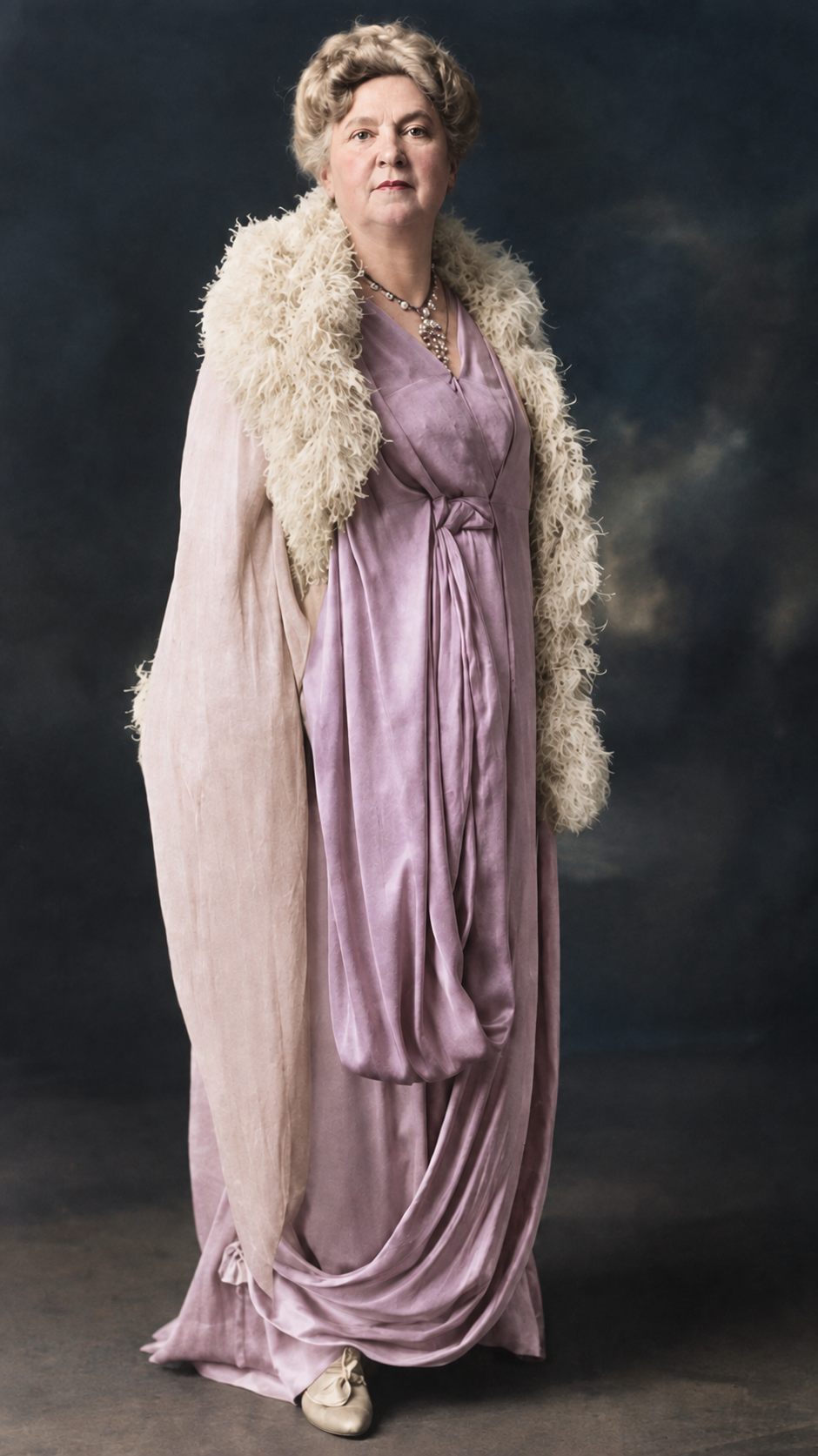
It was known that Tingley was planning a Theosophical Convention in Chicago for 18th February 1898, the highly significant date that had been given for the ending of one major cycle and the dawn of the next. On 30th January of 1898, Hargrove wrote to Tingley:
“Now, my dear friend, you have made an awful mess of it – that is the simple truth. You were run in as O[uter] H[ead] as the only person in sight who was ready to hand at the time. We were all of us heartily glad to welcome you, for you solved the problem which confronted us – who was to be O.H.; you were a sort of neutral centre around which we could congregate. And most of us fairly yelled with delight, for you solved our difficulty and we had ample proofs that some members of the Lodge were working through you and that you had high and rare mediumistic and psychic gifts and that you were a disciple of the Lodge. So things went swimmingly for a time.
“Our enthusiasm and anxiety to see all go well carried us too far – carried me too far to the extent of . . . leading me to use my personal influence with people to get them to accept you as O.H. I thought it was for the good of the work, but since then I have learned better.”
In other words, Hargrove felt somewhat justified in having spearheaded Tingley’s rise to power, but at the same time felt it had ultimately been a mistake to do so, or at least to have gone to the extents that he did.
That Tingley possessed at least a little authentic higher inspiration and spiritual beneficence in the period immediately following W. Q. Judge’s demise is attested to by none other than H. P. Blavatsky’s own niece, Vera Johnston, who in letters to her relatives in Russia provides some intriguing insights.
In a letter of 4th August 1896, she charmingly relates:
“You know that Aunt founded not only the Theosophical Society but also a secret society — something akin to the Masons or the Knights of Malta [Note: This is a reference to the Esoteric Section but in reality there is very little similarity between that and the fraternities that Vera cites as examples; it can also be somewhat misleading to think of the Esoteric Section as resembling what people typically think of as a “secret society”; nonetheless, this was perhaps the only way she could make it comprehensible to her relatives]. Charley [i.e. her husband Charles Johnston, an Irish Theosophist who was a pupil and co-worker of HPB in London, which was where he met Vera] and I have both belonged to this society for several years now, yet until recently we were forbidden to speak of it. Consequently, I believe I mentioned it only to Mother — never to you. But now, at last, I may. Well, after Aunt’s death, the society was led jointly by Judge and Mrs. Besant. Later — when, under the influence of cunning and ambitious Brahmins, Mrs. Besant lost her wits (a fact our mother realized before anyone else) — we shifted our allegiance to Judge alone. He passed away in America, and I — poor sinner that I am — assumed that this marked the end of our secret fraternity. But then, quite suddenly, while reading a newspaper — not a Theosophical journal, mind you, but just one of the hundreds of ordinary American papers — I spotted a portrait of a woman accompanying an article on Theosophy. “What a dreadful likeness of Aunt!” I thought. But upon closer inspection, I realized it was not Aunt at all, but Mrs. Katherine Tingley — the very woman Judge, on his deathbed, had designated to succeed him as the head of Aunt’s secret society [Note: This is a misunderstanding of the situation surrounding the “Occult Diary”; there was no deathbed nomination, as we have already explained]. She is a complete newcomer, having joined the society only after Aunt’s passing — and never met her during her lifetime. Yet, Charley and I both sensed immediately that there is something truly remarkable about her.
“As crazy as it may sound — one cannot dismiss the presence of the very same spirit within her that also dwelt in Aunt. The resemblance extends even to the minutest details — so much so that everyone who knew Aunt takes note of it. Indeed, I sometimes find it uncanny, and at other times, downright frightening. On just the second day of our acquaintance, for instance, she took me aside into her private room and began chatting about absolutely everything under the sun. The “Masters,” the mysteries of the cosmos, and — yes — even the two of you, remarking on how lonely you must be there in St. Petersburg (she affectionately calls you the “poor chickens.”) She spoke, too, of a lovely opal she had been given as a gift, and of her vexation that her corset had somehow gone astray. She talks away while she gets dressed. And right at the most impassioned moment — when speaking about Auntie’s hosts and Judge — she became so carried away that she completely forgot she had already put on her hat — a very fine, expensive hat — and her veil. Aside from the hat, she was wearing nothing but her lingerie and corset. Now, she isn’t very tall, but she is quite plump. I simply couldn’t help myself, and I burst out laughing. My dears, even from this description alone, you can surely see the resemblance — not just to Auntie Lelya [i.e. an affectionate Russian modification of the name Elena, i.e. Helena, as in HPB], but even to Auntie Liza, and indeed to our family as a whole. Her face actually looks more like Mamochka — she has that same aristocratic aquiline nose and those same well-defined lips. You’ll see this for yourselves in the photographs we sent — though they didn’t turn out particularly well — even if her eyes and hair aren’t black. Well, she is, quite simply, the most remarkable person among all our American acquaintances. She speaks about Auntie, about you, and even about Russia, as if she has known us all her entire life. And she does so with such utter simplicity — without the slightest desire to impress or even to persuade anyone, and completely without affectation. I actually have to force myself to remember that I’ve known her for only about two weeks just to feel any sense of surprise — otherwise, I forget that fact entirely and feel as though I am with an old friend. Her defining characteristic is her immense kindness.
“Of course, various overzealous — though not particularly sensible — people have spread rumours that she is a medium whom Auntie possesses. Others simply wish to pass her off as Auntie’s new incarnation. That is all nonsense. She herself says that she is simply a kindred spirit to Auntie, and that her constitution endows her with the same capacity to see and hear things that remain invisible and inaudible to others. We both believe that this is indeed the case — that it is the truth. Be that as it may be — whether it is so or not — she is a most amusing, most charming, and most kind-hearted creature, whose friendship we ought to cherish.”
But a few years later, on 19th February 1903, Vera was to write:
“Your assessment of Ms. Tingley is entirely correct. Of course, the only thing left to do is to simply wash one’s hands of her. Which, incidentally, is exactly what we have done these past few months. We have — and many others as well. But you are mistaken regarding the woman herself. She is no charlatan; she is simply a very powerful medium. If she were a schemer, it would certainly have been in her interest to keep Charley and me close at hand — me as the niece of my aunt, and Charley as a man whose name is becoming increasingly well-known here in the literary world. But she acts unconsciously and without calculation, under the influence now of this force, now of that one — now of this personality, now of that.
“In Dublin, she was enchanting. Our mistake, however, lay in attributing to her personally that pure and beautiful force, which was acting through her at the time, yet did not belong to her. . . . But you are wrong to attribute this error to my sentimentality. Sentimental I may well be, but I am not gullible. Quite the contrary. And besides, I was not alone in this. There were dozens of us — sentimental and unsentimental alike — of every nationality, age, and background. Nor could she have impressed us with her knowledge of Theosophy. She had read so little — a fact she made no attempt to conceal — that any young man who had spent merely two years in the Society could have run circles around her when it came to our literature. No, Nadyusha: she is neither a charlatan nor a mountebank. She is one of those rare specimens of humanity whose very temperament — whose entire physical and psychological constitution — is so constituted that the world of our everyday life seems, to them, somehow not entirely real. They inhabit a different world — one that is not material, yet, is far from being pure — a realm where all manner of forces are active and alive: benevolent and malevolent, mighty and merely foolish. And he alone is a Mahatma — or simply a man with a great soul — who has mastered all these forces, such that he employs them at his own discretion, and they can no longer beguile him.
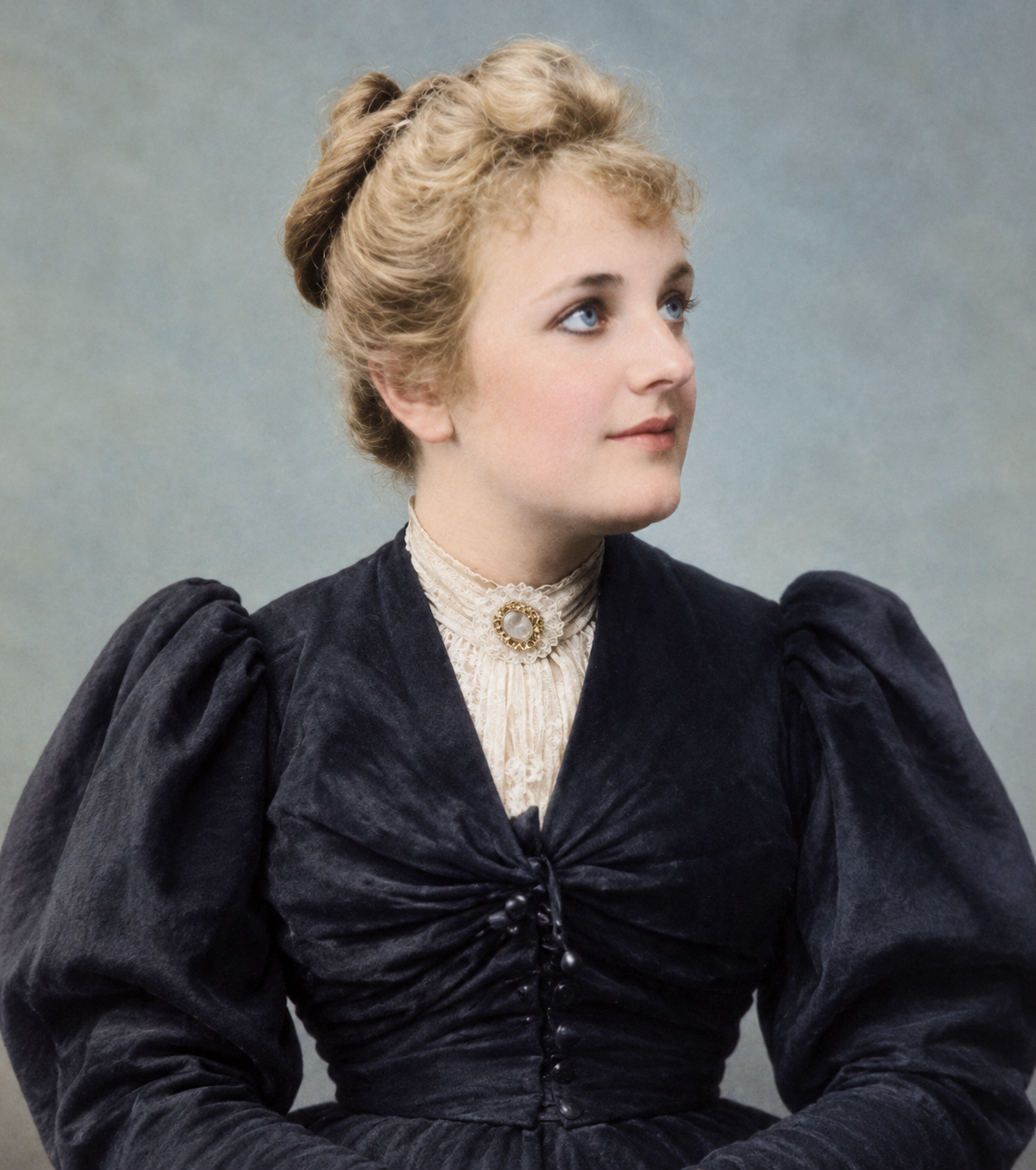
“. . . even the greatest and purest . . . remains vulnerable to the peril of losing control over both themselves and this realm.The law is one and the same for writers, military commanders, monarchs, and philosophers alike: until you have become the master, you remain liable to become the slave. And this is precisely what befell Mrs. Tingley. Everything I have written to you here consists not of empty rhetoric or abstract theories, but of the very essence of life — life as it is experienced by every human being. . . . However, to attribute such remarkable characters — like our Aunt Lelya and, to a much lesser extent, Mrs. Tingley — solely to charlatanism and deceit is to explain absolutely nothing; for such one-sided explanations fail entirely to correspond to the multifaceted reality.
“Oh, Nadyusha, life is simply full of riddles. Life would be so easy if everything in it weren’t merely “half-and-half” — but simply either yes or no, either black or white, either good or bad.”
The same year, Vera was to return to this subject, writing: “In temperament, Ms. Tingley bears a striking resemblance to my aunt; yet she possesses neither my aunt’s talent nor — least of all — her erudition. Still, I simply cannot fathom how such a metamorphosis could have come to pass — how a woman who was once warm-hearted, sensible, indeed even wise and inspired, could transform into a figure demanding not merely obedience, but something bordering on outright adoration — compelling her inner circle to view the rest of us poor sinners — we who refuse to either worship or submit — as if we were lepers infected with some unforgivable heresy. There is much in this that is laughable, yet much, too, that is bitter. For we had expected so very much from this woman. Well — may Christ be with her and let us be done with it.”
6,000 members of “The Theosophical Society in America” and its international Sections in other parts of the world, including the UK, attended the 18th February 1898 Convention in Chicago.
It was at that event that total and supreme autocratic power was conferred upon Katherine Tingley. But something worse than that was to happen: now possessed of this unbridled and unquestionable authority, Tingley announced that she was dissolving the Theosophical Society with immediate effect! She declared the birth of her new organisation, called Universal Brotherhood, and explained that from now on the name “Theosophical Society” would apply merely to a small “literary department” within the Universal Brotherhood organisation. She expressed the wish that this literary department would focus less on the works of H. P. Blavatsky and William Judge from now on. Universal Brotherhood’s main aim and character was to be focused on charitable activities, humanitarian outreach, altruism, the arts, and education, albeit with Tingley as the constantly adored and ever-present figurehead.
So when it is sometimes said that Tingley led the Point Loma Theosophical Society, that expression is just for sake of contemporary clarity, seeing as Gottfried de Purucker renamed that organisation “Theosophical Society” upon succeeding Tingley as its leader, after her death in 1929. It was this organisation which in 1951 would split (again over “Successorship” disputations) into the two societies known today as “The Theosophical Society – Pasadena” and “The Theosophical Society – Point Loma,” the latter of which is nowadays headquartered in the Netherlands. But, technically and accurately speaking, beyond February 1898, Katherine Tingley did not lead the Theosophical Society; on the contrary, SHE OFFICIALLY DISSOLVED THE THEOSOPHICAL SOCIETY!
One might assume that the majority of the 6,000 attendees would strongly protest at this development. But they did not. Individuals whose names are still well known today among many Theosophists – such as Robert Crosbie (later the founder of the United Lodge of Theosophists in Los Angeles) and Alice Leighton Cleather (later the co-founder of the Blavatsky Association in London, England and author of numerous books with Basil Crump) – were among the main signatories endorsing Tingley’s action. Crosbie, Cleather, and others, would later separate from Tingley’s organisation and fiercely criticise her character and actions but not until several years of deep devotion and subservience to her had passed.
The official “histories” of the Theosophical Movement published by the United Lodge of Theosophists are unsurprisingly – but understandably – completely silent about Crosbie’s eight years (1896-1904) of zealous devotion towards Katherine Tingley – and which was rather extreme and fanatical, if one reads some of his letters to her, such as where he addresses her as “Bride of the Sword of Righteousness,” and also accounts by people such as A. E. S. Smythe and C. F. Willard of their experiences with Crosbie while all living at Point Loma – but are unfortunately happy to denounce and lambast everyone else, including the minority of just 200 members who did have sufficient intuitive perception and clarity of thought at that time to stand up to Tingley and voice their resistance and opposition to the dissolution of the Theosophical Society and the granting of total autocracy.
It was reported that these 200 were shouted down by the thousands of other attendees, with loud and aggressive boos and jeering. Realising that theirs was a lost cause among such a mesmerised mob mentality, they left the Convention and reconvened elsewhere. In the ULT version of Theosophical history, that minority was then “foolish” and “misguided” enough to start a new Theosophical Society organisation, which they claimed to be the reformation of the original Society, a notion which in the ULT perspective was merely a further proliferation of untheosophical “sectarianism.”
But what was this group of 200 supposed to do? Should they have abandoned all Theosophical activities until such a time as Crosbie would establish the ULT eleven years later? Or was the main ULT objection that this group retained the name of the Theosophical Society instead of choosing something else? This is not explained, yet ironically Crosbie himself would join this group – originally named “The Theosophical Society in America” (just as the Judge-led Society had been named ever since its 1895 autonomy, up until Tingley’s declared dissolution of the Society) and from 1908 simply “The Theosophical Society” – between his leaving of Point Loma and starting the ULT. ULT histories are silent about this too.
Actually, no Theosophical organisation is required or obligated to disclose all the details of its founders’ past Theosophical involvements and commitments. From the ULT perspective, this can easily become a distraction from the far more important work at hand, as well as leading to an unhelpful overemphasis on personalities. We can well agree with this; it only becomes problematic when the silence about the historical facts of the founder’s own Theosophical past becomes deliberately filled with an apparently concocted and unique version of history, for which no supporting evidence is provided or offered, for none can be found.
In the case of the United Lodge of Theosophists, it would be claimed that whereas the “rescue efforts” of those 200 members in 1898 were somehow inexplicably sectarian and untheosophical, it was Robert Crosbie who truly performed the noble task of rescuing the Theosophical Movement and that he did so in 1909 when founding the ULT. After his death in 1919, his closest colleague John Garrigues would write in “Theosophy” magazine and the pamphlet “The United Lodge of Theosophists: Its Mission and Its Future” that Crosbie alone understood and stayed faithful to the mission of WQJ and HPB, and that he alone fulfilled HPB’s famous last injunction to Theosophists to “keep the link unbroken,” which is understood to refer to the link of conscious connection and communication between the Theosophical Society and the Lodge of Masters.
The historical records that have since become available to us from before and during Crosbie’s time at Point Loma paint a somewhat different picture and also render rather untenable Garrigues’ claim that Crosbie was the closest co-worker of Judge and his most trusted esoteric confidant. There is no evidence for such assertions but there is evidence against it, including letters between Judge and Hargrove about the Boston Theosophists, including Crosbie. In reality, it was the Griscoms, Hargrove, Julia Keightley, and for a time Tingley, who fulfilled the roles in relation to William Judge which the ULT would imagine for Crosbie. Yes, Crosbie and Judge personally knew each other, and Judge certainly placed some trust in Crosbie, approved him for roles of moderate responsibility within the Esoteric Section of that time, and valued his devotion. But there is a world of difference between this and stating, as did Garrigues, that “During all the troublous period 1893–96 Mr. Crosbie shared to an extent unknown and undreamt of by others in the burdens and the confidence of Mr. Judge.”
It must be emphasised that there is no record at all of Robert Crosbie himself ever making such claims as these about himself. If he did, he did so privately, and no-one knows anything about it. He did privately inform a few people that an inner, occult bond had formed between him and Judge from the day they first met in this life, and that this was eventually renewed and revivified towards the end of his time at Point Loma (and thus with the disembodied or disincarnate WQJ). That could well be true and is not something anyone can pass judgment on. As far as Crosbie was concerned, it was deeply and profoundly true and real. Most likely, it was John Garrigues who started the exaggerated claims, at the same time that he declared that HPB, WQJ, and Crosbie can be likened to the Hindu Trimurti or Trinity: HPB the Creator of Theosophy, WQJ the Preserver of Theosophy, and RC the Regenerator of Theosophy.
Robert Crosbie, the man who so eschewed the promotion and exaltation of personality (including his own), thus became after death the focus of a minor “cult of personality” within the ULT, albeit admittedly a very restrained one in comparison with what was going on in other parts of the Theosophical Movement, such as Adyar and Point Loma. It is perfectly reasonable and natural for associates of the ULT to feel gratitude and appreciation towards Crosbie; what we are criticising here is the excesses and exaggerations, an issue with which every “stream” or “branch” of the modern Theosophical Movement has had to deal to one degree or another. Of course, it could be true that Crosbie shared “to an extent unknown and undreamt of by others in the burdens and the confidence of Mr. Judge” but if it was “unknown and undreamt of by others” we will not find anyone from that era attesting to it. The ULT has also never attempted to provide any documentation or evidence to back up the claim.
It is a matter of debate whether the group of 200 protesters had the “right” to take the already established name “The Theosophical Society in America” for their subsequent efforts, or to change the name in 1908 to simply “The Theosophical Society.” In the traditional ULT view, they did not have such a right. But in their view, Katherine Tingley had no truly ethical or spiritual right to dissolve the Society, and in response to this they had the right – or, as they saw it, the duty and responsibility – to not allow the Theosophical Society and the sacrifices, labours, and teachings of HPB and WQJ to be snuffed out like that. This was, for them, a duty to the Masters, the Teachers, and to humanity. They thus did not perceive themselves as establishing a new Society but rather as continuing the existing Theosophical Society by rejecting Tingley’s actions.
This “new” (“reformed” would be a more accurate word) Theosophical Society counted among its comparatively small but international membership – which, as far as we know, never reached or exceeded 1,000, but peaked at around 600-700 – many respected, influential, and important Theosophists who had known and worked with either H. P. Blavatsky, William Q. Judge, or both, including:
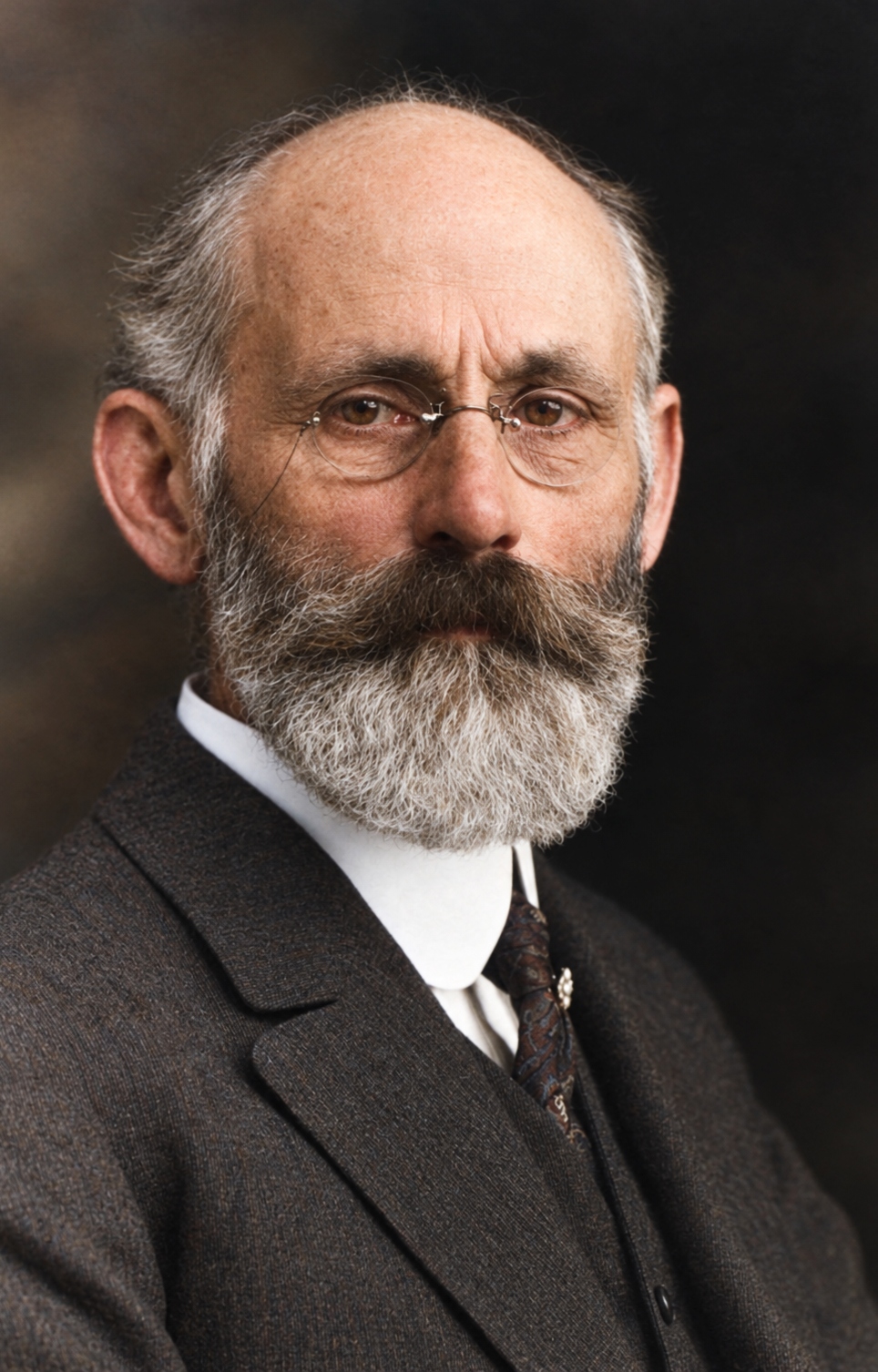
Ernest Hargrove, Clement A. Griscom, Jr., Genevieve Griscom, Archibald Keightley, Julia Keightley (perhaps better known by her pen name of Jasper Niemand), Charles Johnston, Vera Johnston (the niece of H. P. Blavatsky herself), J. D. Buck, Franz Hartmann, Katharine Hillard, Thomas Green, A. H. Spencer, James Morgan Pryse, Elliott B. Page, William Main, Thaddeus P. Hyatt, James Henderson Connelly, and Ella Judge (the widow of William Q. Judge). Other prominent members included Henry Bedinger Mitchell, Theodora Dodge, John F. B. Mitchell, R. E. (Ray Ethan) Torrey, John Dewey, Rev. C. C. (Clarence Carroll) Clark, Ada Gregg, Paul Raatz, Stanley V. La Dow, and George Woodbridge.
Those with the greatest influence over the Society, and who were therefore its primary leaders, were the Griscoms, Hargrove, Charles Johnston, and Henry Bedinger Mitchell. For this reason, the Society is often referred to as the Hargrove Theosophical Society, Griscom Theosophical Society, or Johnston Theosophical Society, as a way of distinguishing exactly which Theosophical Society is meant. But none of these were its actual name.
This Society also had its Esoteric School – which in its view was the same E.S. as that established by HPB, since in their view there had been no break with this in 1898, other than on Tingley’s part – whose Outer Head remained almost entirely anonymous and was never once named or identified publicly, and even rarely, if ever, in the main E.S. literature itself. But it is known that this Outer Head was held to be not an ordinary member of the T.S. or E.S. but in fact a Master, specifically the Master known in Theosophical literature as “Hilarion,” and his direct representative with regard to the E.S. members at large – and who adopted the title of “Secretary, E.S.T.” which William Judge had also used – was Genevieve Griscom, who almost always used the pseudonym Cavé in her Theosophical work, both public and private. Although wishing to remain “in the shadows” and not have any attention drawn to her, she was nevertheless the beating heart and deepest inspiring force of the whole of this Theosophical Society. The Master Morya was still referred to as simply “the Head of the School,” while the Master Hilarion was the new “Outer Head” who had stepped in at the period of great crisis, and Genevieve Griscom can be pictured as the “Outer-Outer Head,” although of course this is just our illustrative phrase and not one that was actually used.
Besides the T.S.A. (Theosophical Society in America) or Theosophical Society headquartered in New York, there was another organisational development arising in 1898 as a reaction to Tingley’s innovations. This was The Temple of the People, founded in Syracuse, New York, on 15th November 1898, by Francia La Due and William Dower. Dower had joined the Theosophical Society a few years before William Judge’s death and had known him to a small extent. La Due joined the Society shortly after Judge’s death. Initially, after Katherine Tingley’s pronouncements at Chicago in February 1898, La Due and Dower supported her. But after only a very short time, they realised that this was a mistaken course of action. La Due, who was highly mediumistic but in a pure sense, came in contact – both inwardly and on the physical plane – with an individual who revealed himself to her as the Master Hilarion, and whose guidance led to the establishing of The Temple of The People, along certain lines not seen before in the various Theosophical organisational developments. (For more on the Master Hilarion, please see the article Two Little-Known Letters from The Master Hilarion.)
By the end of 1898, therefore, there were thus two additional Theosophical organisations arising out of the Judge-Tingley Society, both headquartered in New York (though The Temple of The People would soon relocate to Halcyon, California), both with a psychically perceptive and talented woman at the helm on the inner side (i.e. Genevieve Griscom or Cavé, and Francia La Due or Blue Star) and both claiming the direct inspiration, authority, and leadership of the Master Hilarion. The Griscom/Johnston/Hargrove Theosophical Society never once made such claims publicly, however, choosing to never even refer to Hilarion by name in its publications, whereas they were public and open claims with The Temple and its magazine and literature. Something else the two groups had in common was an increasingly strong Christian colouring and emphasis. In The Temple of The People, a central feature of the apparent Master Hilarion’s message was the Second Coming of Christ, as an Avatar due in 1928. It was left open as to whether this would entail a personal, bodily incarnation or take the form of a purely spiritual presence, influence, and energy accompanying the Aquarian Age. Today, almost a century on, most “Templars” would hold to the latter interpretation. Meanwhile, the apparent Master Hilarion was revealing to Genevieve Griscom that it was he who had been incarnated as Jesus Christ 2,000 years ago. He thus became referred to by members as the Master Christ, a frequently encountered expression in the pages of “The Theosophical Quarterly,” although the latter stopped short at disclosing exactly who they meant Theosophically by this name. The Society’s Esoteric Section or Esoteric School was renamed or rebranded from around 1908 as the Order of the Living Christ, comprising both an Outer Court and an Inner Court. Both the New York headquartered Theosophical Society and The Temple of The People liked to speak in such terms and imagery as “Knights of the Holy Grail,” for example.
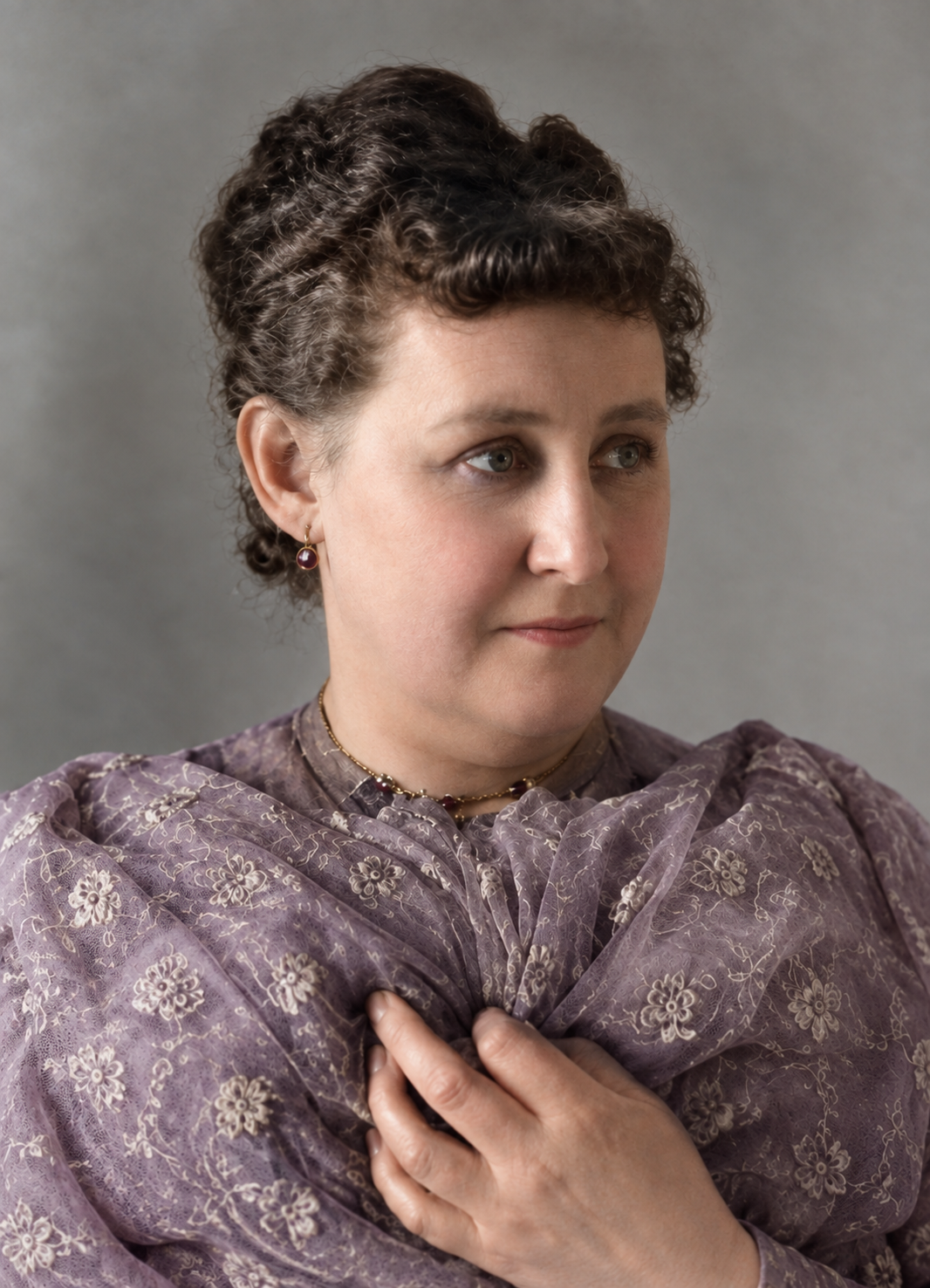
We personally do not count The Temple of The People today as one of the branches of the Theosophical Movement, simply because it does not include the word “Theosophy” or “Theosophical” in its name, and because the course of its development made it more of a “Theosophical offshoot” than a directly Theosophical organisation. This does not prevent it having produced an alleged Third Volume of “The Secret Doctrine” based on additional Stanzas of Dzyan, said to have been received inwardly by Francia La Due from the Master Hilarion and the Master Morya. This book is titled “Theogenesis” and presents itself as the culmination of the trajectory which the two volumes of “The Secret Doctrine” published by HPB had begun with “Cosmogenesis” (Vol. 1) and “Anthropogenesis” (Vol. 2). On the whole, “Theogenesis” is a vastly inferior work, and some of La Due’s explanatory comments show serious confusion on her part regarding such fundamental Theosophical teachings as Rounds and Races. Yet the work is certainly not wholly bereft of signs of higher inspiration and knowledge.
It is not completely inconveivable that one and the same Master would spearhead both of these organisational developments at virtually the same time. Nonetheless, neither accepted the legitimacy of the claims or authority of the other.
The Theosophical Society headquartered in New York decided, under inspiration, to gradually enter into what it called “indrawal” from the mid-1930s. As a result of this, by the early 1940s the Society had wholly disappeared and closed down, with the exception of book sales (which continued in a small way into the 1950s) and the continued existence and activities of its esoteric side, the Order of the Living Christ. The Order progressively shrank, and after Genevieve Griscom’s death at the age of 90 in 1958 was barely heard of at all, until it sold all its property in the 1960s and disbanded.
The hope of indrawal was that by closing down all exoteric work and public activities, the Society’s members would have the time and opportunity to focus much more intently and effectively on attaining chelaship (discipleship), after which it was intended that the new chela or chelas would be responsible for re-instigating and re-establishing the dormant Society in time for the promised and long awaited 1975 Cycle, the new chapter in the long history of centennial efforts made by the Brotherhood of Masters in the closing quarter of each century. It was acknowledged that potentially none of the members would reach to chelaship in time, in which case it was felt best that the Society never re-emerge, for it was felt that a Theosophical Society without any continued direct, conscious contact, communication, and link with the Masters of Wisdom, would be better off not existing at all. History tells us that this indeed proved to be the case. The Society never re-emerged and is today largely forgotten.
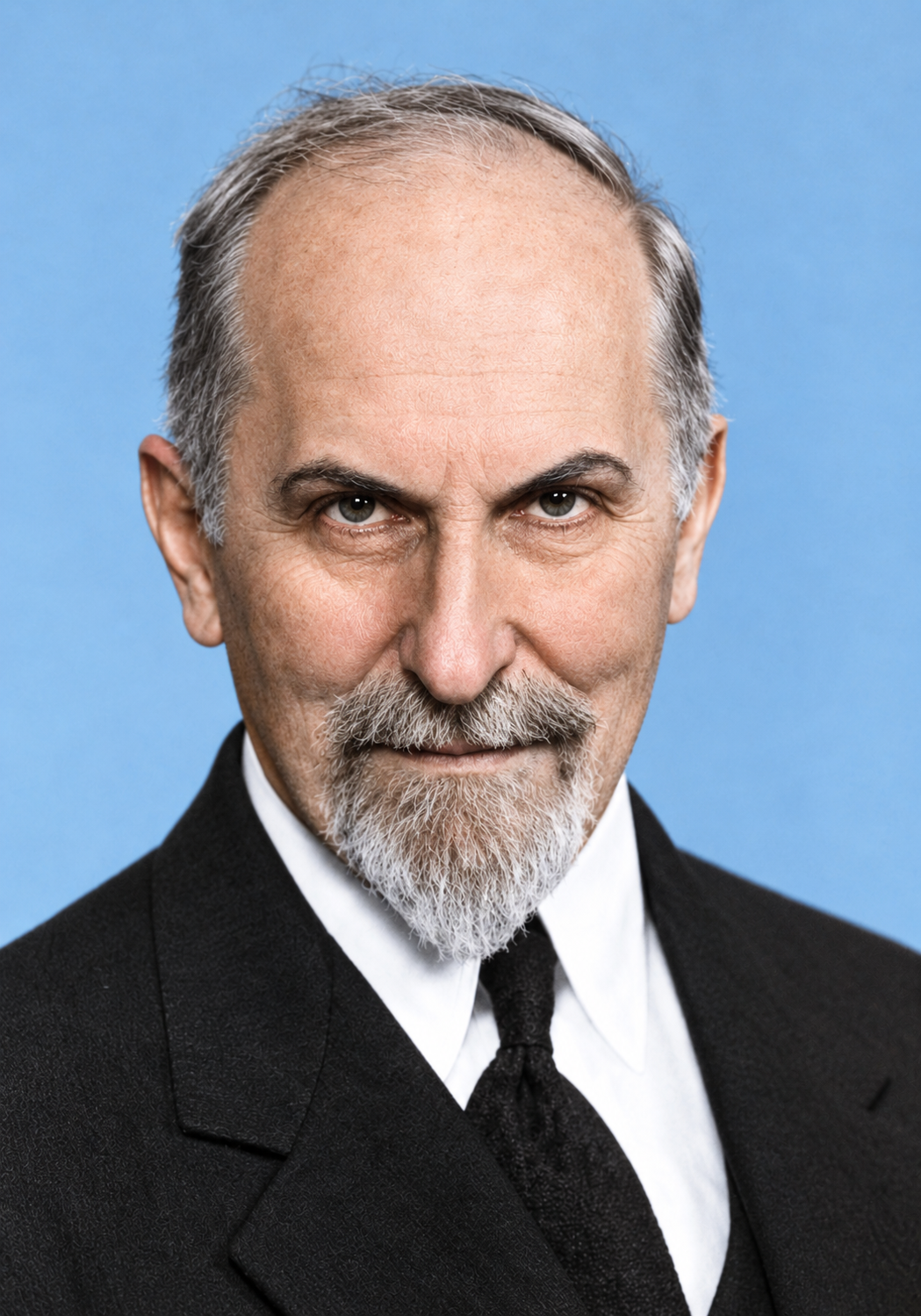
Even more largely forgotten was a far smaller additional Theosophical Society organisation also headquartered in New York, sometimes spoken of as “The Theosophical Society Independent.” It was led by Harold Percival (1868-1953) and among its minuscule membership counted Laura Holloway (who had been fairly well known during the time of H. P. Blavatsky, as a recipient of letters and occult aid from the Master K.H.) and Alexander Wilder (a respected Platonist scholar and one of the earliest ever members of the Theosophical Society, having been a friend of HPB and Olcott during the early years in New York). This Society and its magazine called “The Word” considered itself to be descended from the work of William Q. Judge but made almost no mention of either he or H. P. Blavatsky, and showed almost zero interest in promoting or studying their works and teachings. Instead, the Society became largely a vehicle for promoting classical Indian and Greek philosophy alongside Percival’s own ideas and his self-devised philosophical system. This organisation is long defunct but The Word Foundation continues today to publish Percival’s writings.
While it is quite well known that Robert Crosbie was part of Katherine Tingley’s “Universal Brotherhood” organisation and relocated from Boston to Point Loma within a year or two of that fateful Chicago convention, remaining there until 1904 when he realised or fully accepted that Tingley was not what he and so many others had initially believed her to be, it is mostly unknown that between his leaving Point Loma and starting the United Lodge of Theosophists, he joined the T.S.A. or “Theosophical Society in America,” as it was then still calling itself, i.e. the Griscom/Johnston/Hargrove Theosophical Society as some call it for sake of clarity.
This was in either 1906 or 1907, for in 1907 he was elected President for one year of a new Los Angeles based branch, called the Los Angelenos branch, which he and a number of others had founded. The opening of this branch and other details about it, including Crosbie’s role, were reported in “The Theosophical Quarterly.” As far as can be seen, all was going well until the Society’s annual Convention in the first half of 1908, where it was decided to change the name from The Theosophical Society in America to simply The Theosophical Society. Crosbie and a very few others from the Los Angelenos branch could not accept this and immediately resigned. The majority of those Los Angeles members had no issue with the name change and reorganised themselves under the new name of the Pacific branch, which seems to have then carried on for another 30+ years.
Then, in November of 1908, Crosbie and a handful of supporters would send out, to as many Theosophists as they could reach, the document reproduced towards the end of “The Friendly Philosopher” (p. 409-411) titled “TO ALL OPEN-MINDED THEOSOPHISTS.” This said:
“With the altruistic example of the Messengers [i.e. H. P. Blavatsky and William Q. Judge] and the inspiration of the Message, the Theosophical Society should have been able to stand alone and united.
“Unfortunately, history tells another story; disintegration began at once [after their deaths], and still goes on, and a grand opportunity to impress the world with the spirit and life of the Message has been lost, through neglect of the essentials and pursuit of non-essentials.
“The First Object — the most important of all — the others being subsidiary — has been lost sight of in its direct bearing upon all the changes and differences that have occurred. “To form a nucleus of Universal Brotherhood without any distinctions whatever” was, and is, the key to the situation. . . .
“It now remains for those who are able to take the words that express the never-dormant wish of her heart as the key-note of the present and future: “Be Theosophists, work for Theosophy,” and get together on that kind of a basis; for these are the essentials.
“The unassailable basis for union among Theosophists, wherever and however situated, is SIMILARITY OF AIM, PURPOSE, AND TEACHING. The acceptance of this principle by all Theosophists would at once remove all barriers. A beginning must be made by those whose minds have become plastic by the buffetings of experience. An agreement between such is necessary; an assembling together in this spirit.
“To give this spirit expression requires a declaration, and a name by which those making the declaration may be known.
“To call it The Theosophical Society would be to take the name now in use by at least two opposing organizations. To even call it a Society has the color of an “organization” — one of many, and would act as a barrier. The phrase used by one of the Messengers is significant, and avoids all conflict with organizations, being capable of including all without detriment to any. That phrase is:
“THE UNITED LODGE OF THEOSOPHISTS
“Members of any organization or unattached, old and new students, could belong to it without disturbing their affiliations, for the sole condition necessary would be the acceptance of the principle of similarity of aim, purpose, and teaching. The binding spiritual force of this principle of brotherhood needs no such adventitious aids as Constitution or By-Laws — or Officers to administer them. With it as basis for union, no possible cause for differences could arise; no room is found here for leader or authority, for dogma or superstition, and yet — as there are stores of knowledge left for all — the right spirit must bring forth from “Those who never fail” all necessary assistance. The door seems open for those who would, but cannot see a way. Any considerable number, living, thinking, acting, upon this basis, must form a spiritual focus, from which all things are possible.
“Local Lodges could be formed using the name and promulgating the basis of union, recognizing Theosophists as such, regardless of organization; open meetings; public work, keeping Theosophy and Brotherhood prominent; intercommunication between Lodges, free and frequent; comparing methods of work of local Lodges; mutual assistance; furtherance of the Great Movement in all directions possible; the motto: “Be Theosophists; work for Theosophy.” . . .”
Three months later, on 18th February 1909, Crosbie sent out another circular, announcing that the United Lodge of Theosophists, whose formation he had proposed, was now born into existence. Its expressed mission statement was, and is, “To spread broadcast the Teachings of Theosophy as recorded in the writings of H. P. Blavatsky and William Q. Judge.” Although continuing quite small and confined only to the USA during the remaining decade of Crosbie’s lifetime, it grew and spread exponentially around the world from the early 1920s, due largely to the efforts of Indian Theosophist B. P. Wadia, and is today the second largest and second most influential of all Theosophical groups, the largest and best known being “The Theosophical Society – Adyar,” in which Col. Olcott, Annie Besant, C. W. Leadbeater, and others, had been leading lights.
Regardless of one’s own affiliations or lack thereof, when we look at the Theosophical world in the present day, over 115 years later, one cannot help but feel grateful that Robert Crosbie took the course of action that he did and started the ULT, and that it is still alive and active in the present day, for it is simply a fact that in no other Theosophical group can one find such a distinct and unadulterated focus on the writings of H. P. Blavatsky and William Q. Judge, free from the encumbrances of all later teachings, alterations, and versions of Theosophy, as well as free from the vast majority of organisational trappings and problems. That is not to say that there is absolutely no truth, value, or inspiration in any later Theosophical writings, nor that Theosophy and the Theosophical Movement should be a static thing, frozen in time, and unchanging forevermore. But it is essential – for students of Theosophy, as well as for humanity at large – that there always be easy and reliable access to the unaltered original, which ought to be the gold standard, the measure of truth, the most faithful guide, and the supreme inspiration for all subsequent endeavours and understanding.
The United Lodge of Theosophists may have its flaws and issues, both historically and in the present day (though these are more prevalent in some ULT Lodges than others), but this writer is glad to belong to it.
~ * ~
This article may have raised more questions about various things. Please make use of the site search function (the magnifying glass symbol at the top of the page) and visit the Articles page to see the complete list of over 400 articles covering all aspects of Theosophy and the Theosophical Movement.
~ BlavatskyTheosophy.com ~

