
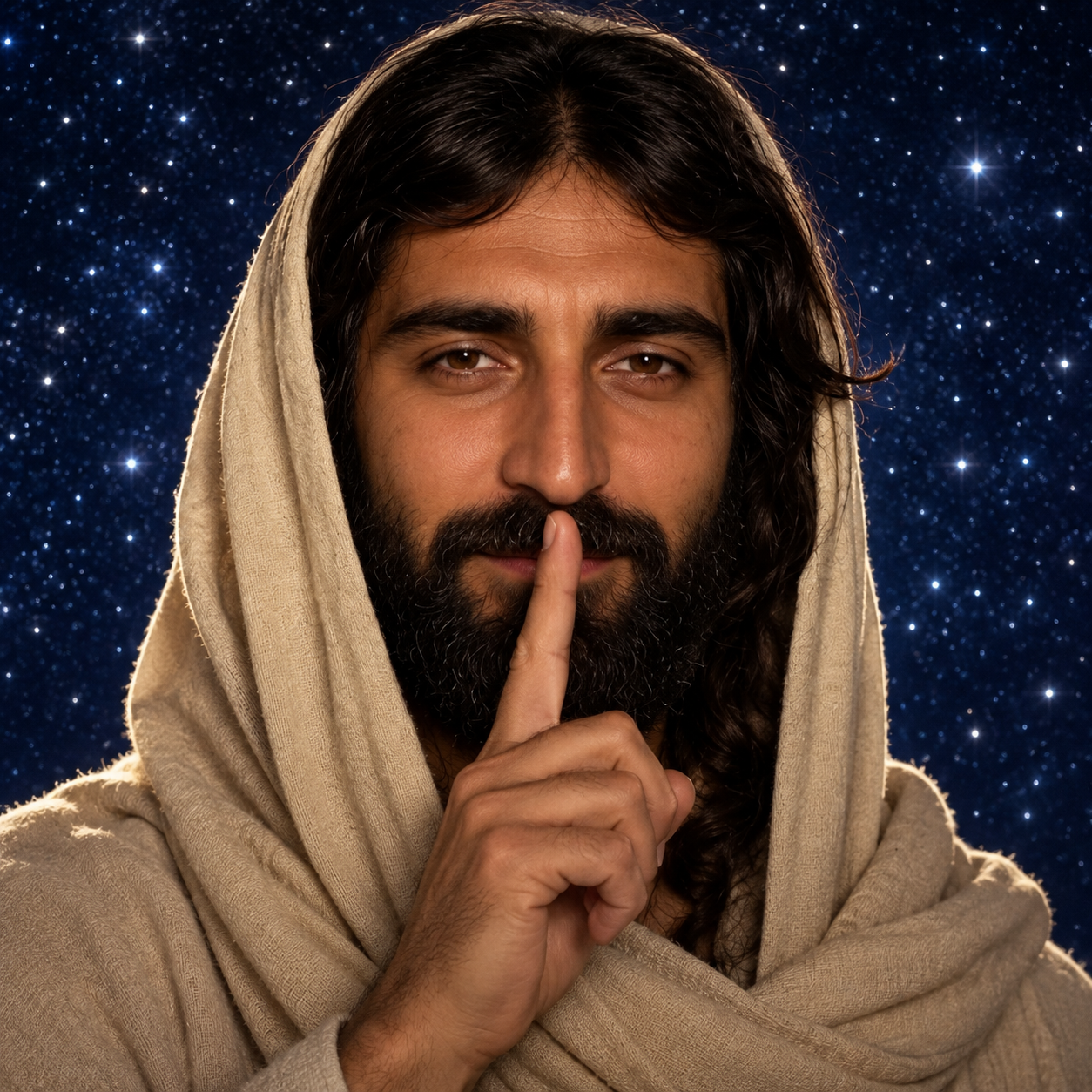
It is fairly well known that the many Gnostic schools and groups, which existed during the first few centuries of Christianity, claimed to possess and be promulgating esoteric knowledge which Jesus Christ had secretly imparted to certain of his disciples either during his life or after his resurrection. It is also now widely known that the leaders of the early, mainstream, established Christian Church strongly opposed these Gnostic claims and activities.
In fact, warnings against some of the earliest Gnostic schools go back to the epistles or letters of the Apostles St. Paul and St. John in the New Testament.
Paul, famously, concludes his first known letter to Timothy with: “O Timothy, guard carefully what has been entrusted to you. Beware of the godless blabberings and contradictions of what is falsely called gnosis, for by professing it some have travelled far from the Faith.” (1 Timothy 6:20-21)
What is less well known is that even though they criticised and condemned the Gnostic movement, some of the leading Church Fathers acknowledged in writing that Jesus had indeed imparted a secret teaching, an esoteric tradition, hierophantic mysteries of initiation, to his disciples, and that some of the disciples, along with their disciples, had preserved this, and that it had survived intact within the early Church, at least up until the time in which these early Fathers were asserting it.
They themselves used the terms Gnosis and Gnostic (literally meaning “knowledge” and “one who knows”) positively, while declaring that what the “falsely called gnosis” was promulgating was either a corrupted or, in some cases, an entirely fallacious and invented version of the esoteric tradition imparted by Jesus. They were thus not opposed to what is popularly labelled Gnosticism simply because it was Gnosticism but because they were absolutely certain that it was not the real Gnosticism.
With this in mind, the first sentence of the Apostle Paul in the passage quoted above can be seen as directly linked with that which follows it. Paul urges Timothy to beware of the so-called Gnosis which he will encounter, if he has not already, but to “guard carefully what has been entrusted to” him, i.e. the legitimate Gnosis, which was almost certainly imparted to him by Paul himself, who speaks of him as his “spiritual son,” which is not merely an expression of paternal endearment but a mystical phrase which for millennia prior to Christianity was associated with the relationship of initiator and initiated in the sacred Mystery Schools.
We now share several relevant passages from the early Christian era. Those from St. Paul and St. Basil are occasionally quoted today – albeit usually without any awareness of what the statements are really referring to – by Roman Catholics and Eastern Orthodox, though without any reference to those from Clement of Alexandria and his pupil Origen, which shed much valuable light on the matter.
FROM ST. PAUL THE APOSTLE (c. 5-67 A.D.)
IN 1 CORINTHIANS 2:6-15
“Yet among the spiritually mature [which can also be translated as “the perfect” or “those who are being perfected”] we do impart wisdom, although it is not a wisdom of this age or of the rulers of this age, who are doomed to pass away. But we impart the secret and hidden wisdom of God [i.e. Theousophia, virtually indistinguishable from the word Theosophia or Theosophy], which God decreed before the ages for our glorification. . . .
“God has revealed [it] to us through the [Holy] Spirit. For the Spirit searches out everything, even the depths of God. Now we have not received the spirit of the world, but the Spirit which is from God, so that we might understand the gifts which God has bestowed on us. And we also impart this [i.e. to “the spiritually mature”] in words not taught by human wisdom but taught by the Spirit, explaining spiritual truths in spiritual language to those who possess the Spirit.
“The unspiritual man does not receive the gifts of the Spirit of God, for they are nonsense in his sight, and he is not able to understand them because they are spiritually discerned. The spiritual [i.e. pneumatic, a term which Paul repeatedly in this and other letters contrasts with psychical – or pertaining to the lower soul – and hylic/sarkic or carnal/fleshly; these three categories of humanity would become a key feature of general Gnostic thought, particularly among the Valentinians] man judges all things, but is himself to be judged by no-one.”
ST. CLEMENT OF ALEXANDRIA (c. 147-215 A.D.)
IN THE MAR SABA LETTER TO THEODORE
Clement is recognised as a Saint by the Oriental Orthodox and Anglican Churches. His saintship was revoked by the Roman Catholic and Eastern Orthodox Churches several centuries ago, though they still respect him. A few scholars and academics doubt the genuineness of the Mar Saba letter but it will be seen that its ideas are entirely in harmony with those in Clement’s Stromata, the authenticity of which is not doubted by anyone.
“As for Mark [i.e. the writer of St. Mark’s Gospel and who had not known Jesus but was a disciple primarily of St. Peter but also of Paul], then, during [the Apostle] Peter’s stay in Rome he wrote an account of the Lord’s doings, not, however, declaring all of them, nor yet hinting at the secret ones, but selecting what he thought most useful for increasing the faith of those who were being instructed.
“But when Peter died a martyr, Mark came over to Alexandria, bringing both his own notes and those of Peter, from which he transferred to his former book the things suitable to whatever makes for progress toward knowledge. Thus he composed a more spiritual Gospel for the use of those who were being perfected. Nevertheless, he yet did not divulge the things not to be uttered, nor did he write down the hierophantic teaching of the Lord [Note: A hierophant is one who instructs and imparts to others the arcane or esoteric Mysteries], but to the stories already written he added yet others and, moreover, brought in certain sayings of which he knew the interpretation would, as a mystagogue [i.e. initiator], lead the hearers into the innermost sanctuary of that truth hidden by seven veils.
“Thus, in sum, he prepared matters, neither grudgingly nor incautiously, in my opinion, and, dying, he left his composition to the church in Alexandria, where it even yet is most carefully guarded, being read only to those who are being initiated into the great mysteries.
“But since the foul demons are always devising destruction for the race of men, Carpocrates [i.e. a Gnostic of the early 2nd century, who promoted casual sex among the members of his sect as a “spiritual” practice of central importance], instructed by them and using deceitful arts, so enslaved a certain presbyter [i.e. priest, elder] of the church in Alexandria that he got from him a copy of the secret Gospel, which he both interpreted according to his blasphemous and carnal doctrine and, moreover, polluted, mixing with the spotless and holy words utterly shameless lies [Note: Some very brief fragments of this corrupted and sexualised text exist today as the “Secret Gospel of Mark”]. From this mixture is drawn off the teaching of the Carpocratians.”
ST. CLEMENT OF ALEXANDRIA (c. 147-215 A.D.)
IN THE STROMATA (MISCELLANIES), 1:1, 6:7
“Well, those who were preserving the tradition of the blessed doctrine derived directly from the holy apostles, Peter, James, John, and Paul, – those sons who had received it from the father (but few were like the fathers) – came by God’s will to us also, to deposit with us those ancestral and apostolic seeds.
“And I know that they will rejoice; I do not mean be delighted with this tribute, but solely on account of the preservation of the truth, exactly as they delivered it.
“No-one lights a candle, and puts it under a bushel, but upon a candlestick, that it may give light to those who are regarded worthy of the feast. (Matthew 5:15, Mark 4:21) For what is the use of wisdom, if it does not make wise the one who hears it? For the Saviour still saves, and always works, following what he sees the Father doing. . . .
“Thus the Lord did not prevent us from doing good while we are keeping the Sabbath, but allowed us to communicate some portions of those divine mysteries, and of that holy light, to those who are capable to receive them.
“He certainly did not disclose to the many what did not belong to the many, but only to the few to whom He knew that the secrets rightly belonged, and who were capable of receiving and being moulded according to them. But secret things are entrusted to speech, not to writing, as is the case with God.
“And if one say that it is written, “There is nothing secret which shall not be revealed, nor hidden which shall not be disclosed [i.e. a saying of Jesus in the Gospels],” let him also learn from us, that what is secret and hidden is indeed revealed and disclosed, but to the one who is taught it in secret. This is what was being predicted in this prophetic saying. And to him who is able to secretly observe what is delivered to him, that which is veiled shall be disclosed as unveiled truth; and what is hidden to the many, shall appear manifest to the few. . . . The mysteries are delivered mystically.”
“If then, we assert that Christ Himself is Wisdom, and that it was His working which showed itself in the [Old Testament] prophets, by which the gnostic tradition may be learned, as He Himself taught the apostles during His presence; then it follows that the gnosis, which is the knowledge and apprehension of things present, future, and past, and which is sure and reliable, and which was imparted and revealed by the Son of God, is itself Wisdom. . . .
“And the gnosis itself is that which has descended by private transmission to a few, having been imparted unwritten by the apostles. Hence, then, knowledge or wisdom ought to be exercised up to the eternal and unchangeable habit of contemplation.”
ORIGEN OF ALEXANDRIA (c. 185-253 A.D.)
IN CONTRA CELSUM (AGAINST CELSUS), 1:7, 6:6
“The existence of certain doctrines, which are beyond those which are exoteric and do not reach the multitude, is not a peculiarity of Christian doctrine only, but is shared by the philosophers. For they had some doctrines which were exoteric and some esoteric. Some hearers of Pythagoras only learnt of the master’s ipse dixit [i.e. proclamations to the general audience] but others were taught
in secret doctrines which could not deservedly reach ears that were uninitiated and not yet purified. None of the mysteries in any place, in Greece and in barbarian lands, has been attacked for being secret. Therefore Celsus [i.e. a Greek philosopher, possibly a Platonist or Epicurean, who was an opponent of Origen] has no reason to attack the secrecy of Christianity and has no accurate understanding of it.”
“Jesus, who was superior to all these men [i.e. the classical Greek philosophers], is said to have spoken the Word of God to his disciples privately, and especially in places of retreat. But what he said has not been recorded. For it did not seem to them that “these matters ought to be described at some length or orally for the masses.” And, if it is not an impertinence to speak the truth about such great men, I affirm that, because they received their thoughts by the grace of God, these men saw better than Plato what truths should be committed to writing, and how they should be written, and what ought under no circumstances to be written for the multitude, and what may be spoken, and what is not of this nature.”
ST. BASIL THE GREAT (330-379 A.D.)
IN “ON THE HOLY SPIRIT”
“Of the beliefs and practices, whether generally accepted or publicly enjoined, which are preserved in the Church, some we possess derived from written teaching; others we have received delivered to us in a mystery by the tradition of the Apostles; and both of these in relation to true religion have the same force.
“And these no-one will presume to diminish or depreciate – no-one, at all events, who is even moderately versed in the institutions of the Church. For were we to attempt to reject such customs as have no written authority, on the ground that the importance they possess is small, we should unintentionally injure the Gospel in its very vitals; or, rather, should make our public proclamation a collection of mere verbiage and nothing more. . . .
“Does not this come from that unpublished and secret teaching which our Fathers guarded in a silence out of reach of curious meddling and inquisitive investigation? They had well learned the lesson that the awful dignity of the mysteries is best preserved by silence. What the uninitiated are not even allowed to look at was hardly likely to be publicly paraded about in written documents.”
~ * ~
Having read all this, many will naturally wonder about the present fate of this knowledge, which was repeatedly implied to have been preserved almost wholly as a secret oral tradition and not committed to writing.
After St. Basil, almost 1,700 years ago, there are few, if any, known mentions of it. But it would be unreasonable to suppose that absolutely no-one in today’s Church possesses the secret – and therefore the most profound, most potent, and most important – teachings that were genuinely imparted by the Master to his disciples, in the mountains and plains of what is today’s Israel and Palestine. Lineages of transmission must surely have been preserved but, being truly esoteric, we are understandably not likely to hear anything about it. Occasionally, some rare and particularly wise priests of the Eastern Orthodox Church subtly hint that they have knowledge of such truths. They are probably not the only ones.
The rest of us may take courage from considering that the publicly known teachings of Jesus, which are predominantly of an ethical-mystical character, constitute the “exoteric” preliminary to his esoteric teaching. If one were to truly and thoroughly put into practice all the principles of thought, speech, and conduct given in the Sermon on the Mount, for example, and if one were to deeply reflect on Jesus’ more mystical sayings found in John’s Gospel, and take as a daily anchor the declaration that anyone who would be Jesus’ disciple must deny themselves, take up their own cross, bear their cross daily, and really follow him . . . then one would almost inevitably come into contact, in some mysterious way, with that hidden Gnosis, the key to which is LOVE: love for God, love for the Master, and self-sacrificing love for all of one’s fellow human beings.
This, at least, applies to those whose souls innately belong to the Master we call Christ. Some are “on the Ray” of other Masters of the Great Lodge or worldwide Brotherhood, and for them the path to what is essentially the same knowledge and realisation lies through some other expression of the Tradition. But to this also, the Theosophical literature and teachings of our era can be an invaluable guide.
“Then the disciples came and said to him, “Why do you speak to them in parables?” And he answered them, “To you it has been given to know the secrets of the kingdom of heaven, but to them it has not been given. For to him who has will more be given, and he will have abundance; but from him who has not, even what he has will be taken away. This is why I speak to them in parables, because seeing they do not see, and hearing they do not hear, nor do they understand.“” (Matthew 13:10-13, Revised Standard Version)
“Unto you it is given to know the mystery of the kingdom of God: but unto them that are without, all these things are done in parables.” (Mark 4:11, King James Version)
~ * ~
This article may have raised more questions about various things. Please make use of the site search function (the magnifying glass symbol at the top of the page) and visit the Articles page to see the complete list of over 400 articles covering all aspects of Theosophy and the Theosophical Movement. If you liked this article, you may particularly be interested in those listed on that page under the heading “CHRISTIANITY, JUDAISM, ISLAM.”
~ BlavatskyTheosophy.com ~

