
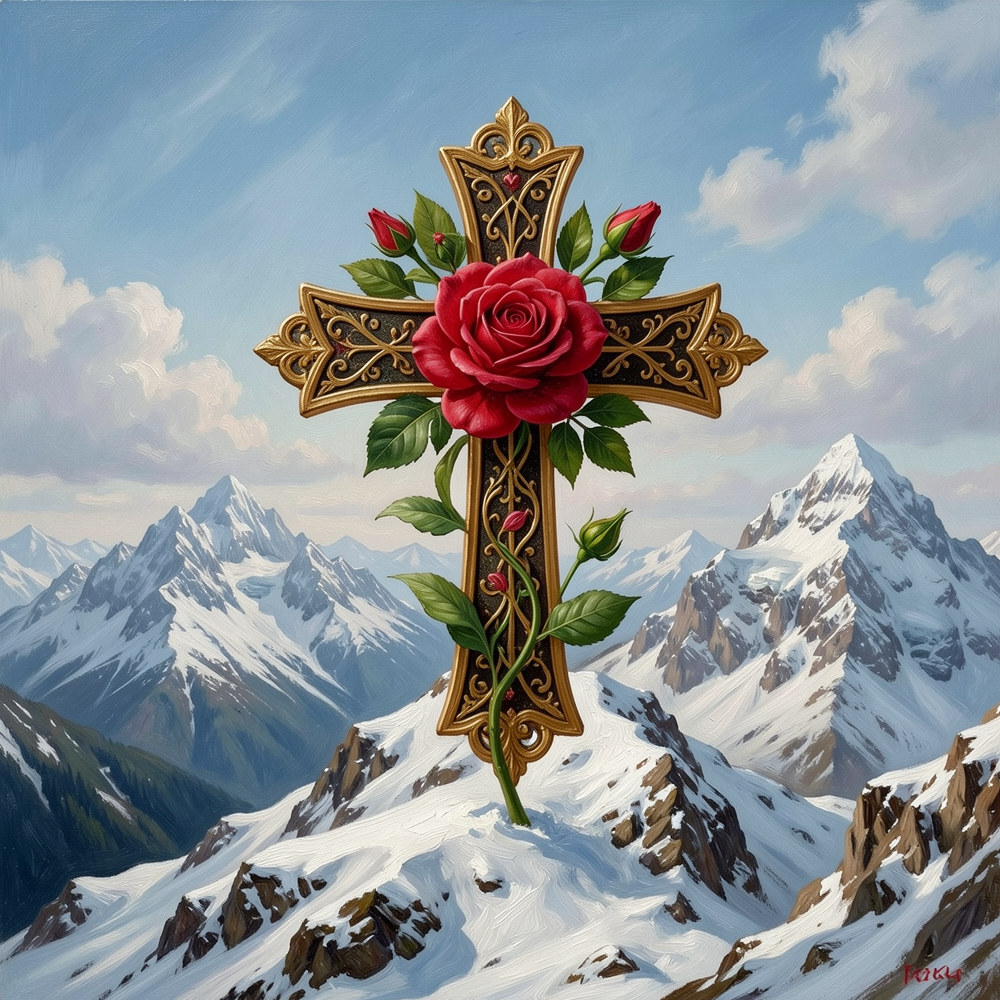
“As for Rosicrucianism, whatever calls itself by that name is self-convicted as an imposture. Rosicrucians were forbidden to disclose their connection with the Order, or to pose as teachers, or as being in possession of any peculiar knowledge whatsoever. Their only visible mission in the world was to “do good by stealth and blush to find it known.” Whoever calls himself a Rosicrucian has thereby proved that he is not one.” (“A Matter of Judgment,” “U.L.T.” Magazine, 26th December 1914)
The teachings, practices, and lineages of all the most popular – and the hundreds of less popular – organisations of today which call themselves “Rosicrucian” are not genuinely Rosicrucian. Any person and any group can claim to be anything; it does not necessarily make it so.
No doubt many people have been legitimately helped in various ways through that which we (and many others) have no hesitation about calling pseudo-Rosicrucianism. Where true good has been done, this should be praised. But it is not true good to give millions of sincere spiritual seekers a highly misleading idea as to what Rosicrucianism actually is, least of all to charge people money for esoteric teachings and “initiations.”
We do not wish to go into this at any length; those who may wish to do their own research can type something like Describe all the ways modern Rosicrucianism differs from historical Rosicrucianism into Google or some other site and read carefully the AI responses and follow up on them accordingly. It will be discovered that apart from the name and some symbols, they have almost nothing in common. Modern “Rosicrucianism” dates back to the early 20th century or late 19th century and no further.
The following compilation of Theosophical quotes is designed to shed some light on historical Rosicrucianism. This latter Rosicrucianism – the only authentic kind – has not been publicly operative in the world at large for a few hundred years. To what extent it still exists “behind the scenes” in any organised way, we cannot say. But what H. P. Blavatsky does make clear is that genuine Rosicrucianism was, or is, an expression and subdivision of the Great Brotherhood of the Masters of Wisdom, seemingly some of those Masters in particular who focus Their work on the Western world.
Although Theosophy does not propose that people try to revive Rosicrucianism in the present era – for it recognises that any genuine Rosicrucianism operates completely behind the scenes in our day, and is the province of Initiates, rather than of any spiritual seeker who feels personally inclined to start a new movement or organisation – it does acknowledge that it bears some relevance to the New Era of Western Occultism which has already dawned and for which we should be working.
In these passages are some things which will be completely new to almost all readers. No-one is under any obligation or expectation to accept as true anything they read here. This is also not a complete compilation, though it does include all the most important of such quotes.
Though there are obviously very many things about which H. P. Blavatsky (who famously owned the Rosicrucian Jewel of the Eighteenth Degree, which was said to have belonged to Count Cagliostro before it was given to her, most likely by the Egyptian Lodge of the Brotherhood of Masters, for Rosicrucianism comes under Their domain) was not permitted to speak or write, she has still provided an intriguing and inspiring overview of this much misrepresented society or fraternity, whose name rightly strikes a chord in the hearts and souls of many.
~ * ~
“The old mission of the Rosicrucians, though dead on the outside, is not dead, for the Masters were in that as They are in this, and it may be possible to usher in a new era of western occultism devoid of folly. We should all be ready for that, if it be possible.” (William Q. Judge, “Letters That Have Helped Me” p. 122)
“This [i.e. the esoteric school, system, and fraternity of the Masters of Wisdom behind the Theosophical Movement] is the mother and the head of all systems of initiation. It is the progenitor of the mystic Rosicrucians, who have adopted the lotus and changed it into a rose, and all the other hundreds of initiating occult societies are merely faint and incomplete copies of this real one; but, unlike those, it has never dissolved. It is secret, because, founded in nature and having only real Hierophants at the head, its privacy cannot be invaded without the real key. And that key, in each degree, is the aspirant himself. Until that aspirant has become in fact the sign and the key, he cannot enter the degree above him. As a whole then, and in each degree, it is self-protective.
“Thus including all other systems, it is the most difficult of all; but as at some time, in this life or in a succeeding age, we must perforce enter this Lodge, the attempt at entry might as well be made at once. . . .
“The probability is that the Rosicrucian “rose” was altered from the lotus because the latter flower was not understood in Europe, whereas the rose was; and the rose is the nearest to the lotus, taken all in all.” (WQJ, “Notes on The Bhagavad Gita” p. 48-49)
“Eliphas [Levi] studied from the Rosicrucian MSS. [i.e. the abbreviation for “manuscripts”] (now reduced to three copies in Europe). These expound our Eastern doctrines from the teachings of Rosencranz, who, upon his return from Asia dressed them up in a semi-Christian garb intended as a shield for his pupils, against clerical revenge. One must have the key to it and that key is a science per se. Rosencranz taught orally. Saint Germain recorded the good doctrines in figures and his only cyphered MS. remained with his staunch friend and patron the benevolent German Prince from whose house and in whose presence he made his last exit — HOME.” (Master K.H., “The Mahatma Letters” p. 280)
“To begin with — the garden of Eden as a locality is no myth at all; it belongs to those landmarks of history which occasionally disclose to the student that the Bible is not all mere allegory. . . . In the Chaldean Book of Numbers, its location is designated in numerals, and in the cipher Rosicrucian manuscript, left by Count St. Germain, it is fully described.” (H. P. Blavatsky, “Isis Unveiled” Vol. 1, p. 575)
“There have been so many secret societies during the Christian era, by whom claims were made to knowledge of nature’s secret laws, that a natural question arises: “In what do the Theosophic Eastern Sages differ from the many Rosicrucians and others so often heard of?” The old bookshelves of Germany are full of publications upon Rosicrucianism, or by pretended and genuine members of that order, and today it is not uncommon to find those who have temerity [i.e. audacity] enough to dub themselves “Rosicrucians.”
“The difference is that which exists between reality and illusion, between mere ritualism and the signs printed by nature upon all things and beings passing forever up the road to higher states of existence. The Rosicrucian and Masonic fraternities known to history rely upon outward signs and tokens to indicate the status in the order of their members, who, without such guarantees, are only uninitiated outsiders.
“But the Sages we speak of, and their disciples, carry with them the indelible mark and speak the well-known words that show they are beings developed under laws, and not merely persons who, having undergone a childish ordeal, are possessed of a diploma. The Adepts may be called rugged oaks that have no disguise, while the undeveloped man dabbling in Masonic words and formulas is only a donkey wearing a lion’s skin.” (WQJ, “Echoes from The Orient” p. 35-36)
“The Rosicrucians of the middle ages, such as Robertus de Fluctibus (Robert Fludd), Paracelsus, Thomas Vaughan (Eugenius Philalethes), Van Helmont, and others, were all alchemists, who sought for the hidden spirit in every inorganic matter.” (HPB, “The Theosophical Glossary” p. 14, Entry for “Alchemists”)
“No mystic, whether calling himself Rosicrucian, Cabbalist, Theosophist, Christian, or Buddhist, would either intellectually or spiritually accept the narrow dogmas and intolerant views of the Christian church, even when to some extent cleansed of many of its grosser abuses by the energy of Martin Luther’s Reform.
“The two lines of thought are essentially different. In the case of the Christian, no matter of what denomination, his thoughts are bound down and paralysed within the rigid circle drawn by the materialistic reading of Christ’s birth, life, and death. The true occultist takes those episodes spiritually or allegorically, finding their correspondences within himself as well as in the universe. To say that a human being can at one and the same time be an occultist, and a sectarian Christian, is as impossible as to speak of a Christian Jew. A true Christian, i.e., one who understood and followed absolutely the teachings of Jesus, would be also a true Rosicrucian. Membership of particular churches or societies does not unfortunately endow the individual immediately with the virtue, knowledge or power, that is the theoretical goal of his initial action. Such membership is, or may be, a step in the direction of Divine Wisdom, but one step does not carry him to the summit of the path. Men do not become either Rosicrucians, Christians, or Theosophists merely by joining the Societies working under those particular names. But certain tendencies in their temperaments urge them into the special Society where the mode of thought seems best fitted to help them, to realise the magnitude and glory of the possibilities inherent in their own souls.” (HPB, Review of “The Real History of The Rosicrucians”)
“As may be judged, however, from the most important, as the best known of the Rosicrucians’ symbols, there is one which has never been hitherto understood even by modern mystics. It is that of the “Pelican” tearing open its breast to feed its seven little ones — the real creed of the Brothers of the Rosie-Cross and a direct outcome from the Eastern Secret Doctrine.” (HPB, “The Secret Doctrine” Vol. 1, p. 19-20)
“The Rosicrucians, who were well acquainted with the secret meaning of the tradition, kept it to themselves, . . .” (HPB, “The Secret Doctrine” Vol. 2, p. 237)
“Fire, in the opinion of the Rosicrucians, who were but the successors of the theurgists, was the source, not only of the material atoms, but also of the forces which energize them.” (HPB, “Isis Unveiled” Vol. 1, p. 423)
“The Rosicrucian theory, that the whole universe is a musical instrument, is the Pythagorean doctrine of the music of the spheres. Sounds and colors are all spiritual numerals; as the seven prismatic rays proceed from one spot in heaven, so the seven powers of nature, each of them a number, are the seven radiations of the Unity, the central, spiritual SUN.” (HPB, “Isis Unveiled” Vol. 1, p. 514)
“If any Adepts have influenced [George] Washington or brought about the great American Revolution, it was not the “Tibetan Mahatmas” at any rate; for these have never shown much sympathy with the Pelings [i.e. barbarian foreigners] of whatever Western race, except as forming a part of Humanity in general.
“Yet it is as certain . . . that several Brothers of the Rosie Cross — or “Rosicrucians,” so called — did take a prominent part in the American struggle for independence, as much as in the French Revolution during the whole of the past century. We have documents to that effect, and the proofs of it are in our possession. But these Rosicrucians were Europeans and American settlers who acted quite independently of the Indian or Tibetan Initiates. . . .
“No Occult theosophist has ever thought of connecting Benjamin Franklin, or “Brother Benjamin” as he is called in America, with theosophy; . . . there is certainly nothing to connect him with modern theosophy or even with the theosophists of the 18th century — as the great body of alchemists and Rosicrucians called themselves.” (HPB, “Adepts and Politics”)
“. . . European Masons . . .When certain of the latter were found worthy of becoming affiliates of the Orient, they were secretly instructed and initiated, but the others were none the wiser for that.
“No one could ever lay hands on the Rosicrucians, and notwithstanding the alleged discoveries of “secret chambers,” vellums called “T,” and of fossil knights with ever-burning lamps, this ancient association and its true aims are to this day a mystery. Pretended Templars and sham Rose-Croix, with a few genuine kabalists, were occasionally burned, and some unlucky Theosophists and alchemists sought and put to the torture; delusive confessions even were wrung from them by the most ferocious means, but yet, the true Society remains to-day as it has ever been, unknown to all, especially to its cruelest enemy — the Church.” (HPB, “Isis Unveiled” Vol. 2, p. 380)
“”The kingdom of Heaven suffereth violence, and the violent take it by force.” Many are the candidates at the doors of those who are supposed to know the path that leads to the secret brotherhoods. The great majority are refused admittance, and these turn away interpreting the refusal as an evidence of the non-existence of any such secret society. Of the minority accepted, more than two-thirds fail upon trial.
“The seventh rule of the ancient Rosicrucian brotherhoods, which is universal among all true secret societies: “the Rosy-Crux becomes and is not made,” is more than the generality of men can bear to have applied to them.
“But let no one suppose that of the candidates who fail, any will divulge to the world even the trifle they may have learned, as some Masons do. None know better than themselves how unlikely it is that a neophyte should ever talk of what was imparted to him. Thus these societies will go on and hear themselves denied without uttering a word until the day shall come for them to throw off their reserve and show how completely they are masters of the situation.” (HPB, “Isis Unveiled” Vol. 2, p. 404)
“Strictly speaking, the Rosicrucians do not now even exist, the last of that fraternity having departed in the person of Cagliostro [Note: Taken alongside the quote before last, which says that “the true [Rosicrucian] Society remains to-day as it has ever been, unknown to all, especially to its cruelest enemy — the Church,” we can only assume that HPB here means that there has not been any legitimate publicly known Rosicrucianism since the time of Cagliostro]. . . .
“The Brotherhood of the Rosy Cross was not founded until the middle of the thirteenth century [i.e. the 1200s, a period characterised in Europe by Knights and Crusades, mostly to the Holy Land], . . .
“The origin of the [Rosicrucian] Brotherhood can be ascertained by any earnest, genuine student of Occultism, who happens to travel in Asia Minor, if he chooses to fall in with some of the Brotherhood, and if he is willing to devote himself to the head-tiring work of deciphering a Rosicrucian manuscript — the hardest thing in the world — for it is carefully preserved in the archives of the very Lodge which was founded by the first Kabalist of that name, but which now goes by another name.
“The founder of it, a German Ritter [i.e. a Knight, a member of the German nobility], of the name of Rosencranz, was a man who, after acquiring a very suspicious reputation through the practice of the Black Art in his native place, reformed in consequence of a vision. Giving up his evil practices, he made a solemn vow, and went on foot to Palestine, in order to make his amende honorable at the Holy Sepulchre. Once there, the Christian God, the meek, but well-informed Nazarene [i.e. Jesus Christ] — trained as he was in the high school of the Essenians, those virtuous descendants of the botanical as well as astrological and magical Chaldæans — appeared to Rosencranz, a Christian would say, in a vision, but I would suggest, in the shape of a materialized spirit.
“The purport of this visitation, as well as the subject of their conversation, remained for ever a mystery to many of the Brethren; but immediately after that, the ex-sorcerer and Ritter disappeared, and was heard of no more till the mysterious sect of Rosicrucians was added to the family of Kabalists, and their powers aroused popular attention, even among the Eastern populations, indolent and accustomed as they are to live among wonders.
“The Rosicrucians strove to combine together the most various branches of Occultism, and they soon became renowned for the extreme purity of their lives and their extraordinary powers, as well as for their thorough knowledge of the secret of secrets.
“As alchemists and conjurers they became proverbial. Later . . . they gave birth to the more modern Theosophists, at whose head was Paracelsus, and to the Alchemists, one of the most celebrated of whom was Thomas Vaughan (seventeenth century), who wrote the most practical things on Occultism under the name of Eugenius Philalethes. I know and can prove that Vaughan was, most positively, “made before he became [i.e. received certain powers and knowledge by having them conferred upon him by occult means at initiation, rather than just struggling alone and unaided to Adeptship; in this article, HPB repeatedly emphasises that the saying “The Adept becomes; he is not made,” is only part of the story, for an Adept is also made such by his or her Guru].”
“The Rosicrucian Kabalah is but an epitome of the Jewish and the Oriental ones, combined, the latter being the most secret of all. . . .
“When our learned author [i.e. Hiraf, to whom HPB’s article is a response] asserts so dogmatically that the Rosicrucian learns, though he never uses, the secret of immortality in earthly life, he asserts only what he himself, in his practical inexperience, thinks impossible. The words “never” and “impossible” ought to be erased from the dictionary of humanity, until the time at least when the great Kabalah shall all be solved, and so rejected or accepted. The Count St. Germain is, until this very time, a living mystery, and the Rosicrucian Thomas Vaughan another one [Note: For more on this subject, see what is said about the “densified astral body” and “the elixir of life” in the article The Permanent Astral – What, Why, and How?].” (HPB, “Occultism or Magic,” “A Modern Panarion” p. 38-46, originally published under the title “A Few Questions to Hiraf” in “The Spiritual Scientist” July 1875, four months before the Theosophical Society was founded. This article was H.P. Blavatsky’s first public mention of her connection with Brotherhoods of Adepts.)
“To investigate and disentangle the network of facts, theories, and traditions which must necessarily envelop a society that up to the commencement of the seventeenth century had not been heard of by the general public is no easy task, and Mr. Waite [i.e. A. E. Waite, the author of the book about the Rosicrucians which HPB is reviewing in this article] may be congratulated upon the calm and judicial spirit with which he has treated his subject, as well as upon the moderation with which he advances his own views.
“To be able to gather from these open records how far the members of such a society may have held in their keeping some of the inner secrets of Nature is of course impossible to ordinary humanity. The real character and aims of such an association can be known only to passed Initiates. . . .
“The popular notion that this Brotherhood is of great, almost incredible antiquity, is utterly condemned by [Waite]. He fails to find any documentary evidence to show that it existed before the early part of the seventeenth century, and argues that the well-known antiquity of the Rose and Cross in symbolism is no proof of the antiquity of a society using them “at a period subsequent to the Renaissance” [p. 210]. Granting that the device of the Rose and Cross, as emblems of a particular order or brotherhood, does not guarantee its equal antiquity with them, still it must be admitted that these symbols bearing as they do a profoundly esoteric interpretation, and being adopted by a society of a distinctly occult character, is an argument in support of the theory that the founder or originator of this order had some reason other than fancy for thus labelling his fraternity.
“Elsewhere he says, “I have shown indisputably that there was no novelty in the Rosicrucian pretensions, and no originality in their views. They appear before us as Lutheran disciples of Paracelsus” [p. 209]. The author here seems to be not entirely logical in his deductions.
“When he states that he has not met in his search with either letters, records, or papers that mention or suggest the existence of such a society before the seventeenth century, he is of course, as a historian, safely ensconced from attack. In this capacity as an impartial seeker after facts, it is outside the area of his work in the absence of data to theorise on probabilities. When, however, in dealing with the manifestoes of the seventeenth century, he finds therein evidence that shows him the Brotherhood has no back history or ancestry, his conclusions are open to criticism. The very fact of the want of originality and novelty in the views, aims and aspirations set forth in the Fama, and Confessio, surely gives strength to the theory that holds to the antiquity of the society, rather than to its being the outcome of a spontaneous effort.
“All true students of mysticism have good reason to believe, even when they do not absolutely know, that the various schools of occultism considered from their highest or most spiritual and abstract teaching, lead to the same goal. They may be called by different names, and their methods in minor details may not be the same, but the wisdom au fond is identical. . . .
“As far as can be ascertained by studying the state of thought and society at the period when the Rosicrucians were first heard of in Europe, this particular order manifested itself as an antidote to the general tendency towards the material side of alchemy, which honey-combed the educated classes of Germany.
“Wonder-seekers then, as now, did not apprehend that ethics, both social and spiritual, are the fundamental basis of real wisdom, consequently the great cry was for power, no matter of what description, for the accumulation of wealth. The craving for arcane knowledge, so widely diffused, and which alchemists were truly known to possess, had gradually degenerated into a purely selfish desire for the secret of transmuting metals. To supply this eager demand, charlatans of every description rushed to the front professing to teach all who joined their standards, i.e., who could pay the necessary fee, how to turn common metal into pure gold. The craze for this power was so universal, the motive of it so unspiritual, that in order to stem the tide of the folly, and to checkmate the impostors who were bringing discredit on the Sacred Art, the Fama was issued by a body of people who took as their symbols the Rose and Cross. From this point of view the Rosicrucians historically come before the world in the light of a group of Reformers.
“Different people interpret in different ways the two manifestoes — the Fama and Confessio. Mr. Waite appears to place great importance on the adherence to Christian dogmas observable in the wording of these papers. But in taking the documents literally, he seems to overlook the necessity that all writers were under, in those troubled times, of pandering to the narrow and prejudiced minds of the leaders of the so-called Christian Church, by apparently adhering to the Ritual. Naturally, the author of the Fama worded it in such a manner as to avoid persecution or suspicion of heresy. Those to whom it was really addressed would not be misled by its tone of orthodoxy, and the general public and the church would pass it by as harmless. . . .
“That in their manifestoes and records there appears no explanation of their emblems, hardly justifies the conclusion that they were incapable of giving any. It would indeed have been a new departure in the annals of Secret Societies if the founders of this particular order had left behind the explanation of their signs and symbols. The study and interpretation of symbology forms a most important element in the education of occult disciples, and therefore to assume that the projectors of this organisation should be unaware of the mystic reading of the Rose and Cross, is a hypothesis that no student of mysticism could accept.
“It is, on the whole, generally assumed by those who have taken any pains to investigate the evidence, that Johann Valentin Andreae [i.e. 1586-1654, known to the world as a German Protestant theologian and writer, specifically a Lutheran] was the author of the Fama, the Confessio Fraternitatis, and also of the Chymical Marriage of Christian Rosencreutz, and to that extent he must be looked upon exoterically as the founder of the Rosicrucian Society, as first known to history [i.e. but not as the real, original founder of the Society or Fraternity in its purely esoteric sense and historically unknown origins; for what little can be revealed about the latter, see the above quote from HPB’s article in “A Modern Panarion,” which describes the original and actual Christian Rosenkreutz – whether or not that was his actual birth name – as establishing this fraternity a few hundred years prior to Johann Valentin Andreae’s time]. He was deeply versed in mystic studies and alchemy, and had besides a widespread reputation as a scholar and learned man. His Chymical Marriage, to anyone with even a slight acquaintance with alchemical literature, reveals him as one who had penetrated deeply into some of the mysteries of nature. Consequently, he must have been well aware that the Rose and Cross bore a profoundly occult signification.
“Considering the man himself, the character of his studies, and his well-known devotion to alchemy and mysticism, it is certainly more reasonable to suppose that he took those emblems (presuming he had any choice in the matter) for his society, not as some suggest, because they happened to form a part of his own armorial bearings, or that the Rose and Cross on a Heart was used by Martin Luther, but because he recognized their full value and importance as symbols of cosmic evolution.
“Mr. Waite seems, on the whole, to agree with the idea that Andreae was the author of the Fama and Confessio, and regards the Chymical Marriage as undoubtedly his production. He also allows that the latter pamphlet can only have been the work of a man deeply imbued with alchemical speculations, a mystic and follower of Paracelsus.
“How then can he ask us to believe that the Society formed under such auspices was au fond, nothing but a Christian sect based on the teachings of Martin Luther! To the public at large these theories may perhaps appear sufficiently plausible in face of the wording of those parts of the manifestoes that touch on theology. To students of esotericism, however, such conclusions will be absolutely unacceptable, and we cannot allow to pass without comment Mr. Waite’s hypothesis that the Rosicrucian Society, as it first came before the world, was simply a society for the propagation of the deteriorated Christianity of the middle ages.” (HPB, Review of “The Real History of The Rosicrucians”)
“An old Persian proverb says, “The darker the sky, the brighter the stars will shine.” Perhaps the very darkness of the European firmament during the Middle Ages caused that mysterious Fraternity known as the Brothers of the Rosy Cross to shine, by contrast, with such startling brilliance.
“The fame of the Rosicrucians, which persists up to the present day, was not due to any desire on their part to dazzle the world with the splendor of their knowledge. They built no colleges, reared no temples, never claimed position as leaders of men. Impersonality was their watchword, and their motto had descended to them from one of their Gnostic predecessors: “Learn to know all, but keep thyself unknown.”
“This does not mean that the Brothers of the Rosy Cross kept themselves aloof from the world. On the contrary, they mingled freely with all classes of men, submitted to all the ordinary obligations of life, obeyed the laws of their respective countries and were considered as excellent citizens, their only secrecy being in regard to their own extraordinary knowledge and powers. . . .
“The existence of the Fraternity first came into public notice in the year 1614, when a small Latin pamphlet known as the Fama Fraternitatis was published in Germany, describing the foundation and aims of the Order. The first English translation of this pamphlet was made by Thomas Vaughan (Eugenius Philalethes) in 1652. It contained the story of Christian Rosencreuz, a poor but noble Knight who was born in Germany in 1358. . . .
“In 1623 there were said to be only thirty-six Rosicrucians in Europe, scattered about in six different countries. By the end of the seventeenth century many prominent men (among them the German philosopher Leibniz) were identified with the Rosicrucians, and in the eighteenth century Cagliostro and the Count de St. Germain travelled throughout Europe trying to unite the Masons and the Rosicrucians on the common basis of Eastern Occultism. With the “death” of Cagliostro the last real Rosicrucian disappeared from Europe.
“One of the aims of the Rosicrucians was to combine the various branches of Occultism into a synthetic whole. Many of the Brothers were alchemists, seeking for the invisible “spirit” in inorganic as well as organic matter. To these alchemical Rosicrucians is attributed the rediscovery of the secret of the “ever-burning lamps,” known to many ancient nations but which had been lost for 1500 years. . . .
“. . . the famous Rosicrucian maxim: To know, to will, to dare and to keep silent.
“To know is the first step, and this knowledge includes an understanding of the laws governing the visible and invisible universe, and involves the study of the complete constitution of nature and of man. Knowledge brings power, and power — if it is to be of any practical value — must be applied. The application of knowledge requires a conscious and deliberate use of will, which, to be efficacious, must always work in perfect harmony with the Universal Will. The great Will of Nature works for the good of all, and the individual who would blend his own will with the Universal Will must dare to practice good alone. But power, once it has been acquired, may be used for either good or evil purposes. Therefore the Rosicrucians taught that power should be given only to those who have been sufficiently tested to prove that it would not be misapplied. Their fourth requirement, therefore, was to remain silent about their own powers and knowledge with those with whom it was not expedient to speak.
“Every candidate admitted into the Fraternity of the Rosy Cross accepted these four Rules as his standard of life, and immediately entered into a period of probationary discipline. He was told that if he fulfilled the required conditions he would find all necessary information in the “Book of Initiation.” He was also promised that, when he was ready, he would find a “guide” who would instruct him in the higher degrees of Occultism.
“The Instructions of the Rosicrucians date from the year 1675. They begin with a warning to the candidate never to use his knowledge for selfish purposes. They inform him that the Brothers of the Rosy Cross have already shown the “Way” to many peoples in many languages, and deplore the fact that their efforts have often been misunderstood and their teachings perverted. Then, in the form of an allegory, the candidate is given a description of the “Way” and is told how it may be found.
“In the center of the world is a mountain, which is near and yet invisible, and in which lie the greatest treasures known to man. It is surrounded by “many fierce animals and plundering birds” which make it difficult of access and may tempt the candidate to turn back. “But have no fear,” the Instructions counsel, “neither look ye back nor desire to return, for your guide who hath led ye thither will not suffer any harm to come to ye.” In these first stages the candidate is cautioned to follow the guidance of the Self within, and is warned of the battle with the lower self which must be fought before victory can be attained. The lower principles are described as beasts of prey and elemental forces which will attack the soul at the foot of the mountain when all is still and dark. But when the night of temptation has been passed, “toward morning it will become right still and lovely, and soon ye will see the morning star arise and the red dawn break, and ye will perceive the great treasure.”
“At this stage the candidate finds himself ready for the help of a Teacher who “will be your guide, if ye desire it of him, and he will truly tell ye where our assembly is to be found, and will teach ye concerning our Order, and will accompany ye until time shall fully reveal all things.”
“For one hundred years after these Instructions were written, little is heard of Rosicrucian activities in Europe. Professor Lauteo, in his History of the Rosicrucians, says that they departed for India at the beginning of the eighteenth century. But in the last quarter of that century some of their teachings were revived by Cagliostro and St. Germain who, nevertheless, remained silent concerning the esoteric side of their doctrines. In the last quarter of the nineteenth century Hargrave Jennings published his illuminating book The Rosicrucians, their Rites and Mysteries, but he, too, respected their secrecy and remained silent concerning those things of which he had no right to speak.” (“The Rosicrucians,” “Theosophy” Magazine, May 1938)
~ * ~
This article may have raised more questions about various things. Please make use of the site search function (the magnifying glass symbol at the top of the page) and visit the Articles page to see the complete list of over 400 articles covering all aspects of Theosophy and the Theosophical Movement. If you liked this article, you may be interested to read the other articles listed on that page under the headings “CHRISTIANITY, JUDAISM, ISLAM” and “THE MASTERS.”
~ BlavatskyTheosophy.com ~

