
The Tibetan Book of the Dead, in its numerous English translations, is one of the best selling and most popular books in the genre of spirituality. The Tibetan name for this book is “Bardo Thodol” which has been translated as meaning “The Book of Liberation upon Hearing in the Afterlife.” According to historians, it was written in approximately 800 C.E./A.D. by Padmasambhava, also known as Guru Rimpoche or Guru Rinpoche, the mysterious Indian founder of the Nyingma school of Tibetan Buddhism, the original and oldest of the four main branches of Tibetan Buddhism.
The text – respected by all the schools of Tibetan Buddhism and firmly grounded in the quasi-tantric Dzogchen system of the Nyingmapas – is apparently based upon scenes and experiences which he either saw in a vision or otherwise gained knowledge of through processes of esoteric initiation. Padmasambhava is commonly attributed with having introduced Buddhism, originally an Indian religion, to the nation of Tibet. In fact, it had already been introduced but did not become widely accepted or officially established until Padmasambhava’s efforts.
The term “Bardo” was actually first introduced to the West by Theosophy in the 1880s and not by W. Evans Wentz’s first publication in English of the “Bardo Thodol” in 1927. It literally means “between two” and refers to the period between death and rebirth. Both the “Bardo Thodol” and the Theosophical “Mahatma Letters” teach that there are three stages or sub-periods of the Bardo.
In many respects, however, the version of the afterlife presented in the Bardo Thodol does not match up with that taught by Theosophy. We will discuss some possible reasons for this and also show the main points in which they do agree and sometimes agree in very significant and surprising ways. The article will conclude by presenting a much fairer and better informed view of Padmasambhava than we have given in the past.
Walter Evans Wentz, the first translator into English of the “Bardo Thodol,” was a keen admirer of the work and teachings of H. P. Blavatsky and always spoke highly of her. He quoted excerpts from her book “The Voice of The Silence” in his own book entitled “Tibetan Yoga and Secret Doctrines.” He also said that “The late Lama Kazi Dawa-Samdup was of opinion that, despite the adverse criticisms directed against H. P. Blavatsky’s works, there is adequate internal evidence in them of their author’s intimate acquaintance with the higher lamaistic teachings, into which she claimed to have been initiated.”
~ * ~
O, Alas! Alas! Fortunate Child of Buddha Nature,
Do not be oppressed by the forces of ignorance and delusion!
But rise up now with resolve and courage!
Entranced by ignorance, from beginningless time until now,
You have had [more than] enough time to sleep.
So do not slumber any longer, but strive after virtue with body, speech and
mind!
Are you oblivious to the sufferings of birth, old age, sickness and death?
There is no guarantee that you will survive, even past this very day!
The time has come [for you] to develop perseverance in [your] practice.
For, at this singular opportunity, you could attain the everlasting bliss [of
nirvāṇa].
So now is [certainly] not the time to sit idly,
But, starting with [the reflection on] death, you should bring your practice to
completion!
The moments of our life are not expendable,
And the [possible] circumstances of death are beyond imagination.
If you do not achieve an undaunted confident security now,
What point is there in your being alive, O living creature?
All phenomena are [ultimately] selfless, empty, and free from conceptual
elaboration.
In their dynamic they resemble an illusion, mirage, dream, or reflected image,
A celestial city, an echo, a reflection of the moon in water, a bubble, an optical
illusion, or an intangible emanation.
You should know that all things of cyclic existence and nirvāṇa
Accord [in nature] with these ten similes of illusory phenomena.
All phenomena are naturally uncreated.
They neither abide nor cease, neither come nor go.
They are without objective referent, signless, ineffable, and free from thought.
The time has come for this truth to be realised!
Homage to the spiritual teachers!
Homage to the meditational deities!
Homage to the dakinis!
O, Alas! Alas! How needing of compassion are those living beings, tortured
by their past actions,
[Who are drowning] in this deep chasm, the engulfing ocean of their past
actions!
Such is the nature of fluctuating cyclic existence!
Grant your blessing, so that this ocean of sufferings may run dry! . . .
How needing of compassion are the ignorant and the deluded,
[Bound] in this confining dungeon of egotistical attachment and the subject-
object dichotomy,
Who, like wild game, are trapped in this snare, time after time!
Grant your blessing, so that cyclic existence may be stirred to its depths!
How needing of compassion are those beings who endlessly revolve [in the
cycle of existence],
As if [circling] perpetually [on] the rim of a water-wheel,
In this six-dimensional city of imprisoning past actions!
Grant your blessing, so that the womb entrances to the six classes of existence
may be barred!
We who are fearless and hard-hearted, despite having seen so many sufferings
of birth, old age, sickness and death,
Are wasting our human lives, endowed with freedom and opportunity, on the paths of distraction.
Grant your blessing, so that we may [continuously] remember impermanence
and death!
Since we do not recognise that impermanent [things] are unreliable,
Still, even now, we remain attached, clinging to this cycle of existence.
Wishing for happiness, we pass our human lives in suffering.
Grant your blessing, so that attachment to cyclic existence may be reversed!
Our impermanent environment will be destroyed by fire and water,
The impermanent sentient beings within it will endure the severing of body and mind.
The seasons of the year: summer, winter, autumn and spring, themselves [exemplify] impermanence.
Grant your blessing, so that disillusionment [with conditioned existence] may
arise from the depths [of our hearts]!
Last year, this year, the waxing and waning moons,
The days, nights, and indivisible time moments are all impermanent.
If we reflect carefully, we too are face to face with death.
Grant your blessing, so that we may become resolute in our practice! . . .
Alas! Alas! O Precious Jewel, embodiment of compassion!
Since you, the Conqueror [i.e. Buddha], are endowed with a loving heart,
Grant your blessing, so that we and the six classes of beings
May be liberated, right now, from the sufferings of cyclic existence!
(Excerpts from “Common Preliminary Practice” in “The Tibetan Book of The Dead” first complete translation, published by Penguin, p. 8-11)
~ * ~
In the section “Consciousness Transference: Natural Liberation through Recollection,” The Tibetan Book of The Dead emphasises that the final thoughts in the last moments of life are extremely important and will shape and direct one’s future experiences.
The book therefore advises encouraging and guiding a dying person who is on the verge of death to do their best to visualise one or another particular form of Buddha, the details of which vary depending on what is known of the state of consciousness and present awareness of the dying person.
Theosophy does not offer any specific advice about this but it does make the point that:
“We create ourselves our devachan [i.e. “heaven” state] as our Avitchi [i.e. “hell” state] while yet on earth, and mostly during the latter days and even moments of our intellectual, sentient lives. That feeling which is strongest in us at that supreme hour, when, as in a dream, the events of a long life to their minutest detail are marshalled in the greatest order in a few seconds in our vision, [That vision takes place when a person is already proclaimed dead. The Brain is the last organ that dies.] that feeling will become the fashioner of our bliss or woe, the life-principle of our future existence.” (Master K.H., “The Mahatma Letters” p. 127-128)
And what about when death itself actually occurs? The Tibetan Book of The Dead says:
~ * ~
O, Child of Buddha Nature, that which is called death has now arrived. You are leaving this world. But in this you are not alone. This happens to everyone. Do not be attached to this life! Do not cling to this life! Even if you remain attached and clinging, you do not have the power to stay – you will only continue to roam within the cycles of existence. Therefore, do not be attached and do not cling! Think of the Three Precious Jewels [i.e. the Triratna: the Buddha, the Dharma, and the Sangha, in all of which one “takes refuge” in order to become a Buddhist and goes to for refuge again and again; these Three Jewels have a basic exoteric meaning and a much deeper esoteric meaning, which H. P. Blavatsky touches on in “The Theosophical Glossary” and which Padmasambhava also gives in the “Outer Refuge,” “Inner Refuge,” and “Secret Refuge” near the start of the book]!
O, Child of Buddha Nature, however terrifying the appearances of the intermediate state of reality might be, do not forget the following words. Go forward remembering their meaning. The crucial point is that through them recognition may be attained.
“Alas, now, as the intermediate state of reality arises before me,
Renouncing the merest thought of awe, terror or fear,
I will recognise all that arises to be awareness, manifesting naturally of itself.
Knowing such [sounds, lights and rays] to be visionary phenomena of the intermediate state,
At this moment, having reached this critical point,
I must not fear the assembly of Peaceful and Wrathful Deities, which manifest naturally!”
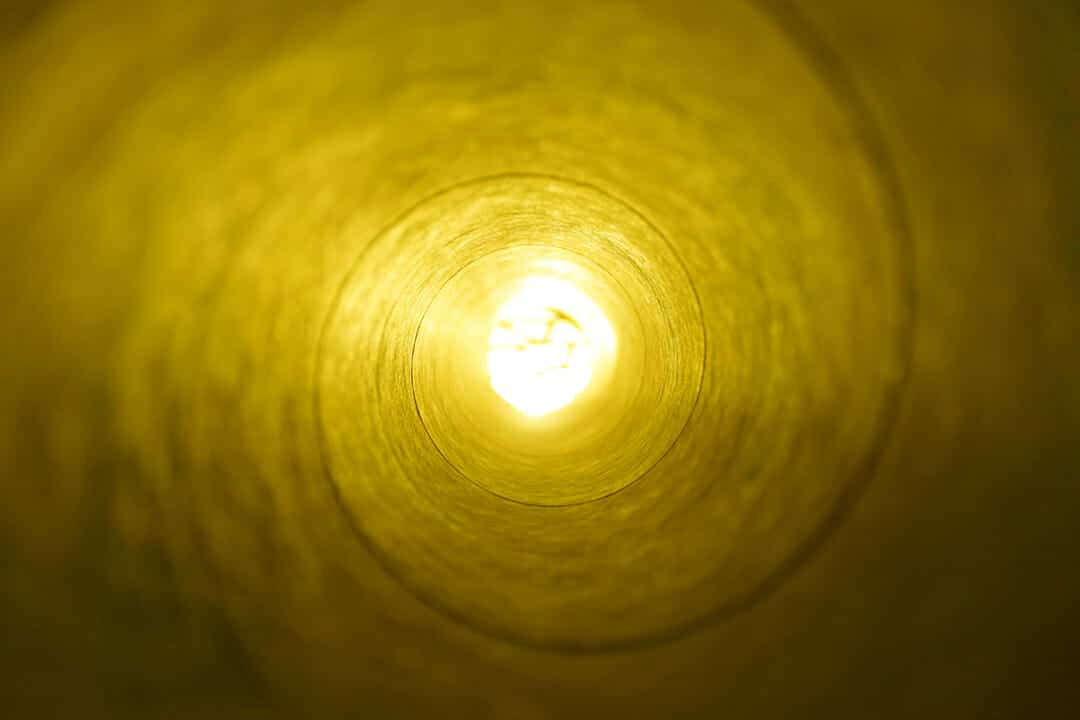
Go forward, reciting these words distinctly and be mindful of their meaning. Do not forget them! For it is essential to recognise, with certainty, that whatever terrifying experiences may arise, they are natural manifestations [of actual reality]. O, Child of Buddha Nature, when your mind and body separate, the pure [luminous] apparitions of reality itself, will arise: subtle and clear, radiant and dazzling, naturally bright and awesome, shimmering like a mirage on a plain in summer. [Note: Compare this with the intensely bright light – often perceived as if at the end of a tunnel – common to almost all Near Death Experiences and now a well known symbol and idea to almost everyone. And now notice this ancient Buddhist explanation as to what this light or lights actually are.] Do not fear them! Do not be terrified! Do not be awed! They are the natural luminosities of your own actual reality. Therefore recognise them [as they are]! From within these lights, the natural sound of reality will resound, clear and thunderous, reverberating like a thousand simultaneous peals of thunder. [Note: Compare with “The Voice of The Silence,” translated by H. P. Blavatsky from The Book of The Golden Precepts, which in enumerating the “Seven Sounds” corresponding to the seven principles or components of the human being says of the seventh and highest – often called in Theosophy by its Hindu Sanskrit name of Atman or the Higher Self – “The last vibrates like the dull rumbling of a thunder-cloud.” (p. 10, original edition) The inseparable nature of “Light in the Sound, and the Sound in the Light” (p. 20) is also a feature of that first section of “The Voice of The Silence.”] This is the natural sound of your own actual reality. So, do not be afraid! Do not be terrified! Do not be awed! The body that you now have is called a ‘mental body’, it is the product of [subtle] propensities and not a solid corporeal body of flesh and blood. Therefore, whatever sounds, lights or rays may arise, they cannot harm you. For you are beyond death now! It is enough that you simply recognise [the sounds and luminosities] to be manifestations of your own [actual reality]. Know that this is the intermediate state!
O, Child of Buddha Nature, if you do not now recognise [these phenomena] to be natural manifestations, whatever meditative practices you may have undertaken whilst in the human world, if you have not [previously] encountered this present instruction, you will fear the light, you will be awed by the sound and you will be terrified by the rays. If you do not now understand this essential point of the teaching, you will not recognise the sounds, the lights and the rays, and you will continue to roam within the cycles of existence.
O, Child of Buddha Nature, should you have moved on, [without recognition], after having been unconscious for [up to] three and a half days, you will awaken from unconsciousness [Note: Compare with such statements in Theosophy as: “The spirit is dazed after death and falls very soon into what we call “pre-devachanic unconsciousness.”” (H. P. Blavatsky, “The Key to Theosophy” p. 151) and “According to the Eastern teaching the state of the deceased in Kama-loka [i.e. the first of the after-death states and one which takes place on the astral plane]is not what we, living men, would recognise as “conscious.” It is rather that of a person stunned and dazed by a violent blow, who has momentarily “lost his senses.”” (HPB, “Some Old Questions Answered”) Theosophy would say that this unconscious period after death almost always lasts much longer than a mere three and a half day maximum and that this figure as allotted by Padmasambhava may be either a symbol or a “blind,” i.e. a deliberate exoteric concealment, although HPB does say that “For those whose lives were very spiritual [it] is very rapid. The time becomes longer with the materialistically inclined.” (“The Key to Theosophy” p. 173) But notice the insinuation in Padmasambhava’s text as to exactly why this unconsciousness comes about: non-recognition by the newly deceased of what the indescribably intense bright light and thunderous vibrating sound actually are, i.e. non-recognition that they are expressions and manifestations of one’s “own actual reality.” As a result, one is understandably deeply afraid and the consciousness is overpowered by the mighty awesomeness of the whole experience. This may help to illuminate HPB’s words quoted above, that “The spirit is dazed after death and falls very soon [i.e. not absolutely immediately but very soon afterwards] into . . . unconsciousness.”] and wonder, “What has happened to me?” So, recognise this to be the intermediate state! At this time, the aspects of the cycles of existence are reversed [into their own true nature] and all phenomena are arising as lights and buddha-bodies.
[On the first day of the intermediate state of reality], all space [Note: Space, in its abstract, infinite, unmanifest sense, is extremely important in both Theosophy and some systems of Tibetan Buddhist tantra or practical esoteric development; see Space, Motion, Duration, Matter and The Essence of Buddhism] will arise as a blue light. At this time, from the central Buddha field called Pervasive Seminal Point, the transcendent lord Vairocana [i.e. the name of one of the five celestial or cosmic Buddhas in Mahayana Buddhism; these are spoken of as not five but seven “Dhyani Buddhas” in Theosophical literature; several Mahayana scriptures identify Vairocana as the supreme or highermost “level” or aspect of the being of the historical Gautama Buddha; Amitabha is also spoken of in this way, although enumerated as distinct from Vairocana in the traditional list of the Five Jinas (Conquerors) or Pancha Tathagatas; many assume, however, that they are actually one and the same, with the name Vairocana also being applied to the primordial wisdom at the heart of manifestation, the impersonal buddha nature within all beings and things] will dawn before you, his body white in colour, seated on a lion throne, holding in his [right] hand an eight-spoked wheel and embraced by his consort Akashadhativishvari [Note: Although on the literalistic surface level, the embracing of male and female “consorts” sounds like something sexual, this is not the intended meaning and significance; it is merely a potent esoteric symbol, for details of which please see Theosophy and Tibetan Buddhist Tantra]. A blue luminosity, radiant and clear, bright and dazzling, [indicative of] the pristine cognition of reality’s expanse, which is the natural purity of your aggregate of consciousness [Note: The “aggregate of consciousness” means the fifth of the five skandhas or psychophysical personality aggregates, which is named vijnana or consciousness. It is a defining doctrine of Mahayana Buddhism that the mind is by nature the pure light of transcendental, all-pervasive reality but that this true nature of mind or consciousness has become temporarily covered over by obscurations, which are within our power to eliminate during life; see The Essence of Buddhism.], [will emanate] from the heart of Vairocana and his consort, and it will shine piercingly before you [at the level of your heart, with such brilliance] that your eyes cannot bear it. Together with this [luminosity], a dull white light, [indicative of the realm] of the gods, will also dawn directly before you [and touch your heart]. At this time, under the sway of negative past actions, you will [wish to] flee in fear and terror from the bright blue light, which is the pristine cognition of reality’s expanse, and you will come to perceive the dull white light of the god [realms] with delight. At this moment, do not be awed by the blue luminosity, which is radiant and dazzling, clear and very bright. This is the supreme inner radiance [of pristine cognition]! Do not be terrified! This is the light ray of the Tathāgata [Note: The specific expression “the light ray of the Tathagata” or “the light ray of the Buddha” is highly obscure and is used by only two people in all of known literature, as far as we have been able to discover, namely Padmasambhava in the Tibetan Book of The Dead or Bardo Thodol, and the Master Morya, one of the Theosophical Mahatmas, the direct Guru and Teacher of H. P. Blavatsky. We quoted that passage from the Master M.’s letter to German Theosophist Franz Hartmann, who had just become a Buddhist, towards the end of our article The Essence of Buddhism: “Above all, try to find yourself, and the path of knowledge will open itself before you, and this so much the easier as you have made a contact with the Light-ray of the Blessed one [i.e. Buddha], whose name you have now taken as your spiritual lode-star [i.e. guiding star, guiding light, exemplar, inspiration, etc.]. Receive in advance my blessings and my thanks.” The Master K.H. once wrote that the Master M. is “one of the few they [i.e. evil elementaries, elementals, and black magicians] fear” (“The Mahatma Letters” p. 42-43) . . . just as was also famously and constantly said of Padmasambhava. Although not using the specific phrase “light ray” in his letters, the Master K.H. did refer, without explanation, to “the true ‘Tathagata’ light within” each person. (“The Mahatma Letters” p. 268) From this Tibetan text of Padmasambhava, we gain a little more awareness of what this “Light Ray of the Blessed Buddha” actually is.], which is called the pristine cognition of reality’s expanse. Have confidence in it! Be drawn to it with longing devotion!
(Excerpts from “Introduction to The Intermediate State of Reality,” “The Great Liberation by Hearing,” in “The Tibetan Book of The Dead” first complete translation, published by Penguin, p. 235-237)
~ * ~
Sometimes people ask why nothing resembling the now well known “tunnel of light” or “being of light” experience is mentioned in Theosophy’s detailed explanations about death and the afterlife, even though it was sufficiently well known among esotericists over 1,000 years ago to have been referred to – minus specific mentions of the “tunnel” or “being” – in The Tibetan Book of The Dead.
We have no idea the reasons for such an omission, other than the fact that HPB and her Adept-Teachers never claimed to be giving out the whole Truth on any subject, death included. HPB repeatedly stated that her teachings, although very extensive, presented only “a few fragments” of THE Secret Doctrine or Gupta Vidya or Esoteric Wisdom-Religion itself, albeit as much of the latter as was permitted to be made public to the Western world until 1975.
Since Near Death Experiences were barely heard of in Victorian times, and not in the public consciousness at all until the 1970s – probably due to medical knowledge and equipment not being able to bring people back from the point of death very easily until ever-increasing advances in this regard from midway through the 20th century – the Masters behind the Theosophical Movement may potentially have felt it unnecessary to go into that detail at that point in time.
In a 1980 article entitled “The Verbum,” Raghavan Iyer – an influential but also controversial figure in the United Lodge of Theosophists – states:
“The Dhyanis are at the apex of complex hierarchies which are difficult to understand because the entire teaching about spiritual hierarchies is numerological, mystical and shrouded in a secret cipher. These exalted intelligences are intimately involved, as daimons, with every single human being. [Note: Not to be confused with the popular religious conception of “demon,” “daemon” or “daimon” is an ancient Greek pre-Christian philosophical term synonymous with “god” or “angel”; in Theosophy it is typically used to refer to one’s Higher Ego, i.e. our own divine soul.] This is closely related to what happens at the moment of death, when every person comes into contact with a being of light. That is the true Father-spirit, the Dhyani overbrooding each human being. Even if a person, for lack of contemplation and meditation or due to misidentification with the body and the persona (namarupa), never really thought of the overbrooding Dhyani, at the moment of death the presence of the Dhyani is essential to enable a smooth separation of the higher Triad from the lower quaternary. The spiritually wise have taught in all times and cultures that the individual who consciously chooses during waking life to think of that which happens involuntarily to the mind in sleep, and of that which comes as a gift at the moment of death, is able to maintain a ceaseless current of benevolent ideation.”
In “The Secret Doctrine” Vol. 1, p. 572, HPB had written:
“The star under which a human Entity is born, says the Occult teaching, will remain for ever its star, throughout the whole cycle of its incarnations in one Manvantara. But this is not his astrological star. The latter is concerned and connected with the personality, the former with the INDIVIDUALITY [i.e. the immortal Monad-Ego or higher Triad which endures from life to life, whereas the “personality” means the mortal personal self, which exists for only one incarnation]. The “Angel” of that Star, or the Dhyani-Buddha will be either the guiding or simply the presiding “Angel,” so to say, in every new rebirth of the monad, which is part of his own essence, though his vehicle, man, may remain for ever ignorant of this fact.”
If such an exalted celestial Being – of which there are seven on that level, also known as the seven Archangels and Seven Rays – plays in some mysterious way a role, either as a guide or an onlooker/watcher/witness at each successive birth of those human entities which came into being primordially under His – or Its – ray, influence, and energy, it would stand to reason that the same would be true in some way at the death of each entity “belonging” to that particular Dhyani Buddha.
“All is impermanent in man except the pure bright essence of Alaya [i.e. the Universal Mind or Storehouse; alaya or alaya-vijnana in Mahayana Buddhism is the “storehouse consciousness,” human and cosmic]. Man is its crystal ray; a beam of light immaculate within, a form of clay material upon the lower surface. That beam is thy life-guide and thy true Self, the Watcher and the silent Thinker, the victim of thy lower Self.” (“The Voice of The Silence” p. 57, original edition, translated by H. P. Blavatsky from The Book of The Golden Precepts)
Yet there are some features common to Near Death Experiences which are mentioned by Theosophy but not by The Tibetan Book of The Dead. The following passage includes two of them:
“At the solemn moment of death every man, even when death is sudden, sees the whole of his past life [i.e. the one that has just ended] marshalled before him, in its minutest details. For one short instant the personal becomes one with the individual and all-knowing Ego. But this instant is enough to show to him the whole chain of causes which have been at work during his life. He sees and now understands himself as he is, unadorned by flattery or self-deception. He reads his life, remaining as a spectator looking down into the arena he is quitting; he feels and knows the justice of all the suffering that has overtaken him.” (HPB, “The Key to Theosophy” p. 162)
~ * ~
A constantly repeated reminder in The Tibetan Book of The Dead is that no matter the overwhelming or even terrifying appearance of what may arise before one’s vision in these after-death experiences, the fear – and the dual presence of both “peaceful and wrathful deities” – only remains as long as one does not recognise them for what they actually are:
“You should recognise all that arises as the naturally arising luminosity of your own awareness. . . . O, Child of Buddha Nature, if even now you do not recognise this [reality], and become afraid and turn away from the [visionary appearances], you will go on to experience yet further suffering. . . . Those [visionary appearances], which are natural manifestations [of actual reality], will [seem to] have become demons, and you will continue to roam in cyclic existence. . . . By recognising all the present visionary appearances to be the natural luminosity of your own intrinsic awareness, manifesting as lights and buddha-bodies, you will dissolve inseparably within the lights and buddha-bodies, and buddhahood will be attained. O Child of Buddha Nature, whatever fearsome and terrifying apparitions appear to you now, recognise them to be natural manifestations [of actual reality]. Do not be afraid! Recognise these [appearances] as inner radiance, your own natural luminosity. Upon recognition, you will undoubtedly attain buddhahood, right now. . . . O, Child of Buddha Nature, when such visions arise, do not be afraid or terrified. Your body is a mental body, formed of habitual tendencies. Therefore, even if you are slain and cut into pieces, you will not die. You are, [in reality], a natural form of emptiness, so there is no need to be afraid. The forms of Yama Dharmarāja [i.e. the traditional figure of the “Lord of Death” believed in by Buddhists and Hindus] arise, too, from the natural luminosity of your own intrinsic awareness. They have no material substance. Emptiness cannot be harmed by emptiness. [Clearly] determine now that, other than arising from the natural expressive power of your own awareness, [whatever seems to appear to you] externally – the Peaceful and Wrathful Deities, the blood-drinking [Herukas], the diverse animal-headed deities, the rainbow lights, the frightening forms of Yama, etc. – these are all without substantial existence. If this is successfully determined, all fear and terror will be liberated [naturally], just where it is. You will dissolve inseparably [with the visionary appearances] and buddhahood will be attained.” (Excerpts from “An Elucidation of the Appearance of the Wrathful Deities in The Intermediate State of Reality,” “The Great Liberation by Hearing,” in “The Tibetan Book of The Dead” first complete translation, published by Penguin, p. 267-268)
Theosophy also teaches that our after-death experiences arise from within ourselves. This is frequently repeated with regard to the Devachan or “heaven” state, which Theosophy is at great pains to point out is not a place or a world, least of all one shared with other departed souls, but a purely individualised state of consciousness, an unwitting mental projection:
“If our physiologists find the cause of dreams and visions in an unconscious preparation for them during the waking hours, why cannot the same be admitted for the post-mortem dreams? I repeat it: death is sleep. After death, before the spiritual eyes of the soul, begins a performance according to a programme learnt and very often unconsciously composed by ourselves: the practical carrying out of correct beliefs or of illusions which have been created by ourselves. The Methodist will be Methodist, the Mussulman [i.e. Muslim] a Mussulman, at least for some time – in a perfect fool’s paradise of each man’s creation and making. These are the post-mortem fruits of the tree of life.” (HPB, “The Key to Theosophy” p. 165)
“. . . the mental joys of Devachan, where every man has his paradise around him, erected by his consciousness.” (HPB, “The Key to Theosophy” p. 99)
“Devachan is the idealized continuation of the terrestrial life just left behind.” (HPB, “The Key to Theosophy” p. 133)
“The Ego is, so to say, wedded to the memory of its last incarnation. Thus, if you think over what I have said, and string all the facts together, you will realize that the Devachanic state is not one of omniscience, but a transcendental continuation of the personal life just terminated. It is the rest of the soul from the toils of life.” (HPB, “The Key to Theosophy” p. 156)
“There are great varieties in the Devachan states . . . As many varieties of bliss as on Earth there are of perception and of capability to appreciate such reward. It is an ideal paradise; in each case of the Ego’s own making, and by him filled with the scenery, crowded with the incidents, and thronged with the people he would expect to find in such a sphere of compensative bliss. . . . the mother’s loving fancy finds her children there without one missing that her heart yearns for. Say, it is but a dream, but, after all, what is objective life itself but a panorama of vivid unrealities?” (Master K.H., “The Mahatma Letters” p. 103)
“The states after death are merely the effects of the life last lived. We step through from the place of our endeavor to reap what we have sown – first casting off the evil, and then experiencing the highest and best of all our aspirations. . . . In his highest state he has with him all those whom he loved, and in just that condition which he would desire to have for them. He has his bliss, because the balance between cause and effect, even for his sufferings on earth, is struck straight and true for the spirit. All those states are within us, not outside; in those states, we meet first, last, and all the time OURSELVES – first as we think we are, and finally as we really are.” (Robert Crosbie, “The Friendly Philosopher” p. 257)
~ * ~
Theosophists and others have noted that the description of the afterlife in The Tibetan Book of The Dead is completely lacking any blissful, heavenly “rest” period, or that which Theosophy calls Devachan, which is itself a Tibetan Buddhist term, usually transliterated and pronounced by Tibetans as “Dewachen.” (Exoterically, Dewachen, or Sukhavati in Sanskrit, is the celestial Pure Land of Amitabha Buddha but in the esotericism of the Trans-Himalayan School it is different.)
This would obviously seem to be a very strange omission but it is explained by the fact that Padmasambhava, using the term “bardo” to mean the “intermediate state” between death and rebirth, does not count in it what we could call the Devachanic state, since for him – and for all of Buddhism – the entering of “Devachan” is itself a form of rebirth and one which does not come to all. As the text says, addressing the deceased: “It may be that you are about to take birth in the higher realms.” (p. 282) The Tibetan Book of The Dead does not refer in any detail to the process or experience of “taking birth in the higher realms” but confines itself almost exclusively to what students of Theosophy would call experiences of Kama Loka.
In the “Introductory Commentary” by the 14th Dalai Lama at the start of the Penguin edition of The Tibetan Book of The Dead from which we have been quoting, it is explained that “From the Buddhist perspective, rebirth in conditioned existence can take place in one of three realms: the formless realm [i.e. called Arupadhatu or Arupaloka], the form realm [i.e. Rupadhatu or Rupaloka] or the desire realm [i.e. Kamadhatu or Kamaloka, which in Buddhism includes both this physical world in which we presently live and its surrounding psychic atmosphere]. The form and formless realms are fruits of subtle states of consciousness, attained upon the realisation of certain meditative concentrations. Our realm, the desire realm, is the most gross of these three.” (p. xviii)
In our experience, most Theosophists do not think or speak in terms of the entrance into Devachan being a type of rebirth and instead confine the latter term to rebirth or reincarnation on the physical plane. Perhaps such important passages as the following have not been noticed by most or, if they have, have not been clearly understood, perhaps due to isolating them from their thoroughly Buddhist context.
The English Theosophist A. P. Sinnett once asked the Master K.H. “Now the question of importance – is who goes to Heaven – or Deva chan?” to which he was answered:
“The personal Ego of course, but beatified, purified, holy. Every Ego . . . which, after the period of unconscious gestation is reborn into the Deva-Chan, is of necessity as innocent and pure as a new-born babe. The fact of his being reborn at all [into the heavenly or blissful state of Devachan], shows the preponderance of good over evil in his old personality. And while the Karma (of Evil) steps aside for the time being to follow him in his future earth-reincarnation, he brings along with him but the Karma of his good deeds, words, and thoughts into this Deva-Chan.” (“The Mahatma Letters” p. 100-101)
“After the gestation period is over, . . . the new spiritual Ego is reborn – like the fabled Phoenix from its ashes – from the old one. The locality, which the former [i.e. the new, reborn, but still physically disembodied being] inhabits, is called by the northern Buddhist Occultists “Deva-chan,”. . .” (HPB, “Seeming Discrepancies”)
“The gestation period is over, it has won the day, been reborn as a new out of the old ego, and before it is ushered again into a new personality, it will reap the effects of the causes sown in its precedent birth in one of the Devachanic [i.e. heavenly] or Avitchian [i.e. hellish] states, as the case may be, though the latter are found far apart [i.e. it is reborn into one or the other and only after that is it eventually reborn on Earth].” (An anonymous Initiate or Adept, “Devachan: Reply II: Dream Life,” “Theosophical Articles and Notes” p. 24)
““Bardo” is the period between death and rebirth — and may last from a few years to a Kalpa. It is divided into three sub-periods (1) when the Ego delivered of its mortal coil enters into Kama-Loka [i.e. literally “desire world”] (the abode of Elementaries); (2) when it enters into its “Gestation State”; (3) when it is reborn in the Rupa-Loka [i.e. literally “form world” but obviously not referring to physical form] of Deva Chan. Sub-period 1 may last from a few minutes to a number of years – the phrase “a few years” becoming puzzling and utterly worthless without a more complete explanation; Sub-period 2 is “very long”; as you say, longer sometimes than you may even imagine, yet proportionate to the Ego’s spiritual stamina; Sub-period 3 lasts in proportion to the good Karma, after which the monad is again reincarnated [on Earth]. The Agama Sutra [i.e. in Buddhism, the several Agama Sutras are collections of early Buddhist texts] saying:– “In all these Rupa lokas, the Devas (Spirits) are equally subjected to birth, decay, old age, and death,” means only that an Ego is born thither then begins fading out and finally “dies,” i.e., falls into that unconscious condition which precedes rebirth; and ends the Sloka with these words: “As the devas emerge from these heavens, they enter the lower world again”: i.e., they leave a world of bliss to be reborn in a world of causes.” (Master K.H., “The Mahatma Letters” p. 105-106)
Compare the last bold sentence of the above with this from p. 290 of The Tibetan Book of The Dead: “You will see the male and the female engaged in sexual union . . . If, based on either attachment or aversion, you enter a womb at this time, you will experience the ‘coemergent delight’, in the midst of the meeting between the sperm and the ovum. From that state of bliss you will faint into unconsciousness, and as time passes, the embryo will come to maturity in the womb, moving through [its various stages of development], that is, the clotting of the embryo, the oval elongation of the embryo, and so forth until finally, you will emerge [from the womb] and open your eyes.”
In “The Mahatma Letters” more than anywhere else in the original Theosophical literature is there a repeated emphasis that between physical death and physical rebirth, one is reborn into either a heaven or a hell – both of one’s own making – Devachan or Avitchi. This latter prospect – metaphysical rebirth into a hell state – is barely mentioned outside of those letters but it is a thoroughly Buddhist teaching.
“From Kama loka then in the great Chiliocosm [i.e. a Buddhist term, meaning the vast collection of different worlds and realms which constitute the universe], – once awakened from their post-mortem torpor, the newly translated “Souls” go all (but the shells) [i.e. the “astral shell” cast off and left behind in Kama Loka stays there and begins to gradually fade out and disintegrate; it does not follow or accompany the integral being into the further after-death states] according to their attractions, either to Devachan or Avitchi. And those two states are again differentiating ad infinitum – their ascending degrees of spirituality deriving their names from the lokas in which they are induced. For instance: the sensations, perceptions and ideation of a devachanee in Rupa-loka, will, of course, be of a less subjective nature than they would be in Arupa-loka, in both of which the devachanic experiences will vary in their presentation to the subject-entity, not only as regards form, colour, and substance, but also in their formative potentialities. But not even the most exalted experience of a monad in the highest devachanic state in Arupa-loka (the last of the seven states) – is comparable to that perfectly subjective condition of pure spirituality from which the monad emerged to “descend into matter,” and to which at the completion of the grand cycle it must return. Nor is Nirvana itself comparable to Paranirvana.” (Master K.H., “The Mahatma Letters” p. 199)
“All these are the worlds of post mortem states. For instance, Kâmalôka or Kâmadhâtu, the region of Mâra, is that which mediæval and modern Kabalists call the world of astral light, and the “world of shells.” Kâmalôka has, like every other region, its seven divisions, the lowest of which begins on earth or invisibly in its atmosphere; the six others ascend gradually, the highest being the abode of those who have died owing to accident, or suicide in a fit of temporary insanity, or were otherwise victims of external forces. It is a place where all those who have died before the end of the term allotted to them, and whose higher principles do not, therefore, go at once into Devachanic state – sleep a dreamless sweet sleep of oblivion, at the termination of which they are either reborn immediately, or pass gradually into the Devachanic state. Rûpadhâtu is the celestial world of form, or what we call Devâchân. . . . the Esoteric Philosophy teaches that though for the Egos for the time being, everything or everyone preserves its form (as in a dream), yet as Rûpadhâtu is a purely mental region, and a state, the Egos themselves have no form outside their own consciousness. Esotericism divides this “region” into seven Dhyânas, “regions”, or states of contemplation, which are not localities but mental representations of these. Arupadhatu: this “region” is again divided into seven Dhyânas, still more abstract and formless, for this “World” is without any form or desire whatever. It is the highest region of the post mortem Trailokya; and as it is the abode of those who are almost ready for Nirvâna and is, in fact, the very threshold of the Nirvânic state, it stands to reason that in Arûpadhâtu (or Arûpavachara) there can be neither form nor sensation, nor any feeling connected with our three dimensional Universe.” (HPB, “The Theosophical Glossary” p. 336-337, Entry for “Trailokya”)
In The Tibetan Book of The Dead, one may not be reborn into a heavenly or hellish realm after all. It depends on whether or not one has sufficiently earned such an experience and laid sufficient seeds in one’s consciousness from which to produce it. The text indicates that many will be reborn very quickly, without encountering either paradise or punishment.
It famously specifies 49 days but the wording suggests it can be less than that or potentially longer, the duration being “based on past actions,” i.e. one’s own karma from the lifetime just ended, this being a point which Theosophy also makes repeatedly: “The intermediate states [between death and birth] will last for one week, or two, or three, or four, or five, or six or seven weeks – up to forty-nine days in all. . . . However, since the duration [of this state] is based on past actions, a specific number of days is not certain.” (p. 277)
As we will see later, the Theosophist Raghavan Iyer states that the 49 day period in The Tibetan Book of The Dead, and believed in literally as a fixed rule by the vast majority of Tibetan Buddhists, is purely symbolic.
Its symbolism is obvious to students of Theosophy, for this Esoteric Philosophy very frequently refers to the number 49 and repeatedly speaks of “the 49 fires.”
This too is a semi-symbolic phrase, in that the “fires” are the multiple aspects or levels within the human being and within the cosmos. The microcosm and the macrocosm are both sevenfold in nature, the former being a reflection of the latter. But each of those seven “principles” (in the case of the human being) and seven “planes” (in the case of the cosmos) is itself sevenfold and constituted of seven sub-principles or sub-planes, thus allowing for the major, fundamental seven to be reflected in each of the seven. Hence the 7×7 which = 49: the totality of manifestation.
But if it is intended in The Tibetan Book of The Dead to be purely symbolical and esoteric, it is not exactly clear how those “49 fires” would all relate to the experiences in the bardo.
There is also the possibility that the Bardo Thodol was originally intended as a book of initiation to be used by those undergoing the initiatory process of death, during a prolonged period of time out of the body, perhaps a period of 49 days.
Considering that the series of events and experiences described in the text are, if taken literally, a terrifying and dangerous test and trial from start to finish, filled with all manner of challenges and temptations – which is very different from how Theosophy and indeed all other traditions describe the experiences of the afterlife – it certainly seems very much like an initiation of a would-be Adept or Bodhisattva is being described . . . not their only initiation by any means but a necessary one.
The Master K.H. once hinted to A. P. Sinnett that there are such “death initiations,” as we could call them, where the candidate, although not actually dying themselves, goes out of the body and learns firsthand the reality of what happens after death:
“The Dhyan Chohans [i.e. celestial beings, gods, or angels] who have no hand in the guidance of the living human Ego, protect the helpless victim when it is violently thrust out of its element into a new one, before it is matured and made fit and ready for it [i.e. referring to the initial after-death state of suicides and others who die prematurely]. We tell you what we know, for we are made to learn it through personal experience. You know what I mean and I CAN SAY NO MORE!” (“The Mahatma Letters” p. 131)
We learn from H. P. Blavatsky that high Initiates are sometimes out of their physical bodies for months at a time, in order to undergo the most sacred processes of initiation and mystical transformation. In a letter to Mrs Hollis Billings in October 1881, she wrote:
“K. H. or Koot-Hoomi is now gone to sleep for three months to prepare during this Sumadhi [i.e. Samadhi] or continuous trance state for his initiation, the last but one, when he will become one of the highest adepts. Poor K. H. his body is now lying cold and stiff in a separate square building of stone with no windows or doors in it, the entrance to which is effected through an underground passage from a door in Toong-ting (reliquary, a room situated in every Thaten (temple) or Lamisery [i.e. Lamasery, another word for a Tibetan Buddhist monastery]; and his Spirit is quite free. An adept might lie so for years, when his body was carefully prepared for it beforehand by mesmeric passes etc. It is a beautiful spot where he is now in the square tower. The Himalayas on the right and a lovely lake near the lamisery. His Cho-han (spiritual instructor, master, and the Chief of a Tibetan Monastery) takes care of his body. M. [i.e. the Master Morya] also goes occasionally to visit him. It is an awful mystery that state of cataleptic sleep for such a length of time.”
H. P. Blavatsky once briefly referred to a 77 day (another esoterically significant number) initiatory experience that she herself underwent out of her body and her experiences during which sound extremely similar to the experiences after death of many who commit suicide (according to Theosophical teachings/explanations about this, as well as contemporary Near Death Experiences of some people who nearly fully died after a suicide attempt) and thus may perhaps have been an example of what the Master K.H. said above about the Initiates being “made to learn through personal experience” all the after-death states, processes, and possibilities.
HPB says: “. . . the liberation of the soul and of the astral body . . . one of the secrets of our Adepts . . . I have seen that operation done by our “Brothers” fifty times, on human beings. They have operated on me, and I once slept for eleven weeks [i.e. 77 days], believing myself to be awake the whole time, and walking around like a ghost of Pontoise, without being able to understand why no one appeared to see me and to answer me. I was entirely unaware that I was liberated from my old carcass which, at that time, however, was a little younger. That was at the beginning of my studies.” (Letter to “La Revue Spirite,” Paris, December 1879)
However, according to Theosophy, it is in fact possible to actually complete all the after-death states extremely quickly, so fast that 49 days could then be taken comparatively literally, but the teachings indicate that this is usually the case for very materialistic people:
“Tanha is the thirst for life. He therefore who has not in life originated many psychic impulses will have but little basis or force in his essential nature to keep his higher principles in devachan. About all he will have are those originated in childhood before he began to fix his thoughts on materialistic thinking. . . . And this sort of materialistic thinker may emerge out of devachan into another body here in a month, allowing for the unexpended psychic forces originated in early life. But as every one of such persons varies as to class, intensity and quantity of thought and psychic impulse, each may vary in respect to the time of stay in devachan.” (William Q. Judge, “The Ocean of Theosophy” p. 113)
On this subject, we recommend reading How Soon Do We Reincarnate? which addresses the claim made by many Theosophists past and present that everyone without exception spends at least 1,000 to 1,500 years in Devachan between lives. We show that there has never been a solid basis in the Theosophical literature for this rigid notion and how it is so much more untenable in the present day.
~ * ~
FROM “DEATH AND IMMORTALITY” BY RAGHAVAN IYER
“When we read about these visions of the dead and about the Day of Judgment in the Tibetan Book of the Dead, we conjure up a picture of a people with extraordinary imagination, to whom the whole universe had a reality which we do not see or seize. Thus we miss the universal import of the teaching of death which was put in so many forms, vulgarly understood by some monks and laymen in Tibet but intuitively grasped by those who knew the purpose of this vast web of symbolism. . . .
“What instead happens [to people going through the Bardo states described in the Tibetan Book of the Dead] is that they are confronted with all that they are in their personal nature. They are confronted with their natures with which they had identified themselves, and which are now exteriorized out of themselves because they imagine that they are not all the bad things that they once thought they were. Suddenly we are confronted with all the elements in our nature in the form of visions, a whole array of terrifying deities holding up to ourselves all the things which are in us. It is only if there is within us a certain weakness that we are afraid of something external. It is only when we are identified with some particular attribute which is personal and separative that we then have a certain fear of what is outside. It is a common observation that an ambitious man is the first to hold out against the ambition of another man, a proud man against the pride of another, and so on. We also know about people filled with lust who love to hold forth against lust. This is exactly what happens in the bardo state, only here the individual is confronted with a whole array of embodied beings, symbolized in visions for the sake of understanding. We should not anthropomorphize this condition as the literalists have done. But we are confronted with innumerable formulations of elements in our nature with which we have not come to terms, which we have not seen for what they really are in their true colours. . . .
“Then [i.e. in the last stage of the Bardo described in the Tibetan Book of the Dead] one begins to make one’s first entry into [a new] physical life through having formed a line of attachment with particular parents. Such people [i.e. who are still disembodied but whose process of rebirth is beginning] dream about mating couples and get so involved with the purely physical side of life that they are very soon caught in the illusory process of birth. They cannot expect to know what birth means because they did not know what death meant.
“So, this whole teaching is highly significant if we can see its practical implications and various facets. By reading the Tibetan Book of the Dead, or by looking at Tibetan pictures of the visions of the dead, one could accumulate a vast amount of detail about the symbolic Forty-Nine days of the bardo with all its day-to-day visions. But merely accumulating a great deal of fantastic knowledge does not add anything to our meditation on death. The moment we start with ourselves and ask not why we are afraid of death but why we hold on to life, the moment we begin to see significant connections, it will be possible for us to discern that at all times we have available to us either the standpoint of nirvana or the standpoint of samsara. If we are ready to see this, we can come to understand those who have gained or can gain immortality in this scheme of things. . . .
“[Some] nefarious practices do go on in the name of Buddhist tradition among several Red Cap sects, especially in places like Bhutan. They have actually been put forward as Tibetan Buddhist, in the name of scholarship, by people who have quoted supposed authorities who have never even visited Lhasa, let alone had the privilege of some kind of initiation into the pure teachings of the Panchen Lama and the Dalai Lama. . . .
“The Buddha nature is not some abstract principle. It is actually embodied in the collective consciousness of such beings perpetually in the universe. We come to see that the various phases in the process of the concretization of the universe from an absolute realm, through archetypes, through individualized forms of thought, and ultimately to material forms, that this whole process is re-enacted in the bardo state, between death and rebirth. A great re-enactment has taken place. . . . If we can consider that there is available in Buddhist teaching the knowledge that there is regular re-enactment of a continuous cosmic process before the eye of the soul, then we can see that enlightenment is not the great terminus to a laborious and boring process of striving, but a ceaseless opportunity which inheres in this very world of woe and delusion, which we call samsara, and to which we cling like blind men, knowing only life but knowing not Life and afraid of death.”
~ * ~
PADMASAMBHAVA AND THE “RED HATS”
What should the attitude of students of Theosophy be towards the famous and colourful Padmasambhava, founder of the Nyingma school of Tibetan Buddhism, and whose most famous written work is the Bardo Thodol, popularly known as the Tibetan Book of the Dead? The following exploration of this subject is reproduced from our article Theosophy and Tibetan Buddhist Tantra.
(1) Tsong-Kha-Pa and his disciples made no secret of the fact that his various teachers were “red hat” Lamas, of the Nyingmapa, Kagyupa, and Sakyapa schools, and nor could they have been otherwise; they could not have been Gelugpas seeing as he was the one who established the Gelugpas, and only did so after having spent years receiving esoteric instruction, transmission, and initiations from some of the most respected members of all the existing schools of Tibetan Buddhism. He always honoured and praised his Nyingma (and other) teachers, as “devotion to the Guru” was the oft-repeated foundation of his system; there is no known historical record of him or his immediate disciples expressing a negative view of Padmasambhava (literally “the lotus-born,” also popularly known as Guru Rimpoche or Guru Rinpoche). Tsong-Kha-Pa was famously an eclectic synthesiser of knowledge and although his main inspiration was Atisha’s Kadampa tradition, which he revived and regenerated in the form of the Gelug school, he never drew set boundaries as to where to derive inspiration and wisdom from.
Similarly, many Dalai Lamas and Panchen Lamas throughout the centuries have had Nyingmapa Lamas among their teachers and Gurus, both exoteric and esoteric. The Second Dalai Lama claimed that Tsong-Kha-Pa had in previous lifetimes been Atisha and Padmasambhava (who did in fact prophesy in some detail the birth and mission of Tsong-Kha-Pa 600+ years in advance) and many Gelugpas have believed this since. The difficulty with such claims is that most of us have no way to be able to investigate or verify them.
(2) Some of the most noble and insightful Gelugpa Lamas of the 20th century, and probably others before, have maintained that although the Nyingmapas founded by Padmasambhava ended up embracing sexual tantra and other unsavoury practices, there is no solid evidence that Padmasambhava himself did so. Tantra and its texts were originally intended to be interpreted and understood symbolically and esoterically, not literally and physically. Dealing with highly esoteric matters and processes, they use a lot of code language, in which spiritual things are often described in mundane language or with carnal/sensual imagery.
In her “Theosophical Glossary” entry for “Dugpas,” H. P. Blavatsky’s wording implies that Tibetan Buddhism became to a large extent degraded and corrupted sometime between its establishment and the time of Tsong-Kha-Pa. The insinuation is that when Buddhism was established in Tibet around the 8th century C.E./A.D. – and which was due very largely and indispensably to Padmasambhava, as no-one has ever denied – it was not problematic. In fact, HPB confirms more specifically elsewhere that this was the case, saying “Between the ninth and tenth centuries . . . in those days, the pure religion of Sakya Muni had already commenced degenerating into that Lamaism, or rather fetichism, against which four centuries later, Tsong-kha-pa arose with all his might.” (“Reincarnations in Tibet”)
(3) It seems undeniable, due to historical evidence, that Padmasambhava frequently travelled with one or sometimes two women, possibly more – the most well known being Yeshe Tsogyal – and many have described them as his “tantric consorts,” the implication being that he engaged in sexual tantra with them. But as mentioned in #2, there is no solid evidence of the latter, and respected Gelugpas maintain that he counted women among his closest disciples but point out that many male spiritual teachers have done so, most notably Jesus with Mary Magdalene, and that it is only in later times that people started claiming a sensual or sexual element to what could well have been a pure and chaste spiritual relationship.
Most of Padmasambhava’s supporters today will claim that he promoted sexual tantra but then there are some Tibetan Buddhists who also claim that Tsong-Kha-Pa endorsed it. Theosophists do not usually give credence to the latter claim, so why give credence to the former when there is insufficient evidence for both? As explained already in this article, there is an outer, an inner, and a secret meaning to the life story of every significant tantric Buddhist Lama and Guru, Padmasambhava and Tsong-Kha-Pa included. HPB once wrote that learned male alchemists of ancient times often found it indispensable to have a woman or wife as their spiritual partner, in order to help bring about occult results that a male constitution was incapable of. She did not really elaborate on this, nor say who or where these alchemists were, but she speaks of it approvingly, adding that those who may have interpreted this spiritual principle of uniting male and female energies for magical “operations” as a bodily union, i.e. sexual union, would be practising black magic instead of white.
(4) H. P. Blavatsky never expresses any view or opinion about Padmasambhava, positive or negative. The only time he is mentioned in her writings is within a passage she quotes from someone else. The quote is not specifically about him but he is mentioned in passing in it as a “master of enchantments.” HPB’s comment on the quote doesn’t touch on that point but only says that the passage in general is rather misleading and ill-informed.
In “The Way of The White Clouds,” Gelug Lama Anagarika Govinda writes of “the tremendous impact that Padmasambhava had on the Tibetan mind. He certainly was one of the most powerful personalities of Buddhist history. . . . if modern historians try to dismiss Padmasambhava as a ‘sorcerer and a charlatan’ or as a ‘black magician,’ they only show their complete ignorance of human psychology in general and of religious symbolism in particular.” Padmasambhava was undoubtedly a magician and an extremely powerful one, almost unrivalled in his era. Being labelled a “master of enchantments” by European Christian writers is not necessarily an insult; many viewed and still view HPB herself – another undoubted magician in the true sense of the word, which is simply a synonym for “practical occultist” – as exactly that.
(5) Everyone of whatever Buddhist school or tradition has always acknowledged that, according to history, the establishment of Buddhism in Tibet was greatly hindered by the disruptive and violent actions of what we would Theosophically call elementals and elementaries, who felt threatened by the prospect of the Tibetans becoming Buddhist and were opposed to Buddhism in general, and that Buddhism would not have been established there had the renowned magician and yogi Padmasambhava not been called for from his native India, whereupon he set to work subduing and subjugating as many of these entities as possible, when not able to dissipate or disintegrate them, and in many cases turned them to good use by offering them roles as “worldly Dharma protectors” of Buddhism in Tibet, which they would be required to commit to by oath and face punishment if the oath were broken.
It seems that most of such entities have continued to perform their role ever since, the most notable example being the spirit known as Dorje Drakden, whose routine periodical possession of a successive line of Nechung oracles has played an important role in the Gelug tradition for centuries, often being consulted by the Dalai Lamas, not as an infallible, all-wise, high spiritual entity, but as a non-physical being whose very job is to look out for the welfare of Tibet’s religion and politics. The 1997 film “Kundun” shows the Nechung oracle providing guidance and warning to the young Dalai Lama about the need to flee Tibet and to not be so trusting of the Chinese as he initially was.
As said, all agree that Padmasambhava could and did play an absolutely essential role in the beginnings of Tibetan Buddhism. But in recent times, some have claimed that the Nyingma (literally “ancient” or “the old ones”) form of Tibetan Buddhism which he inculcated, and which was the first school of Buddhism in Tibet, is little more than the indigenous and anti-Buddhistic Bon or Bhon religion, with a thin veneer of Buddhism laid over it. HPB was repeatedly clear that most of the time when speaking of “the Dugpas” or “Brothers of the Shadow,” she meant the Bons, although in one place she also identifies the Nyingmapas with the Dugpas. But, very importantly, she clarifies in her article “Elementals” that the vast majority of the adherents of such traditions – and she says this about the vast majority of Jesuits within the Roman Catholic Church too – are perfectly good and decent people and that it is usually only a comparatively small group of the priestly elite which in such cases constitutes the dark and dangerous element.
However, even if it is true that the Nyingmapas today often have an inordinate amount in common with the Bons, history tells us that in Padmasambhava’s time this was not exactly so, for “Padmasambhava, himself a great master of this secret science [i.e. of accessing and utilising the hidden forces of man and Nature through internal yoga], made wise use of it and thus fought the Bon shamans, who tried to prevent the spread of Buddhism in Tibet with their own weapons.” (“The Way of The White Clouds”)
(6) The last section of our article The Dalai Lama, Theosophy & The Gelugpa Tradition is titled “DUGPAS AND GELUGPAS” and the following is quoted from it:
“When Tsong-Kha-Pa established the Gelugpas and inculcated their usage of yellow hats and caps, he made visually clear that there was indeed a significant distinction between his group and the older and already established branches of Tibetan Buddhism, such as the Nyingmapas, Kagyupas, and Sakyapas, all of which used and still use red hats. The Bhons or Bons . . . also use red hats. . . .
But there are a few important things to be aware of . . . The Gelugpas themselves also sometimes wear red ceremonial hats and apparently have done so since soon after, or even during, the time of Tsong-Kha-Pa, so it would be mistaken to form the assumption that “Red hat in Tibetan Buddhism = bad.” . . .
“In a “Mahatma Letter” to A. P. Sinnett, the Master K.H. speaks of having recently been “in the neighbourhood of Pari-Jong, at the gun-pa of a friend, and was very busy with important affairs. . . . I was just crossing the large inner courtyard of the monastery; bent upon listening to the voice of Lama Tondhub Gyatcho.” Pari-Jong, nowadays standardised in spelling as Paro Dzong, is an area of Bhutan, and its monastery is Rinpung Dzong Monastery, also known simply as Paro Dzong Monastery. This is, and has always been, a Drukpa–Kagyu monastery. . . . HPB has associated the Drukpas with the Dugpas, although she never implies them to be synonymous. The fact that the Master K.H., so closely associated with the Panchen Lama and the inner side of the Gelugpas, would visit a Drukpa-Kagyu “Red Hat” monastery and count a Lama there as his friend, indicates that there was never such a complete and unequivocally sectarian distinction in the minds of the Masters and HPB between the Gelugpas and all the other forms of Tibetan Buddhism as one might initially assume. . . .
“One almost entirely unknown group within the Gelugpas is the Kuthumpas, literally “followers of Kuthumi” or Koothoomi, i.e. of the Master K.H. Long believed to have been merely a “theosophical invention,” the Kuthumpas surfaced publicly in the early 2000s, in France and online, but after a few years disappeared again from public view and all public knowledge, with the exception of certain areas of the Trans-Himalayan region such as Ladakh, Lahaul, and Spiti, where their existence has never been a secret, even if not especially well known. The Kuthumpa website, which now no longer exists, seems to have gone unnoticed by most Theosophists, but, relevant to this present article, it showed that (a) The Kuthumpas are indeed affiliated with the Gelugpas and express reverence and respect towards the Dalai Lama, and (b) Rather than viewing all other branches of Tibetan Buddhism as inherently bad or untouchable, they were endeavouring to raise funds for the reconstruction of the “monastère de TAYUL (lahaul-ladakh),” i.e. the Tayul Monastery in the Lahaul–Ladakh area of the Trans-Himalayan region. And this Tayul Gompa or Monastery belongs to the Drukpa–Kagyu lineage or school of Tibetan Buddhism which we have mentioned; it houses one of the world’s largest statues of Padmasambhava, the founder of the Nyingmapas, . . .
“All this should show us that as students of Theosophy who do not yet have the full and broad vantage-point of the Masters of Wisdom, we are in no position to condemn or denounce even the “Red Hats,” let alone the Dalai Lama (who can deny the huge amount of good he has done for a huge amount of people, nor the tremendous pressure of trying to hold together a nation-in-exile?) and nor should we desire or seek to engage in condemnation and denunciation. We can of course critically point out, in a constructive and helpful manner, those things that are clearly and undoubtedly wrong and which are of a questionable or harmful nature and we have done some of that . . . And non-condemnation of the “Red Hat” sects does not equate to an approval or friendly tolerance of true Dugpas or black magicians . . . besides which, the simple fact of being a Gelugpa is in itself no guarantee against being or becoming a Dugpa. Similarly, a Theosophist by name is not necessarily a Theosophist by nature!”
(7) To conclude this section on Padmasambhava: Please note that we are not saying Theosophists should start actively revering or promoting Padmasambhava. Without being a true Initiate, one cannot definitively know for sure whether he was actually a white magician, black magician, or something in between, i.e. a grey magician. But what we have tried to point out is that there are as valid – if not much more valid reasons – for supposing, if one is willing to look into the matter with a genuinely open mind, that he was in reality a white magician and a noble adept, than condemning and denouncing him as the opposite (as we ourselves have unadvisedly done in the past) when it’s possible that may be absolutely unwarranted. We have learnt in regard to many things over the years that it is always better not to be hasty, rash, or presumptuous.
The following are a few quotes from Russian Theosophist and famous artist Nicholas Roerich’s “Altai–Himalaya – A Travel Diary”:
“Even the physical world of Tantrik teaching, which has been so degraded in modern understanding, must be conceived sublimely. The teacher, Padma Sambhava, would not have proclaimed only a physical teaching. . . . No matter how clouded is his teaching now, its foundation stills gleams through. . . . Of course, the teacher, Tsong-kha-pa, is still nearer. He rose beyond the confines of magic.”
“Twelve hundred years after Buddha, the teacher Padma Sambhava brought the teachings of the Blessed One closer to men. At the birth of Padma Sambhava all the skies were aglow and the shepherds saw miraculous tokens. The eight-year-old Teacher was manifested to the world in the Lotus flower. Padma Sambhava did not die but departed to teach new countries. Had he not done so the world would be threatened with disaster. In the cave Kandro Sampo, not far from Tashiding, near a certain hot spring, dwelt Padma Sambhava himself. A certain giant, thinking to penetrate across to Tibet, attempted to build a passage into the Sacred Land. The Blessed Teacher rose up and growing great in height struck the bold venturer. Thus was the giant destroyed. And now in the cave is the image of Padma Sambhava and behind it is a stone door. It is known that behind this door the Teacher hid sacred mysteries for the future. But the dates for their revelation have not yet come.”
“Many times the teaching of Buddha was purified, but it was again quickly covered with the soot of prejudices. Its vitality was disfigured into a heap of treatises and of metaphysical nomenclature. Why, then, be astonished if there still remain erect the walls of the monastery of Lamayuru, stronghold of the faith of Bon-po with its Shaman invocations, founded long before the birth of Buddha?
“Nevertheless this brought about a healthy realization: they became accustomed to purify the teachings. Of course it was not the heralded synods in Rajagriha, Vaisali and Patna which brought back the teachings to their original simplicity of the community. But strong-spirited individual teachers sincerely tried to reveal again the beautiful image of the teaching: Atisha, defeating convention, wrestled with the somber survival of the sorcery of Bon-po. Ashvagosha, the creator of the entire Mahayana of the north, applied the form of dramatic productions for the sake of conviction and visualization. The bold Nagarjuna reaped wisdom on Lake Yum Tso from his discourses with Nagi, “King of Serpents.” The Tibetan Orpheus, Milarepa, surrounded by animals, hearkened to the prophetic voices of the mountains. Padma Sambhava conquered the forces of nature – powerful figure, distorted by the conventions of the Red Caps. The clear and active Tsong-kha-pa was beloved of the entire north as founder of the Yellow Caps. And many others – solitary figures – who understood the predicted evolution and purged the gospel of Buddha from the dust of conventional forms. Their works, again, were covered by the musty layer of mechanical ritual. The conventional mind of the “man of everyday,” though he accepted the teaching of Buddha, tried to clothe it with his own prejudiced understanding.”
We do not know how relevant this is but both Lama Govinda and Nicholas Roerich had close contact with the famed Gelugpa Lama known as Domo Geshe Rinpoche, who was one of the most esoterically advanced, noble, and pure Lamas of Tibetan Buddhism in the whole 20th century. Govinda was a direct chela or disciple of his (as recounted in “The Way of The White Clouds”) while Nicholas and Helena Roerich had numerous conversations of esoteric significance with Domo Geshe. The latter also presided over Nicholas Roerich’s mysterious ordination as a Gelugpa Lama, a role which he never actually acted in. It is possible, therefore, that their both having a positive view of Padmasambhava and saying that he has been misrepresented and misinterpreted, is due to insights shared with them by Domo Geshe Rinpoche, who is known to have revered Padmasambhava and to have installed a special statue of him in his main monastery, Dungkar Gompa in the Chumbi or Domo valley of southern Tibet.
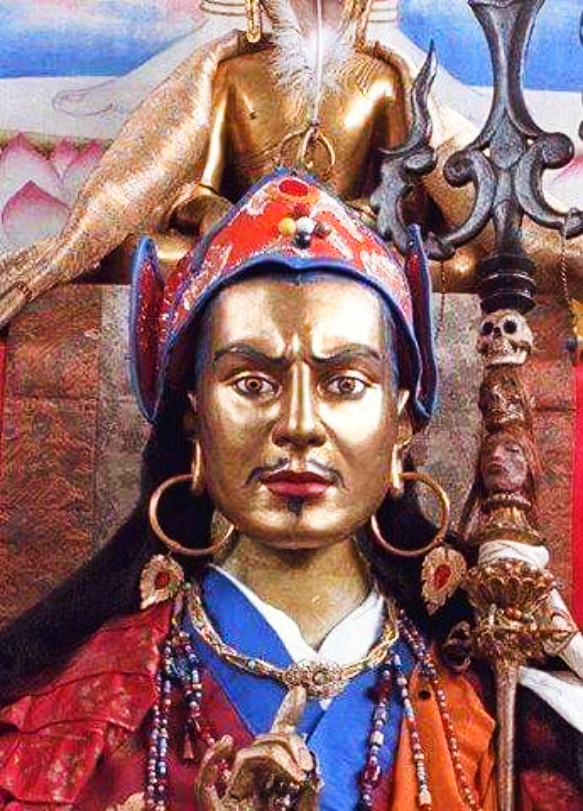
Domo Geshe Rinpoche also spent much time at the Yiga Chöling Gelug monastery in Ghoom or Ghum, near Darjeeling, India, and became responsible for this monastery, from which H. P. Blavatsky had written letters while staying there in the autumn of 1882, en route to spend several days with the Masters M. and K.H. and some of Their chelas who were in nearby Sikkim. It was also this same Domo Geshe Rinpoche who in the early 1920s officially inducted English Theosophists Alice Leighton Cleather (one of HPB’s closest esoteric pupils during her last years in London) and Basil Crump, along with Cleather’s son Graham and possibly their colleague Christobel Davey, into the Gelugpas, after which they were recognised as Gelug lay-disciples. The Cleathers and Crump lived some of the time in Darjeeling, as also did the Roerichs. Cleather and Crump would go on to form a close connection with the 9th Panchen Lama, who amongst other things encouraged them to republish HPB’s “The Voice of The Silence.”
“After the Tséwang, Phiyang Lama continued his daily instructions and finally crowned them by giving us in short succession two esoteric initiations which completed the circle (maṇḍala) of our previous initiations and introduced us to many new aspects of meditative practice, belonging to the most ancient tradition of Tibetan Buddhism as preserved by the Nyingmapas (lit.: ‘The Old Ones’). Thus we began to understand the various esoteric aspects of Padmasambhava, which have created such a sorry confusion among Western scholars, who neither understood the symbolic language of Padmasambhava’s Biography nor that of his teachings, and who mixed up descriptions of mystic experience with historical facts and legendary accretions. . . . His name, ‘Lotus-born,’ [i.e. the literal meaning of “Padma-sambhava”] indicates his spiritual birth from the ‘lotus’ or one of the psychic centres [i.e. chakras, which are often symbolically called lotuses, especially in Indian tradition] in the movement of his enlightenment or in the process of his spiritual realisation, which has to be re-enacted by each of his devotees, i.e. by all who have been initiated into his teachings and his way of ultimate liberation. . . . Reformers like Atīśa, Tsongkhapa, and others never rejected the traditions of earlier sects, but tried to synthesise their teachings and only criticised the faults of those among their followers, who had fallen from the high standard of their own professed ideals, and insisted on a re-establishment of those standards and the personal integrity of every member of the clergy.” (Lama Anagarika Govinda, “The Way of The White Clouds”)
~ * ~
This article may have raised more questions about various things. Please make use of the site search function (the magnifying glass symbol at the top of the page) and visit the Articles page to see the complete list of over 400 articles covering all aspects of Theosophy and the Theosophical Movement. You may like other articles listed under the heading “BUDDHISM AND TAOISM.”
Other articles closely related to this one include
THE ESSENCE OF BUDDHISM, THEOSOPHY AND TIBETAN BUDDHIST TANTRA, DEATH AND THE AFTERLIFE, WHEN WE DIE, BUDDHA NATURE, “THE VOICE OF THE SILENCE” – AN AUTHENTIC BUDDHIST TEXT, KALACHAKRA AND THEOSOPHY, and THE DALAI LAMA, THEOSOPHY, & THE GELUGPA TRADITION.
~ BlavatskyTheosophy.com ~
 T H E O S O P H Y