
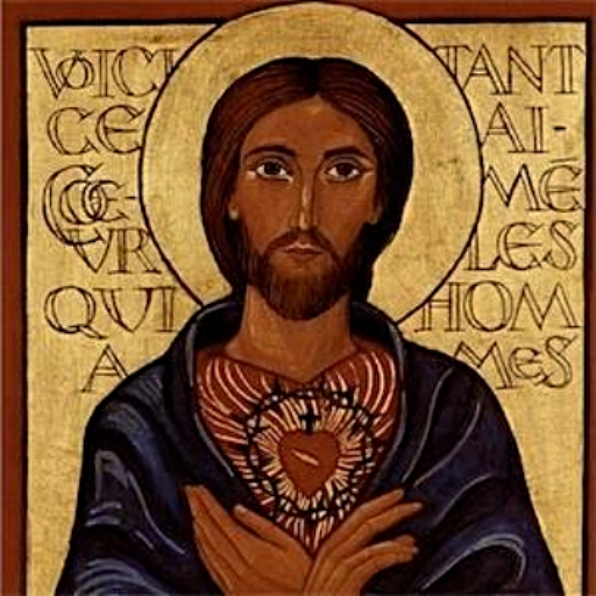
“Theosophy was founded as a nucleus for Universal Brotherhood. So was Christianity. The latter was a complete failure and is a sham, only because the Roman Latin Church claims infallibility, absolute authority, and will convert by fair or foul means the two other Churches [i.e. the Eastern Orthodox and the Protestant, the latter of which takes many hundreds of different forms and denominational expressions] to her way of thinking. So do the other two but in a weaker degree. Now Christianity is the same Theosophy, only in masquerade dresses [i.e. “dressed up” in a way that disguises its true Theosophical nature and character, except to those who know and understand what is behind the mask and the costume], this cycle of ours being the carnival period of the greater cycle, that of our sub-race. Don’t let us do as the Christians do. Our Society was established to bring together people as searchers after truth, independent thinkers, one having no right to force his opinion on the other: or meddle in his religious views.” (“The Letters of H. P. Blavatsky to A. P. Sinnett” p. 221)
“We have but to follow the precepts of our respective great and noble Masters on earth. The East had her Sakyamuni Buddha, “the light of Asia”; the West her Teacher, and the Sermon on the Mount; both uttered the same great, because universal and immortal, truths.” (H. P. Blavatsky, “The Fall of Ideals”)
“In isolating themselves as they do, neither the Yogi nor the “Saint” helps anyone but himself; on the contrary, both show themselves profoundly indifferent to the fate of mankind, whom they fly from and desert. Mount Athos [i.e. the famed and isolated Greek Orthodox monastic community] contains, perhaps, a few sincere fanatics; nevertheless, even these have without knowing it got off the only track that leads to the truth — the path of Calvary, on which each one voluntarily bears the cross of humanity, and for humanity.” (HPB, “The Beacon-Light of The Unknown”)
The Abbé Roca, a broad-minded, anti-papal, and quite Theosophically inclined priest of the Roman Catholic Church in France, wrote in an open letter/article to HPB: “It is written, perchance, in the decrees of Providence that these mysterious Keys shall be brought to the brethren of the West by the “Brothers” of the East. Hence it would be Christ himself who would be directing this occult movement in order to realize his own saying:- “I will give thee the keys of the kingdom of heaven” [Matt., xvi, 19], by making them pass from the hands of the Mahatmas into thy hands, O Peter [i.e. the Catholic Church], . . .”
H. P. Blavatsky replies on this point: “Yes, it is indeed the Christos himself who directs this occult movement; but if it is so, it is not with the idea that Saint Peter, who denied his Christ three times, should receive the keys of the mysteries from the hands of the Mahatmas, nor that the latter should re-enact the scene of the three Magi-Kings.” (“Theosophy: Some Rare Perspectives” p. 31, 48)
“My only hope is that you will understand that my books are not aimed against religion, against the Christ, but against the heinous hypocrisy of those who murder, burn, and kill in the name of the Almighty Son of God, ever since the moment of his death on the Cross for the sake of all humanity, and especially the sinful, fallen men, the heathen, the fallen women, and those who have gone astray. . . .
“Jesus was chosen by the Divine Spirit, which descended into him instead of overshadowing him from a greater or lesser distance; and for the purpose of redeeming the human race, or rather to redeem forthcoming generations of men who had forgotten other Saviours, who had appeared in other times and countries [i.e. and who thus needed a new Teacher to remind them of the ancient, timeless, life-giving truths]. . . .
“You are wrong in expressing the opinion, my friend, that I only “cast a glance” towards Christ, but in reality yearn for the Buddha. I look straight into the eyes of Christ, as well as of Gautama the Buddha. . . . I see in both of them the identical Divine Spirit, invisible but clearly felt by me. . . . In words and deeds, as well as in the practical life of both of them, I feel with all my spiritual being the same substratum of Divine Truth. For me neither the dogmas of Christianity nor those of Buddhism and Brahmanism exist. . . . I am not against Christ or in favour of the Buddha, but against man-made dogmas. . . . For us, Christ, and for the Buddhists, Buddha. Both taught the blind people how to see truth, but the apostles of both distorted a great deal, some out of spiritual and bodily weakness, some out of ill will and selfish ambition like that of the Papacy.” (From letters of H. P. Blavatsky to her relatives; see Blavatsky on The Eastern Orthodox Church)
“Once unfettered and delivered from their dead weight of dogmatic interpretations, personal names, anthropomorphic conceptions and salaried priests, the fundamental doctrines of all religions will be proved identical in their esoteric meaning. Osiris, Krishna, Buddha, Christ, will be shown as different means for one and the same royal highway to final bliss, Nirvana. Mystical Christianity, that is to say that Christianity which teaches self-redemption through one’s own seventh principle — the liberated Paramatma (Augoeides) called by the one Christ, by others Buddha, and equivalent to regeneration or rebirth in spirit — will be found just the same truth as the Nirvana of mystical Buddhism. All of us have to get rid of our own ego, the illusory apparent self, to recognise our true Self in a transcendental divine life. But if we would not be selfish we must strive to make other people see that truth, to recognise the reality of that transcendental Self, the Buddha, the Christ or God of every preacher.” (Letter from the Maha Chohan)
““I baptize you with water, but . . . he shall baptize you with the Holy Ghost and with fire,” says John of Jesus (Matt. iii. 2); meaning this esoterically. The real significance of this statement is very profound. It means that he, John, a non-initiated ascetic, can impart to his disciples no greater wisdom than the mysteries connected with the plane of matter (water being a symbol of it). His gnosis was that of exoteric and ritualistic dogma, of dead-letter orthodoxy; while the wisdom which Jesus, an Initiate of the higher mysteries, would reveal to them, was of a higher character, for it was the “FIRE” Wisdom of the true gnosis or the real spiritual enlightment.” (HPB, “The Secret Doctrine” Vol. 2, p. 566)
“One of the greatest Masters . . . the Great Master . . . the Western Master . . .” (Wording used by H. P. Blavatsky when referring to Jesus Christ, in such articles as “The Book of Enoch,” “Some Reasons for Secrecy,” and “The Mystery of Buddha”)
“Theosophists have been called Atheists, haters of Christianity, the enemies of God and the gods. They are none of these. . . . [We] propose to give a series of essays upon the hidden meaning or esotericism of the “New Testament.” No more than any other scripture of the great world-religions can the Bible be excluded from that class of allegorical and symbolical writings which have been, from the pre-historic ages, the receptacle of the secret teachings of the Mysteries of Initiation, under a more or less veiled form. The primitive writers of the Logia (now the Gospels) knew certainly the truth, and the whole truth; but their successors had, as certainly, only dogma and form, . . .
“The Christian canon, especially the Gospels, Acts and Epistles, are made up of fragments of gnostic wisdom, the ground-work of which is pre-Christian and built on the MYSTERIES of Initiation. It is the mode of theological presentation and the interpolated passages — such as in Mark xvi. from verse 9 to the end [i.e. the passage which says that those who do not believe in Jesus shall be damned to everlasting hell; this is the only place in the Gospels where Jesus is presented as saying such a thing, and it has been widely known since Victorian times that this is a later sectarian addition and is not found in the oldest copies of the text; HPB remarks that this greatly disappointed the majority of Christians, who chose to ignore this information, keep it in the Bible, and continue preaching hellfire and damnation for unbelievers regardless] — which make of the Gospels a “magazine of (wicked) falsehoods,” and throw a slur on CHRISTOS. But the Occultist who discerns between the two currents (the true gnostic and the pseudo Christian) knows that the passages free from theological tampering belong to archaic wisdom, . . .
“There was a universal mystery-language, in which all the World Scriptures were written, from Vedas to “Revelation,” from the “Book of the Dead” to the Acts. . . . For, the more one studies ancient religious texts, the more one finds that the ground-work of the New Testament is the same as the ground-work of the Vedas, of the Egyptian theogony, and the Mazdean allegories. . . . The first key that one has to use to unravel the dark secrets involved in the mystic name of Christ, is the key which unlocked the door to the ancient mysteries of the primitive Aryans, Sabeans and Egyptians. . . . one may truly say that, in its purely metaphysical aspect, the Spirit of Christ (the divine logos) was present in humanity from the beginning of it. . . .
“Truly, Christianity can never hope to be understood until every trace of dogmatism is swept away from it, and the dead letter sacrificed to the eternal Spirit of Truth, which is Horus, which is Crishna [i.e. Krishna], which is Buddha, as much as it is the Gnostic Christos and the true Christ of Paul. . . .
“Occultism pure and simple finds the same mystic elements in the Christian as in other faiths, though it rejects as emphatically its dogmatic and historic character. . . .
“Belief in the Bible literally, and in a carnalised Christ [i.e. the belief that the word “Christ” is absolutely synonymous with the personal man Jesus, and that there is no Christ apart from the man Jesus, rather than the more Theosophical view that the man called Jesus gained unison with and became a direct conduit of the universal Logos or cosmic Christ, i.e. an Avatar of the Christos, as are all Avatars, though the terminology differs depending on the religious culture and part of the world; this same Theosophical view can in fact be found strongly hinted at in the Creed of St. Athanasius in the Anglican “Book of Common Prayer,” especially when read with the benefit of sound understanding of Theosophical philosophy and metaphysics], will not last a quarter of a century longer. The Churches will have to part with their cherished dogmas, or the 20th century will witness the downfall and ruin of all Christendom, and with it, belief even in a Christos, as pure Spirit. . . . theological Christianity must die out, never to resurrect again in its present form. This, in itself, would be the happiest solution of all, were there no danger from the natural reaction which is sure to follow: crass materialism will be the consequence and the result of centuries of blind faith, unless the loss of old ideals is replaced by other ideals, unassailable, because universal, and built on the rock of eternal truths instead of the shifting sands of human fancy. Pure immateriality must replace, in the end, the terrible anthropomorphism of those ideals in the conceptions of our modern dogmatists.” (HPB, “The Esoteric Character of the Gospels”)
~ * ~
A century ago, in 1925, around 70% of the UK population attended church. This began to significantly decline after the Second World War (1939-1945) and partly as a result of the crisis of faith brought about by that War, the horrors and destructions of which – especially when added to those of the First World War just a couple of decades prior – understandably caused many to reject the notion of a “loving Heavenly Father” or a “saving Jesus.” The rise of atheism (theoretical materialism) and the multiform practical materialism which invariably follows in its track, had already started around the middle of the 19th century but it began to boom after World War 2. By 2018, only 8% of the UK population was regularly attending church. At present, there is a modest but definite degree of renewed attraction towards Christianity and the Church, especially among young adults, and statistics showed that in 2025, 12% of the population were now church-goers. As her article “Karmic Visions” shows, HPB was well aware in the 1880s of both the First and Second World Wars that lay in store for the 20th century. Thus, her statement that “The Churches will have to part with their cherished dogmas, or the 20th century will witness the downfall and ruin of all Christendom” was based on esoteric knowledge of fact and has to a large extent proved prophetic, as has her warning of the “danger from the natural reaction which is sure to follow” such a downfall, namely “crass materialism.” In the article True Materialism and True Spiritualism we explained:
“Most people today – including most spiritually-minded people – believe that “materialism,” “materialist,” and “materialistic” refer to a person, people, culture, or society, which is chiefly motivated by the acquisition of money, possessions, material goods, and exterior success, whilst quite probably at the same time having a very superficial outlook on life, one which values and prizes appearance, fame, and wealth, above all else.
“Whilst it’s true that this is an expression of materialism, it is not what the word actually means.
““Materialism” is originally and primarily a philosophical term and means the belief and conviction that there is nothing above or beyond material objective life, that matter is all there is, that everything is essentially physical, biological, chemical, and mechanical, and that the idea of soul and spirit are ignorant delusions.
“A true materialist, then, is one who holds to this worldview and outlook. Materialism is basically a synonym for atheism but, unlike the latter term, it defines and gives some description of the atheist’s “philosophical” stance.
“When Theosophy speaks of materialists and materialism and declares that materialism is the enemy Theosophists have to fight in the world today, in order to save humanity from its own self-destruction, this is what it is referring to. That way of living and thinking which is today commonly described as “materialism” is merely the by-product of real materialism and can fade away when enough people see the materialistic worldview for what it is and turn their focus, attention, and consciousness towards its opposite.”
As undeniably flawed as conventional Church Christianity was, and still is, it at least provided the great service of keeping alive some degree of spiritual thought and perception among the general populace, as well as regular ethical instruction. It is a quantifiable fact that as Christianity and the Church have declined in the UK, murders, rape, violence, crime, drug addiction, sexual promiscuity, normalisation of pornography, and all other types of abuse and even psychopathic behaviours have accordingly increased.
“The loss of old ideals” among Christian peoples had to be “replaced by other ideals, unassailable, because universal, and built on the rock of eternal truths,” but this was not done and now – behold the tragic results! The influx into Christian nations of other religions and forms of spirituality, even Buddhism and Hinduism, has made and can make very little difference overall. No Christian nation is going to convert en masse to some other religion, nor is that what the Theosophical Mahatmas had in mind. Neither did They anticipate the substitution of Theosophy itself for Christianity, for it was made clear that Theosophy is not intended to be a religion substitute:
“Theosophy is not a religion, but a philosophy at once religious and scientific; . . . the chief work, so far, of the Theosophical Society has been to revive in each religion its own animating spirit, by encouraging and helping enquiry into the true significance of its doctrines and observances. . . . The Theosophical Society has branches respectively composed of Buddhists, Hindoos, Mohammedans, Parsees, Christians and Freethinkers, who work together as brethren on the common ground of Theosophy; . . . the work it has undertaken — the revival of spirituality in religion, and the cultivation of the sentiment of BROTHERHOOD among men.” (H. P. Blavatsky, “Lucifer to the Archbishop of Canterbury, Greeting!”)
“The work of the Society in Christian lands is ever tending to bring forth a real Christianity, and not to oppose it. . . . the Society is a builder up and not a mere destroyer of old beliefs.” (William Q. Judge, “The T.S. and Its Basis”)
“Thus it is plain that the methods of Occultism, though in the main unchangeable, has yet to conform to altered times and circumstances. The state of the general [Theosophical] Society of England — quite different from that of India, where our existence is a matter of common and, so to say, of inherent belief among the population, and in a number of cases of positive knowledge — requires quite a different policy in the presentation of Occult Sciences. The only object to be striven for is the amelioration of the condition of MAN by the spread of truth suited to the various stages of his development and that of the country he inhabits and belongs to. TRUTH has no ear-mark and does not suffer from the name under which it is promulgated — if the said object is attained.” (Master K.H., “The Mahatma Letters” p. 399)
“You can do immense good by helping to give the Western nations a secure basis upon which to reconstruct their crumbling faith.” (Master K.H., “A Master’s Letter,” the first Mahatma Letter to A. O. Hume)
There the Master Koot Hoomi does not speak of giving the Western (i.e. Christian) nations a secure basis on which to construct a new faith. Rather, what is spoken of is the re-construction of their existing but now crumbling faith.
The revival or regeneration of Christianity, with a more universal, mystical, and – where possible – esoteric, colouring or flavour, free from dogmatism and sectarianism, while emphasising the vitality of and the ensuing peace and joy from the pure ethics inculcated, for example, in the Sermon on the Mount – surely this is the scenario seen by the Great Lodge of Masters as the most useful and most possible of accomplishment for the Western world, or at least the nominally Christian nations? The same principle in outline would hold true in other parts of the world for their own respective religions.
Theosophists are familiar with the oft-repeated teaching of the Bhagavad Gita about the importance of not shirking or abandoning one’s natural duties or responsibilities. If that is a fundamental of the Ancient Wisdom, it stands to reason that the various Masters who have established the different religions of the world – when incarnated as Jesus Christ, as Gautama or Shakyamuni Buddha, Krishna, Mohammed, etc. – have not abandoned or wholly given up on them. In other words, they have not and would not walk away from them, discarding them, and leaving them entirely to their own dismal fate. How could they, without violently contravening the law of karmic duty? Whatever other names those Masters may now be known by, it does not seem unreasonable to suppose that both directly and via their disciples, they are still actively endeavouring to inspire, teach, influence, or guide sufficiently receptive and suitable individuals, as well as small groups, within their respective religions, with the ultimate aim of truly helping and aiding increasing numbers of people and the welfare of the world.
It is true that no great Teacher of the Lodge or Brotherhood ever founded a religion in the sense in which the religions exist today. They established groups of disciples and pupils, and these subsequently spread out and transformed into official religions following the passing of the Teacher. And as we know, those religions over time take on quite a different form and expression – sometimes very different – than in their beginning. Nevertheless, they can all ultimately be traced back, some more directly than others, to that Teacher and their work and activities. William Q. Judge once expressed that the world religions are the modern remnants of ancient Mystery Schools.
The following is from the article The Forgotten Theosophical Society about The Theosophical Society headquartered in New York, now defunct but from whom we personally take much inspiration:
“We have to be careful not to react to and judge all such things from an anti-Christian bias or prejudice. Many students of H. P. Blavatsky’s teachings have such a bias, in varying degrees, but we do not believe this can reasonably be attributed to HPB or her writings but rather to people’s own negative experiences with the Christian Church and conventional Christian doctrine, or “Churchianity.” After all, HPB made such statements as these:
“Once I was in a great cave-temple in the Himalayan mountains, with my Master [i.e. the Master M. or Mahatma Morya]. There were many statues of adepts there; pointing to one of them, he said: ‘This is he whom you call Jesus. We count him to be one of the greatest among us.’” (from “A Meeting with HPB” by Charles Johnston)
“H. P. B. . . . told them [i.e. her Russian Orthodox Christian family] that her Master had a deep respect for the spirit of Christ’s teachings. She had once spent seven weeks in a forest not far from the Karakoram mountains [Note: Technically speaking, the Karakoram range is north of the Himalayas and is considered a Trans-Himalayan mountain range], where she had been isolated from the world, and where her teacher alone had visited her daily, whether astrally or otherwise she did not state. But whilst there she had been shown in a cave-temple a series of statues representing the great teachers of the world, amongst others:
“”A huge statue of Jesus Christ, represented at the moment of pardoning Mary Magdalene; Gautama Buddha offers water in the palm of his hand to a beggar, and Ananda is shown drinking out of the hands of a Pariah prostitute.”” (“Letters of H. P. Blavatsky” Part II, compiled and published by William Q. Judge, “The Path” January 1895)
“Jesus . . . the Theosophists . . . see in him, or the ideal he embodies, a perfect adept (the highest of his epoch), a mortal being far above uninitiated humanity.” (“A Word with Zero”)
“Theosophists, even those who are no longer, as those who never were, Christians, regard, nevertheless, Jesus, or Jehoshua as an Initiate . . . in whom they see one of the Masters of Wisdom.” (“Miscellaneous Notes” from “Lucifer” magazine, August 1888)
“Christ . . . [we regard him] as an Avatar like Gautama Buddha and other great adepts who became the vehicles or Reincarnations of the “one” Divine Influence.” (“On Pseudo-Theosophy”)
“In light of such statements, how can any serious student of Theosophy recoil from legitimate mention and promotion of Christ and his teachings, even from those in the Four Gospels of the New Testament, which HPB in her lengthy and important series of articles titled “The Esoteric Character of The Gospels” repeatedly affirms to have an actual esoteric and mystical basis and origin?
“The Master Hilarion informed Genevieve Griscom – and, through her, the others in the Esoteric School – that since one’s dharma or duty is what naturally presents itself to us, and “washes up at our feet,” so to speak, the greatest duty of Western Theosophists as regards the religious sphere is to help the Christian Church, both from without and within . . .for if Theosophists do not utilise in this direction the understanding and knowledge they have gained from their studies, and provide the help that is needed by the Church and Christians, who will? And who can? The Master explained that our duty to Buddhism, Hinduism, and other religions, is far less than to our own native religion, the religion of our own country and ancestors. It is not for no reason or to no purpose that we have incarnated in a Christian country or Christian part of the world this time around. It was said that such a course of action could not have been taken reliably, effectively, and constructively, had not 20+ years of study of H. P. Blavatsky’s writings cleared their minds of conventional Christian ideas, attitudes, and predilections, and enabled them to see and appreciate Christ and his teachings completely afresh and in a Theosophical light.”
Some Western Theosophists will not feel any affinity with that and that is perfectly fine. Each has their own Karma to work out and their own dharma to fulfil. But one has to be aware whether or not one’s perceived lack of affinity towards something is a genuine lack of Karmic affinity, or simply a bias and a prejudice. If one considers Christ, Christianity, and the Christian scriptures to be something inherently inferior to those of the East, and if one essentially celebrates the decline of Christian faith and looks forward to the day when that religion exists no longer, and if one automatically laughs dismissively or tuts derisively at almost anything Christian, or if one cannot bring oneself to read any spiritual book or text that happens to have been written from a Christian perspective or using Christian terminology . . . then one is clearly in stark opposition to the views and teachings of H. P. Blavatsky which have been quoted throughout this article. Besides that, one is clearly suffering from some degree of anti-Christian prejudice. From a purely mundane perspective, that is quite understandable, especially considering the many monstrosities that have been committed in the name of Christianity and the Church. But from an occult perspective, it is not permissible, at least not if one hopes to be able to be of conscious and direct service to the Masters in this life. An accepted chela (disciple) cannot be a person afflicted by prejudice.
As students of Theosophy, we would also do well to guard against the mistaken notion that the Trans-Himalayan Brotherhood or Eastern Brotherhood in general constitutes the whole of the Great Brotherhood or Great White Lodge of Mahatmas, Adepts, and Initiates. It does not. The Brotherhood is Western as well as Eastern and we must not forget about the Egyptian Lodge, which is closer to us both geographically and in modes of thought than the Eastern. Although the ultimate aim of all branches or divisions of the GREAT LODGE is the same, and although the philosophy they teach is in essence identical, there are many surface differences between them. For striking proof of this, see in the article Find God and Know Yourself the comparison between the thoroughly different views or statements on the subject of God from the Master K.H. of the Trans-Himalayan Lodge and the Master Serapis of the Egyptian Lodge. One can also see there, and in other letters in the series from which those words are excerpted, that the Egyptian Brothers endorse and recommend a practice of praying for other people, whereas HPB and her Trans-Himalayan Teachers famously do not.
The Master Christ is seen “beyond any doubt, as an Initiate of the Egyptian Mysteries,” says HPB in her article “Traces of The Mysteries.”
She alludes to this in “The Secret Doctrine” when remarking that “the narrow upward passage leading to the King’s chamber [i.e. in the Great Pyramid at Giza, used for initiatory purposes] had a “narrow gate” indeed; the same “strait gate” which “leadeth unto life,” or the new spiritual re-birth alluded to by Jesus in Matthew vii. 13 et seq; and that it is this gate in the Initiation temple, that the writer who recorded the words alleged to have been spoken by an Initiate, was thinking of.” (Vol. 1, p. 318)
The Master Hilarion, in assuming responsibility for the inner direction and guidance of The Theosophical Society headquartered in New York following Katherine Tingley’s attempt to dissolve the Society in early 1898 (see The Forgotten Theosophical Society), made it privately known via his disciple Genevieve Griscom (or Cavé) that he is part of the Egyptian Lodge, not the Trans-Himalayan, although the two naturally work very closely together. The Master’s Egyptian connection (though Greek-Cypriot himself) was in fact strongly indicated some years before, in two of his books produced through the agency of Mabel Collins: “The Idyll of the White Lotus” and the most celebrated “Light on The Path.” In the original Theosophical literature we find mention of the Master’s connection with and visits to other Western countries, including Scotland, and in the literature of The Theosophical Society (New York) the attentive reader may notice some deliberately half-buried or semi-concealed references to his very close connection with France and his leadership of the Order of the Living Christ. But for more on that, please see the article just linked to. We also have an article titled The Egyptian Lodge and the Secret Wisdom.
We conclude this article with a few relevant statements from the pages of “Theosophical Quarterly,” which was published until 1938 by the Society we are referring to, which counted among its members many of the close co-workers of William Judge and H. P. Blavatsky, including HPB’s own niece Vera, who married Charles Johnston.
“Theosophists are concerned with the spiritual life of humanity as a whole. They are interested in all religions in so far as these promote, or can be made to promote, the development of that spiritual life. Some of us have an especial love for Buddhism; others for what little is known of the religion of ancient Egypt; others for some off-shoot of Hinduism, such as the Vedanta philosophy. But the vital fact remains that we who were born in Europe or America were not born here by chance, and that the religious language of our inheritance and environment is not Buddhist nor Egyptian nor Hindu, but Christian. Would we convert Europe and America to the use of Hindustani or of Chinese, to the abandonment of English and French and German? Would we abolish the existing tongues, which, be it remembered, are natural growths, and persuade humanity to the use of Esperanto or Volapuk? We know better. We know that Theosophy was never propounded as a new religion, but as a method of interpreting all religions; as a very ancient interpretation, not only of religions, but of the symbolism of nature — physical, mental, and spiritual. So, in China, we should be able to use the terminology (the symbolism) of Confucius or of Lao-tsze; in India, we should be able to speak indifferently in the language of Shankaracharya or of Ramanuja, of Shandilya or of Narada — always for the purpose of upholding the Highest ideal which we can discover, with the aid of Theosophy, in the forms and symbols which we find in use. Should we do less for Christianity? . . .
“We can speak in any language; we can find the spirit in every form. Wherever men are gathered together with some love in their hearts for that which is above and nobler than themselves, we can join them in their worship, and, should the occasion offer, suggest the next step towards a more rational, and at the same time a more spiritual interpretation of the symbols we find them using. Incidentally, we shall learn that before we can serve them, we must gain their confidence: they must discover for themselves that we are not iconoclasts who would tear down, but that we are even more religious than they are, at least as sincere as they are, just as devout as they are, that our respect for their symbols is profound and that our love for the truths which such symbols convey is paramount. Not until they are sure of this will it be possible to help them intellectually, or to place at their disposal the deeper insight into spiritual things which Theosophy has given us. . . .
“It may be that Theosophists, by all these years of Christian propaganda (for the occult tradition is of the very essence of Christianity), have already done much to guide the thought of the western world, including that of the Episcopal Church, in the direction the Church should go. We have upheld the immediate reality of Christ, both as active principle and as living Master. We have maintained, as few if any of the Churches have maintained, the truth of the saying, “Lo, I am with you alway, even unto the end of the world.” We have insisted that the words of St. John — “That was the true Light, which lighteth every man that cometh into the world” — are literally and not merely apologetically true. We have declared, and have done our best to prove philosophically, that “as many as received Him, to them gave He power to become the sons of God.”
“In other words, we have stood, among Protestants, as the defenders of Christian Mysticism, which the Protestant Churches, unlike the Roman Catholic, have for the most part failed to value or to understand. In our opinion, it is only because of a growing belief among Churchmen in these mystical and truly Christian tenets . . . that the best of Churchmen everywhere will learn to look more and more for points of agreement between themselves and others, rather than for points of difference. Does this mean that Theosophists have already done their share of the work? It is the belief of the present writer that they have scarcely yet begun it.
“In years past, they had to use the means and methods of pioneers: their work was rough and crude. There seemed to be no time for tact, even if the circumstances had called for it. We laughed at prejudices; we rode rough-shod over habits of mind and speech; we gave and received blows, carelessly, like half-grown boys. But now we are men — or ought to be. Among other things, our manners should have improved. The need now is not for rough and tumble fighting, but for tact and patience and a tremendous perseverance. It is possible to be brave, and yet to be wise.
“Is there any virtue in parading the extent of our differences from others? Do we further the scheme of evolution by labeling ourselves “peculiar”? If it were given to us to assist some spiritual revival in China, should we flaunt before Chinamen our most superior familiarity with the Bible? If we found them to be repelled by the doctrine of Reincarnation, but ready to accept that of the infinite possibilities latent in all men, would it be wise or right to insist that they must swallow either both pearls, or none? Surely by this time we as Theosophists should have learned the meaning of “esotericism.”
“Surely we should have discovered that at a meeting of members and students, or at a meeting advertised as theosophical, it is right and proper to use, within limits, our own terminology, and to expound those views of life and of nature which we regard as distinctively our own; while, on the other hand, at a meeting of Oddfellows or of Baptists or of Positivists, it is best (and certainly more polite) to use so far as we can whatever language we may find current there among them. In every sense, if we consider ourselves qualified to teach, we should be able so to modulate our voices that we do not frighten or deafen our pupils. To carry them one step further than their previous thought is helpful; but to attempt to flick them into jumping a mile is either silly or insane. . . .
“Above all things let us avoid the negative attitude. Our work should be constructive; not destructive. If we learn that someone believes firmly in the Immaculate Conception, instead of chasing him with the wholly unimportant fact that we do not (if we do not, and, as students of Theosophy, we should know that this dogma is the symbol of a fundamental truth) — let us realize that on this particular point our friend needs time in which to mature, but that on other points his mind may be looking for light, and that further acquaintance with him may reveal in just what connection we may be of service to his soul.” (Ernest Hargrove, “Christianity and The Churches”)
“The very first studies in Theosophy had brought a wanderer back to the old Church in which he had been reared and from which he had turned in a stage of “rationalism,” . . . Until the Bible and the Book of Common Prayer were recognized as Theosophical they had, as a matter of fact, made no real appeal. They had been read in duty, used by rote and even enjoyed emotionally, but they had never been the guides to the Path that they became when considered in the light of Theosophy. Since then, there has been found in them, in almost every phrase, pure Theosophical doctrine paralleling — no, duplicating — the Theosophical doctrine in the Eastern Scriptures, such as the Bhagavad Gita, which were also part of the beginner’s early reading.
“This is emphasized so strongly because the Christian aspect of Theosophy, which has so rejoiced the student reporting, does not always appear to those who would otherwise be attracted by the T. S. There are those who use these great Theosophical books almost daily in Church, and yet are obsessed by a conviction (to one churchman-student entirely unexplainable) that Theosophy is unchristian. Whereas, to one who makes even a cursory study of the various Scriptures and studies the doctrine at all, it would seem unavoidable to conclude that Christ Himself taught and teaches pure Theosophy of the highest, finest kind. To the new member it sometimes seems as if the apparent failures of Christianity have only been at such times as its so-called teachers and would-be followers have departed from Theosophy and thereby from the fundamentals and indespensables in the teachings of the Master. . . .
“The more one studies the career of Madame Blavatsky and the record of the T. S. the more apparent it grows how powerful an instrumentality the combination has been in making more Christlike the Christian Church. Madame Blavatsky might be regarded as the blacksmith cutting off, under orders, the collar of serfdom even at the expense of momentarily hurting the freedman!
“That Madame Blavatsky never opposed the Master Christ or His own teachings, and, therefore, never was opposed to true Christianity seems to be the inexorable conclusion to be drawn from even a cursory study of her work; from even a beginner’s analysis of the doctrine she transmitted.
“That this is not to be dismissed as a mere opinion of a new student is indicated by the fact that while the T. S. has all creeds represented in its membership, in accordance with its Constitution and its practice of tolerance, yet among its most loyal and active members (including some of Madame Blavatsky’s own pupils) are to be numbered some of the gentlest, finest, truest followers — veritable disciples in truth — of our Lord Jesus Christ that are to be found throughout Christendom.
“It was from an active worker in the T. S. organization, a man of brains, ability and high standing in the outside world, that the writer first heard enunciated as fact, a firm belief, a quiet conviction that the Master Jesus Christ in person works to-day as an active Individuality to save His flock — a doctrine set forth in the New Testament and accepted by the Fathers and even yet recited in words from every Christian pulpit, but truly accepted and believed in by pathetically few outside the T. S.
“As the applying student found, and as set forth in its Constitution, no one has to accept anything arbitrary in joining the T. S. It is the experience of one new member that the modern Theosophical teachings and organization started through Madame Blavatsky bring one back to the Master, Jesus Christ our Lord, and to His Church, in the simple and sincere spirit of a little child who foolishly runs away in a make believe feeling of being grown-up and who returns, tired and sorry but sure of a welcome, to a loved and loving parent and a happy home.” (Servetus, “Some Aspects of Theosophy – As Seen by a New Member of the Society”)
“Those of us who believe in the great Lodge of Masters, whether our belief rest on personal knowledge or intellectual conviction, must recognize that from this immortal brotherhood came the founders of all the world religions as well as the initial impulse for the formation of the Theosophical Society. We cannot, therefore, take this view without perceiving that “the faiths are all brothers, all born of the same mystery,” all rooted in the same changeless science of the soul. And we cannot be true to the light that has been given us unless we recognize its presence and its guidance in the great systems that for centuries have been the open channels for the world’s aspiration and religious life. As the Masters have not deserted the Society they founded so are they working ceaselessly within the great religions they established in the past, and we cannot seek to become their fellow servitors and disciples without assuming the obligation of loyalty to their aims and a faithful seconding of their work.
“Theosophy and Christianity, therefore, so far from being opposing or separate systems, are indissolubly united in their common source, their common truth, and their common leadership. The symbols in which their teachings are couched differ, as do our mental images of to-day from those which our ancestors used a thousand years ago. But it is the part of the Theosophist to see within the symbol to the truth which it depicts, and to be able of his own knowledge to testify to its reality and its worth. There is no Christian or Buddhist symbol which is not equally and of necessity a theosophic symbol. There is no article of the Christian faith of which the Theosophist cannot say: “Yes, I too believe, and in this tenet there is more truth and deeper meaning than you yet see.” Even in the overgrowths and distortions of age-long misunderstanding we can find and uncover the spark of truth which they conceal.
“This is the obligation of the Theosophist to the great religious faiths; and, in this time and country, it is peculiarly our obligation to Christianity. For us many veils have been lifted, but the vision we have been vouchsafed must be used for all who aspire to the life of the soul. They must be aided to see even as we have seen, the constant outpouring of their Master’s help and love, and the presence of that great order of disciples, servants of the living Christ, whose ceaseless labors have never failed the Christian Church.
“It is true that the world has grown in these nineteen centuries since the birth of Jesus. The Hebraic legalism which first obscured his message and the scholastic philosophy which formulated and hardened it, are alike in dissonance with our modern thought. There are many, therefore, who believe that their growth has taken them away from the ancient systems, and that Christianity can no longer give them the spiritual sustenance they need. To such, perhaps more than to all others, Theosophists can render deep and lasting service. For within the old interpretation they have outgrown, we can show a deeper, richer significance; and through the pathway of their own faith, all but lost to them, we can lead them back to the truths of the Spirit for which they have hungered.
“Such is our opportunity and obligation. But to fulfill it we have need for more than knowledge of theosophy and Christian teaching. An intuitive sympathy and understanding which do not fail, a self-control which is never off its guard, and a poise which is not shaken, must be made permanently our own. It is not an easy task. The service in which the Theosophist is enlisted commands all the power of mind and heart and soul. But its rewards are great, and in the Masters’ service and by their help we can do what alone we could not hope to accomplish.” (Henry Bedinger Mitchell, “Notes and Comments”)
“Had I longed for the Master of Wisdom, at whose feet I might sit and learn the deep things of God, thinking to find him only in alien [i.e. foreign, unfamiliar] lands and faiths? There, all the while, nearer than hands or feet, guiding, directing, loving, stood a living Master, Christ Jesus, who in His glorified Humanity, still shares my nature and therefore capable of being known and loved, as friend by friend. Love, then, for the living human Master (human still, however and in what degree transcending our conception of ordinary humanity), love was the flame to the torch! . . . the Theosophical Society gave me back Jesus Christ, even the Divine Vision, radiating light, yet none the less living Master and Friend. “Theo-Sophia” – “The Wisdom of God and the Power of God.”” (S., “Why I Joined The Theosophical Society”)
“You also speak of becoming dissatisfied with Christianity. Please do not forget that Christianity is the religion given by the Great Lodge to a third of the human race, including the portion of it to which you belong. Therefore your dissatisfaction with it is likely to be because you do not understand it, rather than because of its defects. Do not confuse Christianity, the teachings of Christ, with Churchianity, — the teachings of whatever Church or clergyman you happen to have heard. There is nothing in the world more elevating, more instructive, more spiritual, more inspiring, than the teachings of Christ.”
“There is no doubt that at present an attempt is being made, in which the Theosophical Movement has a part, to reinvigorate and freshen the old Christian doctrines. . . . So here is an immensely large and valuable organization already in the world, begging for help; and there is little doubt that Theosophy can do much for it. Furthermore, being, nearly all of us, at one time members of some Christian denomination, and all of us with Christian heredity, it is the most natural method to proceed along Christian lines, instead of, say, Buddhist lines, from which we are racially barred of full comprehension. H. P. B. had to start [the teachings given through the Theosophical Society] on Eastern lines or we never should have acquired a sufficiently detached point of view from which to value Christian teachings. We had to make an excursion into new territory, as it were, to get a fresh point of view; to get free from the mental entanglements of words and phrases. We know, for instance, what the Holy Ghost means, because we go back to a consideration of it free from its theological connotations, and with the Eastern teachings of the Higher Self, of the Universal Oversoul, etc., in our minds. We know what the Resurrection was, because we know something of the Eastern teaching of immaterial bodies, of the Mayavi Rupa, etc. And so it goes through the whole of Christian theology. The words and phrases are not stereotyped to us, they have a very real and a very vital meaning. It is now our duty gradually to instil this meaning into the minds of our Christian brethren whenever and wherever we have a chance.” (Clement A. Griscom, Jr., “Letters to Students”)
We have to remember that times have changed a lot since those passages were written. As we mentioned earlier, over the course of the last 100 years, regular church attendance in the UK sank from 70% to just 8% of the population. Thus the potentially far-reaching good that could be done by Theosophists within a church setting or environment in the first three or four decades of the 20th century cannot be done today, since the quantity of people is no longer there, nor is the degree of influence the Church once had. But, as we also pointed out, church attendance and attraction to Christianity is now gradually on the rise again in the UK, especially among the younger demographic. In 2025, Bible sales also significantly increased in the UK, with young adults again being the primary group responsible. Naturally, when the state of today’s world and the hollowness of modern living leads people who are from a Christian nation and religio-cultural background towards a spiritual alternative, they will mostly gravitate towards what is “closest” and most familiar to them, i.e. the Christian religion. One could not reasonably expect them to do otherwise, nor is there any particular reason why they should. It might be beneficial to keep an eye on this development and then each decide for ourselves how, as individuals or as groups/lodges/branches of Theosophists, we may best be able to help and serve.
But we do not wish to give the impression that we as students of Theosophy merely have something to give to Christianity and nothing to receive or learn from it. That would be very arrogant and also untrue. It is not only that Christianity needs us; many of us also need the devotional heart-qualities, the softening of the heart, the mystical bent, the deep adoration of the Divine, and the putting of the intellect in its proper place, subordinate to LOVE and direct inner experience, which Christian Mysticism or a mystical approach to Christianity can bring. Some Theosophists are entirely lacking in all of these things and many have them only barely developed, chasing instead after endless theoretical information, metaphysical data, and abstruse intellectual complexities. No-one is denying that this has a valid place but it is certainly not supposed to be in the primary place. That is not what Theosophy is really about. “Theosophia” means Divine WISDOM . . . and one cannot attain the Divine Sophia through books, intellect, or recondite debates. In this regard, we recommend reading Approaching Theosophy Through The Intellect or The Heart.
Of course, there are many ways to cultivate those faculties just enumerated. Christian Mysticism is only one of them but it is one which many of us will have the greatest natural affinity for and thus derive the deepest benefit from, especially those of us who may have been long suppressing a primal inclination or attraction towards Christ and Christianity due to mistakenly believing that as Theosophists we are “supposed” to prefer and focus on everything “Eastern” instead.
Finally, it becomes necessary to clarify that none of the above should be taken as in any way an endorsement of or recommendation for the Liberal Catholic Church or the psychically inspired, highly distorted “Christianity” of Adyar Society Theosophists such as C. W. Leadbeater, Annie Besant, or Alice Bailey. With their proclamations of the imminent and bodily Second Coming of Christ, the legitimacy of the Roman Catholic apostolic succession (Leadbeater, “The Science of the Sacraments” p. 286), claims that priests have the power to forgive and absolve the devotee’s sins and erase their negative Karma after receiving their confessions (ibid.), and the assertion that the Master Jesus (that is, the Leadbeater/Besant/Bailey version of Jesus) will become the new Pope and bring the Roman Catholic Church and Vatican into a position of supremacy and control over all of world spirituality and religion (Bailey, “The Destiny of the Nations” p. 59), plus much more besides, such individuals and movements have shown themselves to be tools and instruments – whether wittingly or unwittingly, only they can know – of the Black Lodge, the Dark Brotherhood. We would prefer not to have to mention them but we do so lest misunderstandings or misinterpretations arise. The last thing we would want to do is lead people toward them or toward Rudolf Steiner‘s Anthroposophy, which claims to be Esoteric Christianity but is really one man’s unsubstantiated and often deeply bizarre psychism.
~ * ~
“And now once more we have to beg the reader not to lend an ear to the charge against Theosophy in general and the writer in particular of disrespect toward one of the greatest and noblest characters in the History of Adeptship – Jesus of Nazareth – nor even of hatred to the Church.” (“Facts Underlying Adept Biographies”)
“The day when the Church will find that its only salvation lies in the occult interpretation of the Bible, may not be so far off as some imagine. Already many an abbé and ecclesiastic has become an ardent Kabalist, and as many appear publicly in the arena, breaking a lance with Theosophists and Occultists in support of the metaphysical interpretation of the Bible. But they commence, unfortunately for them, from the wrong end. They are advised, before they begin to speculate upon the metaphysical in their Scriptures, to study and master that which relates to the purely physical — e.g., its geological and ethnological hints. For such allusions to the Septenary constitution of the Earth and Man, to the seven Rounds and Races, abound in the New as in the Old Testaments, and are as visible as the sun in the heavens to him who reads both symbolically.” (H. P. Blavatsky, “The Secret Doctrine” Vol. 2, p. 747)
“It is not the desire of the Brotherhood that those members of the Theosophical movement who have, under their rights, taken up a belief in the messengers and the message should become pilgrims to India. To arouse that thought was not the work nor the wish of H.P.B. Nor is it the desire of the Lodge to have members think that Eastern methods are to be followed, Eastern habits adopted, or the present East made the model or the goal. The West has its own work and its duty, its own life and development. Those it should perform, aspire to and follow, and not try to run to other fields where the duties of other men are to be performed.” (William Q. Judge, “Letters That Have Helped Me” p. 73-76; see also William Q. Judge and The New Western Occultism)
~ BlavatskyTheosophy.com ~
 T H E O S O P H Y