
FROM “STUDIES IN THE SECRET DOCTRINE” BOOK I, p. 156-161
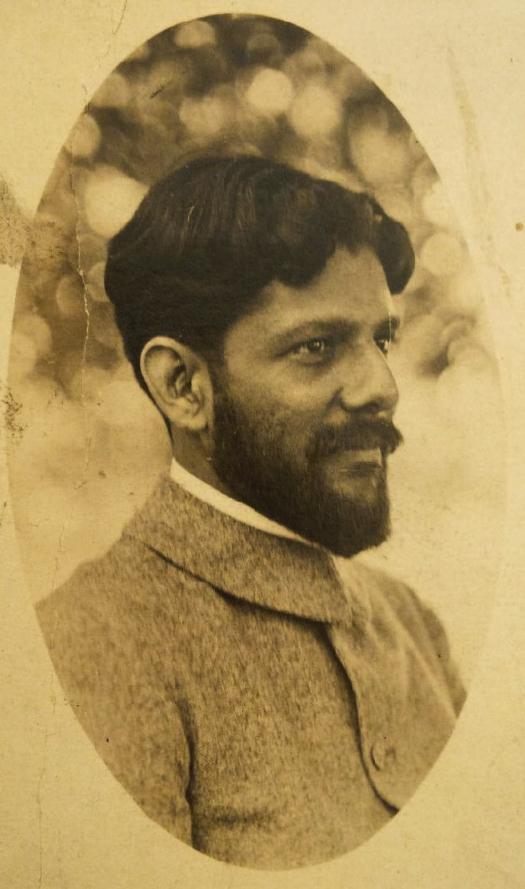
BY B. P. WADIA
Sacrifice is a much misunderstood word. Its association with religious and ascetic notions has given it a wrong significance. In the East the conception has deteriorated till yagna or yajna for some is akin to animal-sacrifice at the altar of the gods; for others, sundry ritualistic performances. In Christendom ”the sacrifice of Christ who died on the Cross for our salvation,” with its attendant vicious belief in vicarious atonement, is the corrupted expression of a sublime truth known to the world centuries before the Christian era. What the significance of Yagna-Sacrifice is for the student of the esoteric philosophy can well be gathered from the Note on Yajna in H. P. Blavatsky’s Theosophical Glossary.
The Self-energized, will-full and thought-full offering which Wisdom makes for the growth of the weak and the ignorant, joyously because with a purpose, is Sacrifice or Yagna. Mother Nature bountifully emptying herself in her milliards of forms makes such a sacrifice. With full knowledge the Masters follow that Example, who draw from the Night of mortal existence Their Disciples, one by one, into the Light of Immortality. The gratitude-expression of the chela of old was this:
“Salutations to the glorious Guru. He opened, with his collyrium-stick, my sight blinded by the darkness of ignorance and restored to me the Light of Wisdom. Salutations to the glorious Guru.”
The milliards of forms in and of Nature are but the expressions of her One Life. The child is formed of the mother-substance – bone of her bone and flesh of her flesh. The disciple embodies the indivisible One Wisdom of the Master – and every chela-follower has his guru-predecessor, in one holy chain spoken of as Guruparampara.
Because Nature is one, beings in Nature act and react on each other; thus circles and cycles are formed; the larger circle narrowing itself to meet and mingle with the smaller, and the latter expanding and becoming one with the former, produce the phenomenon, Sacrifice. It is necessary, therefore, at the very outset of this study to examine the following in the light of what has been said:
“The Secret Doctrine points out, as a self-evident fact, that Mankind, collectively and individually, is, with all manifested nature, the vehicle (a) of the breath of One Universal Principle, in its primal differentiation; and (b) of the countless “breaths” proceeding from that One BREATH in its secondary and further differentiations, as Nature with its many mankinds proceeds downwards toward the planes that are ever increasing in materiality. The primary Breath informs the higher Hierarchies; the secondary – the lower, on the constantly descending planes.” (II, 492) [“The Secret Doctrine” by H. P. Blavatsky]
Just as all human beings, however ignorant of Reincarnation and Karma, are reborn again and again to work out the effects of causes which they generated in former lives; just as all human beings suffer as well as profit from the age-yuga in which they are evolving, though most of them are not aware of the workings of the Law of Cycles; so also all human beings, however unrecognizant of the fact, benefit from the sacrifices of the hosts of higher intelligences, and also sacrifice themselves for the benefit of the hosts of lower intelligences. Says The Secret Doctrine:
“The AH-HI (Dhyan-Chohans) are the collective hosts of spiritual beings . . . who are the vehicle for the manifestation of the divine or universal thought and will. They are Intelligent Forces that give to and enact in Nature her ”laws,” while themselves acting according to laws imposed upon them in a similar manner by still higher Powers; but they are not “the personifications” of the powers of Nature, as erroneously thought. This hierarchy of spiritual Beings, through which the Universal Mind comes into action, is like an army – a “Host,” truly – by means of which the fighting power of a nation manifests itself, and which is composed of army corps, divisions, brigades, regiments, and so forth, each with its separate individuality or life, and its limited freedom of action and limited responsibilities; each contained in a larger individuality, to which its own interests are subservient, and each containing lesser individualities in itself.” (I, 38)
“Stanza IV shows the differentiation of the “Germ” of the Universe into the septenary hierarchy of conscious Divine Powers, who are the active manifestations of the One Supreme Energy. They are the framers, shapers, and ultimately the creators of all the manifested Universe, in the only sense in which the name ”Creator” is intelligible; they inform and guide it; they are the intelligent Beings who adjust and control evolution, embodying in themselves those manifestations of the ONE LAW, which we know as “The Laws of Nature.”” (I, 22)
The human constitution is a composite one. Man’s highest or Spirit-pole is a portion of the One Life, universal and unitary. It emerges from its state of spiritual unconsciousness and migrates to the plane of mentality still intellectually unconscious and from there its inherent energizing power functions. Like the grub which becomes chrysalis and butterfly, Man, or rather that which becomes man, passes through all the forms and kingdoms and human shapes, till self-consciousness comes to birth. Then progressing onward through savagery to citizenship and beyond to perfect sageship, the Mahatma is born. But all the time it is one and the same Being. That pole of our being which is the lower-material enjoys the sacrificial offering of the higher-spiritual. Thus Buddhi comes to be because Atma limits Itself, by its own inherent power. Body is formed because Prana sacrifices itself as a connecting, nourishing link holding in unison the countless lives who make the form-rupa. Manas sacrifices itself to redeem the Kamic nature by the same Law of Yagna which joins Buddhi to Manas.
Men are different but Man is one. The human principles elude enumeration, because every man differs from every other, just as there are no two leaves or blades of grass on the whole earth absolutely alike. With one man it is Buddhi that is predominant and stands as number one; with another the Lower Manas; with another Prana; and so on. But all men, without exception, are alike in this, that every principle of their natures is but a part of Nature itself. Every Jiva-atma is but a portion of the Pratyag-Atma; buddhi in man is but a part of Maha-buddhi in Nature; manas comes from Mahat; body is of the earth; its design is part of the Design of Nature; the prana which works with the corpus and its design is like a drop of water from the Ocean of Jiva; Kama, the middle principle, between the two triads of Atma-Buddhi-Manas and Prana, Linga-sharira and Sthula-deha is but a portion of the universal Kama-Eros, which becomes the blind Cupid functioning on the plane of the lower.
Man is the small copy of Nature, and contains in himself centres through which all the great forces of Nature may be operated. Nay more – man is identical with the Absolute unmanifested, and also with the Deity as we see it manifested in Nature. Man and Nature are one. It is on the acceptance or rejection of the teaching of the Unity of all in Nature, in its ultimate Essence, that a real comprehension of the cosmogenesis and anthropogenesis of The Secret Doctrine depends.
“It comes to this: Mankind in its first prototypal, shadowy form, is the offspring of the Elohim of Life (or Pitris); in its qualitative and physical aspect it is the direct progeny of the ”Ancestors,” the lowest Dhyanis, or Spirits of the Earth; for its moral, psychic, and spiritual nature, it is indebted to a group of divine Beings, . . . Collectively, men are the handiwork of hosts of various spirits; distributively, the tabernacles of those hosts; and occasionally and singly, the vehicles of some of them.” (I, 224)
The teaching about the Hierarchies of Intelligences of differing degrees has to be grasped to gain a clearer comprehension of the sacrifice made by those who possess higher forms for the benefit of those who are lower in the scale of evolution. The Law of Yagna is the foundation of manifestation itself, say the ancient scriptures. We fail to perceive the intimate connection existing between Nature and Man because we do not see that of the conflicting principles in us. Differences in Unity is the programme of manifestation and, similarly, harmony in the midst of conflict is that of the human stage of evolution. Through the Law of Sacrifice man succeeds in paying his own Karmic debts; through it he learns that the cause and effect aspects of Karma are not to be separated, as they are one in reality; thus man recognizes that pleasure and pain are not to be regarded in the light of reward and punishment but both have to be taken as avenues to experience. When action is performed as sacrifice its reaction is altruistic. Says the Gita (pp. 24-25):
“But the man who only taketh delight in the Self within, is satisfied with that and content with that alone, hath no selfish interest in action. He hath no interest either in that which is done or that which is not done; and there is not, in all things which have been created, any object on which he may place dependence. Therefore perform thou that which thou hast to do, at all times unmindful of the event; for the man who doeth that which he hath to do, without attachment to the result, obtaineth the Supreme.”
Altruism and selfishness work within our constitution. The lower nature in man, failing to appreciate the sacrifice made for it and on its behalf by the higher, wars with other lower natures. Our mentality sharpened in devising tactics and strategy to dodge the voice of conscience and to hide the activity of the Kamic nature competes with other mentalities by the same tricks. Failing to listen to the voice of Buddhi in him, man fails to hear the music of Nature. Permitting Kama to pollute his body of senses, he uses that body to corrupt the bodies of others. When war rages within us we cannot but see confusion abroad. The conflict of human principles pushes the individual to compete with his neighbour. Because of this war and conflict within, even man’s virtues often cause him anguish – love producing jealousy, the sense of justice resulting in anger, the ardency of service causing impatience, and spiritual progress itself engendering pride.
If there are barren and fertile periods for human civilization so are there for soul culture. During the barren periods the sympathy or rapport existing between all Nature and man is at a low ebb. When that kinship asserts itself man tends towards soul-culture. In the emergence of such kinship the instrument of Theosophy and Theosophists plays its part. But every such arousal has to be sustained by self-energization, persevered in by constant effort and heedfulness. The maintenance of the right attitude and its unbroken expression through continuous right approach to all the problems of life compel man to recognize his own individual responsibility to all beings of all kingdoms, to Nature herself. The prolific mother earth, the cleansing waters, the vitalizing fire, the health-giving air, the constructive and regenerating electrical and magnetic forces – to all these is due a great debt. The colour and fragrance of flowers on earth, the brilliance of distant orbs in heaven, the nourishment which plant life bestows on our bodies, that which the beauty and majesty of space bestow on our minds – to them we owe a mighty acknowledgment. Men recognize obligations for kindness done and service rendered by fellow men; we have not yet begun to realize our responsibility and our duty to all the kingdoms of Nature. It is necessary for us to contemplate how invisible and visible aspects of all Nature flow into us and how from us radiate beneficent or baneful influences to every kingdom and literally to the four quarters of space itself. ”He who enjoyeth what hath been given unto him by the gods, and offereth not a portion unto them, is even as a thief,” says the Gita.
A clear perception of the Compassion of Nature which is the energy of Sacrifice-Yagna arises from the study of the metaphysics of The Secret Doctrine. The impersonal principles embodying themselves in personalities, their return to those ultimate principles as Perfected Individualities results from that study. The book is for the student of Occultism. These really esoteric tenets are not for any other than the quiet, contemplative student who, putting aside Kamic excitements of the lower mind, will brood and ponder over them with the aid of Buddhi-manas or Intuitional Intelligence. Such a study alone destroys the inner conflict and the lustful propensity to live in the objects of the senses. Says The Voice of the Silence:
“There Klesha is destroyed for ever, Tanha’s roots torn out. But stay, Disciple. … Yet one word. Canst thou destroy divine COMPASSION? Compassion is no attribute. It is the Law of LAWS – eternal Harmony, Alaya’s SELF; a shoreless universal essence, the light of everlasting right, and fitness of all things, the law of Love eternal.
“The more thou dost become at one with it, thy being melted in its BEING, the more thy Soul unites with that which Is, the more thou wilt become COMPASSION ABSOLUTE.”
H.P.B. defines this Compassion as “an abstract impersonal law whose nature, being absolute Harmony, is thrown into confusion by discord, suffering and sin.” In Buddhist esotericism this Compassion is the prime attribute of Adi-Buddha and is sometimes called Adi-Bodha, the former embodying in himself the latter or the latter incarnating as the former. This Compassion is the positive characteristic of Paramartha-Satya – the Spirit and Essence of philanthropy, altruism and self-less-ness. The philanthropist is known as Parmarthi, but like so many other sacred words this one also has been used somewhat loosely.
Energizing himself by this Compassion – Paramartha-Satya – the Emancipated Soul on the threshold of final Nirvana performs the supreme Sacrifice of remaining with the darkness of the world and radiating the Light of Wisdom of his own Diamond-Heart. He sacrifices himself for the sake of mankind, though but a few elect may profit by the Great Sacrifice. Not only does such an one remain with the world but incarnates among the children of men; free, He assumes the bondage of flesh; above Karma, He shoulders the responsibility of contacting causes and effects; beyond the influences of yugas and cycles, age by age He is one with their vicissitudes. Says Sri Krishna:
“I produce myself among creatures, O son of Bharata, whenever there is a decline of virtue and an insurrection of vice and injustice in the world; and thus I incarnate from age to age for the preservation of the just, the destruction of the wicked, and the establishment of righteousness.” [Bhagavad Gita, Ch. IV]
In these verses of the Gita (Fourth Discourse) the student should note the triple law of compensation, cycle and sacrifice in unison. In another place Sri Krishna declares that “Adhiyajna is myself in this body, O best of embodied men.”
Contemplation on such Sacrifice-Yagna kindles the Fire of Devotion in the human heart. As the child’s first feeling is for its mother, so the first spiritual aspiration of the awakening inner nature is for the Man of Fire, who embodies and expresses that Devotion through his Sacrifice. At his Flame we kindle our little lamp and, protecting it against the winds of impurity, the fogs of superstition, the mists of sense-attractions, the biting snows of selfishness, we march forward to the Holy of Holies.
FROM “SACRIFICES AND SACRIFICE” IN “LIVING THE LIFE” p. 156
The good man who lives the good life to the best of his ability and practices sattvic sacrifices must in course of time understand the occult significance of the Yagna of Raja Yoga taught in the Ninth Chapter of the Gita, and thus begin his return journey. Whither will he turn? To the heavenly home of Pure Bliss — Light, Peace or Nirvana? Or to the mysterious retreat of some Great Renouncer of Nirvana itself, there to acquire the Secret of secrets, how to render endless Service to Humanity through many yugas, many kalpas? There, too, he will learn the hidden meaning and power of Yagna and also the right and righteous use of it. The Secret of Service is supreme and is the continuous living out of the Maha Yagna allegorized in The Voice of the Silence:—
“Self-doomed to live through future Kalpas, unthanked and unperceived by men; wedged as a stone with countless other stones which form the “Guardian Wall,” such is thy future if the seventh Gate thou passest. Built by the hands of many Masters of Compassion, raised by their tortures, by their blood cemented, it shields mankind, since man is man, protecting it from further and far greater misery and sorrow.”
~ * ~
This article may have raised more questions about various things. Please make use of the site search function (the magnifying glass symbol at the top of the page) and visit the Articles page to see the complete list of over 400 articles covering all aspects of Theosophy and the Theosophical Movement. You can also read The Occult Life of B. P. Wadia.
~ BlavatskyTheosophy.com ~
“Duty, Dharma, is the Law of
human life through which man feels his own divinity; but it is through
the higher Law of Sacrifice, Yagna, that he realizes his brotherhood
with humanity and his oneness with all Nature.”
(B. P. Wadia, “The Festival of The Winter Solstice”)
 T H E O S O P H Y