
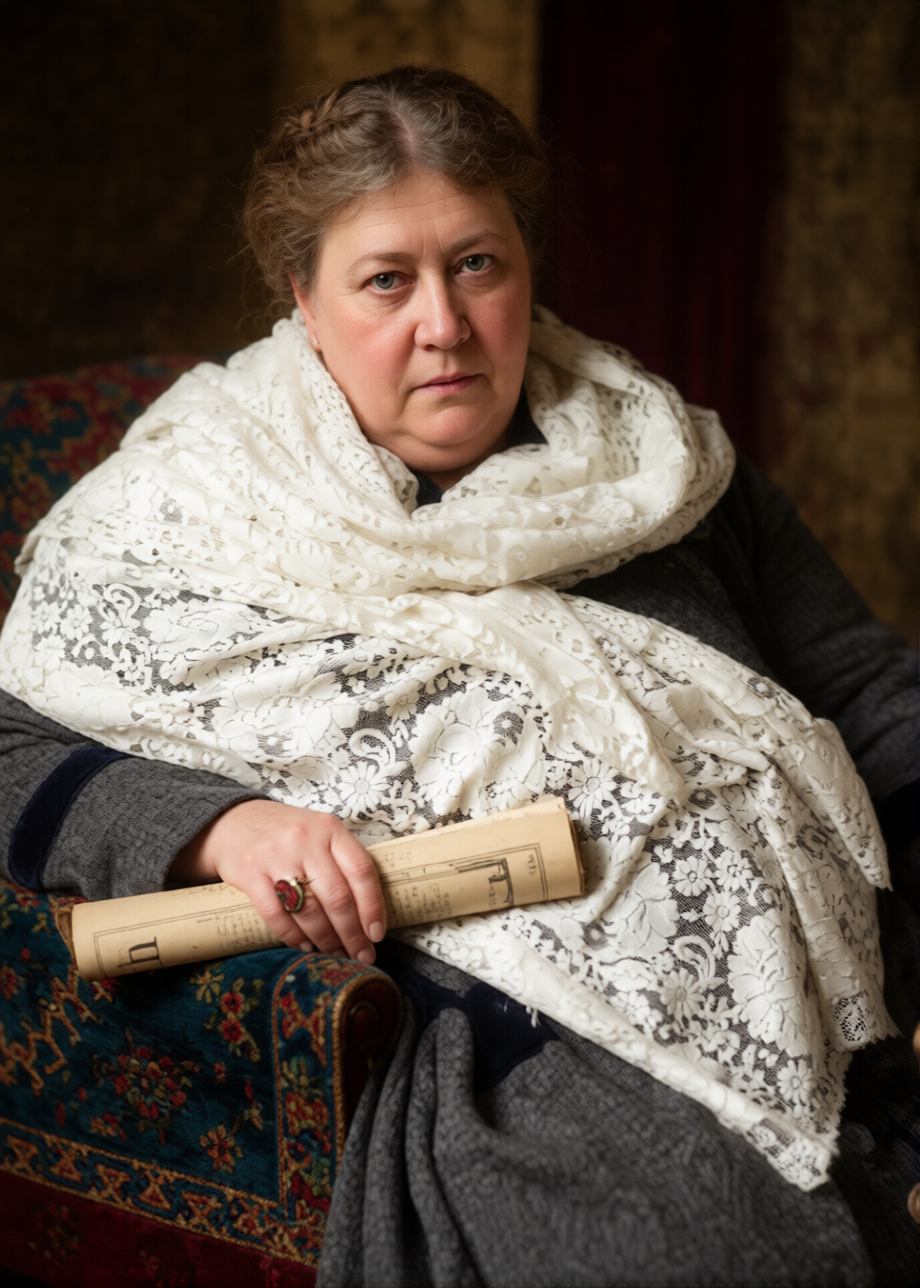
“From H.P.B. to H. P. Blavatsky, with no kind regards.”
(Note by HPB in her own personal copy of “The Voice of The Silence”)
“I never gave myself out for a full-blown occultist, but only for a student of Occultism for the last thirty-five or forty years. Yet I am enough of an occultist to know that before we find the Master within our own hearts and seventh principle — we need an outside Master. As the Chinese Alchemist says, speaking of the necessity of a living teacher: “Every one seeks long life (spiritual), but the secret is not easy to find. If you covet the precious things of Heaven you must reject the treasures of the earth. You must kindle the fire that springs from the water and evolve the Om contained within the Tong: One word from a wise Master and you possess a draught of the golden water.”
“I got my drop from my Master (the living one) [i.e. HPB’s Guru, the Master M. or Mahatma Morya]; you, because you went to Adyar. He is a Saviour, he who leads you to finding the Master within yourself. It is ten years already that I preach the inner Master and God and never represented our Masters as Saviours in the Christian sense.” (H. P. Blavatsky, Letter to Franz Hartmann, undated but probably early 1886, published in “The Path” magazine, March 1896)
“Never, never, shall you, or even could you, realise with all your earnestness and sympathy for me, and your natural keen perceptions — all I had to suffer for the last ten years! What could people know of me? The exterior carcase [i.e. carcass, the visible and physical body and appearance] fattened on the life-blood of the interior wretched prisoner, and people perceived only the first, never suspecting the existence of the latter. And that “first” was charged with ambition, love of cheap fame, mercenary objects; with fraud and deceit, cunning and unscrupulousness, lying and cheating — by the average outsider; with insincerity and untruthfulness, suspected even of passing off deliberately bogus phenomena — by my best, my dearest friends. Bound up, as I was, from head to foot by my pledge, an oath involving my future life — aye, even lives — what could I do since I was forbidden to explain all, but insist on the truth of the little I was permitted to give out, and deny simply the unfair charges? But as I hope redress in my future existence, when this terrible period of Karma wans away; as I venerate the Masters, and worship MY MASTER — the sole creator of my inner Self which but for His calling it out, awakening it from its slumber, would have never come to conscious being — not in this life, at all events; as I value all this — I swear I never was guilty of any dishonest action. I may have appeared often heartless for allowing occasionally people to sacrifice themselves as I did, while knowing they had none of my chances, in this life of theirs, to progress very far; but then, it was for their good, not mine. Whether they progressed or not, reward for the good intention was stored for them by their Karma; while, in my case, the more I progressed in occult matters, the less I had any chances of happiness in this life, for it became more and more my duty to sacrifice myself for the good of others and to my own personal detriment. Such is the law.” (H. P. Blavatsky, letter to Patience Sinnett, “The Letters of H. P. Blavatsky to A. P. Sinnett” p. 103-104)
“Most assuredly it is not I who do it all, but my Ego, the highest principle which lives in me. And even this with the help of my Guru and teacher who helps me in everything. If I happen to forget something I have just to address him, or another of the same kind, in my thought, and what I have forgotten rises once more before my eyes — sometimes whole tables of numbers passing before me, long inventories of events. They remember everything. They know everything. Without them, from whence could I gather my knowledge?” (H. P. Blavatsky, Letter to her sister Vera Zhelikhovsky, 1877, “The Letters of H. P. Blavatsky” series in “The Path” magazine, January 1895)
“Spirit is strong but flesh is weak; so weak sometimes that it even overpowers the strong spirit “which knows all truth.” And now, having almost shaken off its control this poor body raves. Since even I am not above suspicion in her sight, you can hardly be too indulgent or use too many precautions until this dangerous nervous crisis is passed. It was brought on by a series of unmerited insults . . . and can be cured only by rest and peace of mind. If you are ever to learn any lesson about man’s duality and the possibility through occult science of awakening from its dormant state to an independent existence the invisible but real I am, seize this chance. Observe and learn. It is cases like this which puzzle the biologist and physiologist. But as soon [as] one learns this duality all becomes as clear as day. . . . Mr. Hume’s letter to her, a letter full of suspicion and benevolent insult — proved the “one drop too much.” Her Punjab fever — once the typhoid symptom removed is no worse in itself than many a European has passed through; while I may tell you now that the crisis is over — her reason as well as her life were in peril on Saturday night.” (Master K.H., “The Letters of H. P. Blavatsky to A. P. Sinnett” p. 7)
“After having proved what I have to, I will bow myself out from the refined Western Society and – be no more. You may all whistle then for the Brothers. – GOSPEL. . . . No; you do not hate me; you only feel a friendly, indulgent, a kind of benevolent contempt for H.P.B. You are right there, so far as you know her the one who is ready to fall into pieces. Perchance you may find out yet your mistake concerning the other – the well hidden party. . . . Now, do you really think that you know ME my dear Mr. Sinnett? Do you believe that, because you have fathomed – as you think – my physical crust and brain; that shrewd analyst of human nature though you be – you have ever penetrated even beneath the first cuticles of my Real Self? . . . What I say is this: you do not know me; for whatever there is inside it, is not what you think it is; and – to judge of me therefore, as of one untruthful is the greatest mistake in the world besides being a flagrant injustice. I, (the inner real “I”) am in prison and cannot show myself as I am with all the desire I may have to. . . . why should I be held responsible for the outward jail-door and its appearance, when I have neither built nor yet decorated it?” (H. P. Blavatsky, Letter to A. P. Sinnett, Appendix to “The Mahatma Letters” p. 466)
There is nothing sinister implied in HPB’s mentions to Sinnett and his wife of being inwardly “a prisoner” or “in prison.” For one thing, the Esoteric Philosophy taught by HPB and her Adept-Teachers makes clear that the Soul or immortal spiritual Ego of each of us is a prisoner during earthly life, and only becomes fully freed during those periods of the night in which our body is in a state of deep, dreamless sleep. The rest of the time, our body and brain are all too often subjected to and dominated by the low and earthly influences of our physical senses, desires, emotions, and habitually uncontrolled, unconcentrated, and chaotic minds. This – which varies in degrees of intensity from person to person – is our Soul’s prison, at least during our successive periods of physical incarnation. For the vast majority of us, it doesn’t feel like prison and we aren’t aware of it being one. This is because our own Ego has not yet undergone an “awakening from its dormant state to an independent existence” due to a real Master, a highly initiated Adept in practical Esoteric Science, directly assisting us in “calling it out, awakening it from its slumber” so that it may “come to conscious being,” i.e. become fully and permanently CONSCIOUS, AWARE, and ACTIVE in relation to the material realm. If that Ego’s physical body and brain are not fully and constantly receptive, permeable, malleable, and in subjection to this Inner Ego or Permanent Individuality, the Ego is bound to feel its imprisonment in a more profoundly painful and continual way than we can even begin to imagine. Nonetheless, the Mahatmas did state that the “Blavatsky body” was the best and most suitable body available for Their desired work in the world at large. Another facet of HPB’s inner “imprisonment” was her willing and voluntary submission to some mysterious and highly occult type of inner “paralysis” (for want of a better term) before departing from her time spent living with and being taught, trained, and prepared by the Masters of the Trans-Himalayan Brotherhood, to embark on her public mission for humanity:
“I am painfully aware of the fact that the habitual incoherence of her statements – especially when excited – and her strange ways make her in your opinion a very undesirable transmitter of our messages. Nevertheless, kind Brothers, once that you have learned the truth; once told, that this unbalanced mind, the seeming incongruity of her speeches and ideas, her nervous excitement, all that in short, which is so calculated to upset the feelings of sober minded people, whose notions of reserve and manners are shocked by such strange outbursts of what they regard as her temper, and which so revolt you, – once that you know that nothing of it is due to any fault of hers, you may, perchance, be led to regard her in quite a different light. Notwithstanding that the time is not quite ripe to let you entirely into the secret; and that you are hardly yet prepared to understand the great Mystery, even if told of it, I am empowered to allow you a glimpse behind the veil. This state of hers is intimately connected with her occult training in Tibet, and due to her being sent out alone into the world to gradually prepare the way for others. After nearly a century of fruitless search [i.e. this search began sometime in the 1700s], our chiefs had to avail themselves of the only opportunity to send out a European body upon European soil to serve as a connecting link between that country and our own . . . Now, no man or woman, unless he be an initiate of the “fifth circle,” can leave the precincts of Bod-Las [i.e. Tibet but possibly meaning Shambhala in this case] and return back into the world in his integral whole – if I may use the expression. One, at least of his seven satellites [i.e. one or more of the seven principles of his/her constitution] has to remain behind for two reasons: the first to form the necessary connecting link, the wire of transmission – the second as the safest warranter that certain things will never be divulged. She is no exception to the rule, . . . Acting in accordance with my wishes, my brother M. [i.e. the Master Morya] made to you through her a certain offer, if you remember. You had but to accept it, and at any time you liked, you would have had for an hour or more, the real baitchooly [i.e. the real, complete, inner being of HPB] to converse with, instead of the psychological cripple you generally have to deal with now.” (Master K.H., “The Mahatma Letters” p. 203-204)
The notion of “leaving a principle behind” (or more than one, since the Master wrote “one, at least”) has intrigued many. Some have tried to hypothesise about which of HPB’s principles or inner components she would have “left behind” before returning into the world at large to begin her public Theosophical work and mission. Sinnett’s friend A. O. Hume, who was one of the recipients of that letter, tried to work it out logically and intellectually and listed why he found it an implausible and nonsensical explanation of things. The Master responded, “Very clever – but suppose it is neither one of the seven particularly but all? Every one of them a “cripple” and forbidden the exercise of its full powers? And suppose such is the wise law of a far foreseeing power!” (“The Letters of H. P. Blavatsky to A. P. Sinnett” p. 307)
There is no denying that the Master’s original statement – and that later comment also – is quite cryptic and deliberately so. But even that explanation is not the whole story. It is, as said, merely “a glimpse behind the veil” – but a very precious, priceless, and sacred glimpse. All that we have shared so far will help to make clearer such statements as:
“The T.S. [i.e. Theosophical Society] lives, – I am killed. Killed in my honour, fame, name, in everything H.P.B. held near and dear, for this body is MINE and I feel acutely through it. . . . I have not worked and toiled for forty years, playing parts, risking my future reward, and taking karma upon this unfortunate appearance to serve Them without being permitted to have some voice in the matter. H.P.B. is not infallible. H.P.B. is an old, rotten, sick, worn-out body, but it is the best I can have in this cycle. . . . When I am dead and gone in this body, then will you know the whole truth. Then will you know that I have never, never, been false to any one, nor have I deceived anyone, but had many a time to allow them to deceive themselves, for I had no right to interfere with their Karma. . . . Oh ye foolish blind moles, all of you; who is able to offer himself in sacrifice as I did!” (H. P. Blavatsky, “She Being Dead Yet Speaketh” posthumously published)
There, the initials H.P.B. are clearly used to designate the mortal personality Helena Petrovna Blavatsky in contrast with an unnamed or identified inner “I,” but usually she used “H.P.B.” as a convenient way of designating and pointing towards the mysterious and real Entity within, such as in our opening quote. Another example:
“He or she, who believes that under any circumstances whatever, provocations, gossips, slander or anything devised by the enemy H.P.B. will ever dream even of going against W.Q.J. – does not know H.P.B. – even if he or she does know H. P. Blavatsky, or thinks he knows her.” (H. P. Blavatsky, Letter to William Q. Judge, 23rd October 1889, from a statement for WQJ to share with members of the Esoteric Section)
“Yes, there are “two persons” in me. But what of that? So are there two in you; only mine is conscious & responsible & yours is not. So you are happier than I am.” (H. P. Blavatsky, Letter to William Q. Judge, 23rd February 1887)
“Owing to certain expressions therein, the letter was stopped on its way by order of our Brother H.P.B. As you are not under my direct guidance but his, we have naught to say, either of us; . . . Our Brother H.P.B. rightly remarked at Jeypore . . .” (Mahatma Letter received by Col. Olcott in India, 1879; not able to perceive anything to H. P. Blavatsky beyond her external personality, he remarked that this letter “most strangely alters her sex [and] speaks of her in the male gender.”)
“Master M. and “our Brother H.P.B.” (not Madame Blavatsky) were and are as different in their idiosyncrasies of thought, manner and expression, as two members of the Lodge can be, while “our Brother H.P.B.” and Madame Blavatsky, though totally different persons, were very much alike in some ways.” (Ernest Hargrove, “Theosophical Quarterly” July 1924 – Hargrove was a leading member of what we have called The Forgotten Theosophical Society.)
“The Voice of The Silence” says regarding the inner Entity of each of us:
“All is impermanent in man except the pure bright essence of Alaya [i.e. the Logos or Universal Soul]. Man is its crystal ray; a beam of light immaculate within, a form of clay material upon the lower surface. That beam is thy life-guide and thy true Self, the Watcher and the silent Thinker, the victim of thy lower Self.” (p. 57, original edition)
Those words and that description are true for every human being, except the comparative minority who have tragically lost their Souls. We are all equally divine. We are all individualised rays of the Universal Mind or, in symbolic language, the Central Spiritual Sun. But though our inner divinity is equal and of the same nature, source, and essence, this does not mean that your Inner Ego, my Inner Ego, his or her Inner Ego, etc. are identical in all respects or resemble bare, homogeneous rays of light without any characteristics unique to themselves.
In “The Theosophical Glossary” HPB speaks of the Antahkarana “as the path or bridge between the Higher and the Lower Manas, the divine Ego, and the personal Soul of man. It serves as a medium of communication between the two, and conveys from the Lower to the Higher Ego all those personal impressions and thoughts of men which can, by their nature, be assimilated and stored by the undying Entity, and be thus made immortal with it, these being the only elements of the evanescent Personality that survive death and time. It thus stands to reason that only that which is noble, spiritual and divine in man can testify in Eternity to his having lived.” (p. 23-24)
In “The Key to Theosophy” we see that this relates to “the Sutratma, which means literally the “Thread Soul.” It is a synonym of the reincarnating Ego ― Manas conjoined with Buddhi — which absorbs the Manasic [i.e. mental] recollections of all our preceding lives. It is so called, because, like the pearls on a thread, so is the long series of human lives strung together on that one thread. . . . as the bee collects its honey from every flower, leaving the rest as food for the earthly worms, so does our spiritual individuality, whether we call it Sutratma or Ego. Collecting from every terrestrial personality, into which Karma forces it to incarnate, the nectar alone of the spiritual qualities and self-consciousness, it unites all these into one whole and emerges from its chrysalis as the glorified Dhyan Chohan [i.e. a cosmic God or Angel, a celestial being].” (p. 163, 168)
So our permanent Individuality or Soul does develop, in a certain specific sense, its own “permanent personality” as a result of the good harvests garnered over the course of myriad lifetimes. Thus, while we are all divine in our essence and at our foundation, we cannot all legitimately claim to inwardly be Mahatmas, Masters of Wisdom, Adepts, Bodhisattvas, and so forth. We all have that potential and capability within us but we have not all reached such a high state of development thus far. Whether we do so or not depends on no-one other than ourselves. Thankfully, we have some great examples to inspire and motivate us, and the ever-living “HPB” is one of these.
“The Being in that old body called H. P. Blavatsky is a mighty Adept working on his own plan in the world. And thus we do not need to go to Tibet or S. America to find the sort of Being so many wish to see. Yet having seen the reality better keep silent and work with that in view. For even did you go and tell Him you knew He was there he would smile while he waited for you to do something such as you could in your limited sphere. For flattery counts not and professions are worse than useless. But it is a great thing to see as much as you have, and a greater thing it will be if you do not doubt – for you may never see it again.” “As to HPB you cannot judge her by any rule. There is a great Adept there and he uses that body for His own purposes, both for use and for trial of others.” (Letters by William Q. Judge, “Practical Occultism” p. 162-164)
Madame Blavatsky indicated in a letter to William Judge that this real, inner “HPB” is a Nirmanakaya: “I will not be able to help it [i.e. the Theosophical Movement] on & stir its course [i.e. not immediately following her death], because I will have to act in a body which will have to be assimilated to the nirmanakaya.”
In a letter to “The Irish Theosophist” magazine a few years after HPB’s death, Roger Hall wrote: “I was sitting one afternoon with H. P. B. . . . She answered that W. Q. Judge was her favorite pupil and would worthily bear her mantle when she was gone. . . . she seemed to know that some serious disturbance would surely occur after her departure. In this connection I asked her if she meant to reincarnate immediately; she answered that she would not do so but would be able to help in the good work better as a Nirmanakaya.”
In the teachings of the Eastern Esoteric Philosophy, those Adepts and Initiates who are Bodhisattvas are also known as Nirmanakayas. HPB defines the Nirmanakayas as “those great Adepts of the past ages, who, renouncing their right to Nirvana, remain in our spheres of being, not as “spirits” but as complete spiritual human Beings. Save their corporeal, visible envelope, which they leave behind, they remain as they were, in order to help poor humanity, as far as can be done without sinning against Karmic law. This is the “Great Renunciation,” indeed; an incessant, conscious self-sacrifice throughout aeons and ages till that day when the eyes of blind mankind will open and, instead of the few, all will see the universal truth.”
A compilation of Theosophical explanations and insights about Nirmanakayas can be found here. They are at times in physical incarnation and at other times not. It is also the case that there are differing degrees of Nirmanakaya; while some have already reached to and renounced entry into Nirvana, others have not yet reached that far but have been able to renounce and stay out of Devachan between lifetimes, but this in itself is vastly beyond the level of spiritual advancement and inner evolution any of us is likely to have so far achieved.
There are some Theosophists who like to say that HPB “was only a chela” (i.e. a disciple) or who go as far as to assert that she was not even a chela! Usually, those who say such things are people who are ungrateful towards HPB and have no conception of her greatness, their perceptions often having been warped by the Leadbeater/Besant/Hodson/Bailey influence. This ought to be addressed.
In “Letters from The Masters of The Wisdom” First Series, p. 73, the Master K.H. tells Laura Holloway that “outward Upasika” (“Upasika” being a term by which the Masters often referred to HPB; it literally means “female Buddhist lay-disciple”) “is not a ‘chela.’” The same Master also told Sinnett that “Of course, she is utterly unfit for a true adept; her nature is too passionately affectionate and we have no right to indulge in personal attachments and feelings” but adds, however, “You can never know her as we do, therefore – none of you will ever be able to judge her impartially or correctly. . . . We find a profounder wisdom in her inner Self than you will ever find yourselves able to perceive.” (“The Mahatma Letters” p. 314)
But those who like to draw attention to those words of the Master that HPB was “utterly unfit for a true adept” conveniently ignore and presumably deliberately evade the fact that this same Master K.H. who told Laura Holloway that HPB “is not a ‘chela’” clarifies in a subsequent letter to Holloway that the inner HPB (i.e. in contrast with the outward Upasika) is not a chela because she is in fact an “adept,” i.e. far higher than a chela or disciple. He there refers to her as “the adept.” (“Letters from The Masters of The Wisdom” First Series, p. 79)
Granted, this whole subject is a great and sacred mystery, and one which we do not need and cannot hope to fully solve at this point in time.
But HPB seems to dispassionately dismiss notions that she had died and was now just an empty body occupied and animated at times by various Masters (including her Guru) and disciples. She wrote to William Judge on 1st May 1885: “He [i.e. Franz Hartmann] believes like Olcott used to and you sometimes also that I am usually a “shell” which becomes good for something only when some one else enters it. Believe what you please.”
She did regularly allow her body to be used as a temporary vehicle by the Master M., as also by other Initiates of the Great Lodge, but this does not automatically equate to the Russian woman Helena Blavatsky being in any sense “dead” (at that time), nor to the inner HPB literally and permanently being the Master M., as Robert Crosbie (and the traditional views of the United Lodge of Theosophists which he founded) repeatedly claimed. Crosbie also wrote that the inner Being of William Judge was literally the Master K.H. We truly respect anyone’s right to believe this; we merely wish to point out that HPB and WQJ wrote numerous things regarding their inner nature and that never once in all of this did they claim, suggest, or even hint at really inwardly being those two Masters. Aside from this, Crosbie’s theory (which he said he knew as experiential knowledge) contravenes almost all the known historical facts about HPB’s and WQJ’s relations to the Masters, as well as creating a whole load of logical difficulties, none of which Crosbie attempted to address or resolve. For a short time, we ourselves partly promulgated this view but now accept it as untenable. We believe that surely HPB and WQJ should themselves be considered the #1 authorities on their own inner life. True, being advanced occultists with a proper sense of the sacred, they have not told us everything, but they have told us enough.
“The intense desire to see Upasika reincarnate at once has raised a misleading Mayavic [i.e. illusory] ideation. Upasika has useful work to do on higher planes and cannot come again so soon.” (Master K.H., The Final Mahatma Letter of 1900, addressed to Annie Besant)
“I also state, on the same authority [of the Masters], that H.P.B. ∴ has not reincarnated. That Ego is quite conscious and working toward the final accomplishment of the end in view, which depends very largely upon the members of the Theosophical Society, and on their loyalty.” (William Q. Judge, “By Master’s Direction” esoteric circular, 1894)
“Our old lion of the Punjab is not so far off, but all the same is not in the place some think, nor in the condition, either.” (William Q. Judge, “Letters That Have Helped Me” p. 129)
We are reminded of those words of Ernest Hargrove which we quoted earlier and which seem to be in line with the known facts: “Master M. and “our Brother H.P.B.” (not Madame Blavatsky) were and are as different in their idiosyncrasies of thought, manner and expression, as two members of the Lodge can be, while “our Brother H.P.B.” and Madame Blavatsky, though totally different persons, were very much alike in some ways.” Madame Blavatsky was a mortal woman, a temporary personality who died just over 130 years ago. But the Brother or Adept – known for convenience as “HPB” to the uninitiated – who was present within that persona . . . who worked through that persona . . . and who was willing, out of great compassion and a wish to do whatever would most benefit humanity, to be to a large extent constricted by and constrained within that body and persona . . . She, or He, never dies but is always alive and active, on one plane or another, a veritable embodiment of the Bodhisattva Ideal, and an essential part of the Great Lodge or hidden esoteric Brotherhood that guides and watches over the spiritual evolution and advancement of the human race.
“O poor, poor Sister! Chaste and pure Soul – pearl shut inside an outwardly coarse nature. Help her to throw off that appearance of assumed roughness, and any one might well be dazzled by the divine Light concealed under such a bark.” (Master Serapis, “Letters from The Masters of the Wisdom” Second Series, p. 28-29)
“I am not at liberty to say . . . who I am, or may be, or even who H.P.B. is.” (Master K.H., “The Mahatma Letters” p. 44)
“We employ agents – the best available. Of these for the past thirty years the chief has been the personality known as H.P.B. to the world (but otherwise to us). Imperfect and very troublesome, no doubt, she proves to some, nevertheless, there is no likelihood of our finding a better one for years to come – and your theosophists should be made to understand it. Since 1885 I have not written, nor caused to be written save thro’ her agency, direct and remote, a letter or line to anybody in Europe or America, nor communicated orally with, or thro’ any third party. Theosophists should learn it. You will understand later the significance of this declaration so keep it in mind. Her fidelity to our work being constant, and her sufferings having come upon her thro’ it, neither I nor either of my Brother associates will desert or supplant her. As I once before remarked, ingratitude is not among our vices. . . .
“H.P.B. has next to no concern with administrative details, and should be kept clear of them, so far as her strong nature can be controlled. But this you must tell to all: – With occult matters she has everything to do. We have not abandoned her; she is not ‘given over to chelas.’ She is our direct agent. I warn you against permitting your suspicions and resentment against ‘her many follies’ to bias your intuitive loyalty to her.” (Master K.H., “Letters from The Masters of the Wisdom” First Series, p. 49-50)
In response to the question “Do Theosophists know of the previous incarnation of H.P.B. and can they identify her with any historical personage?” William Judge once replied:
“Speculation on such personal matters was always very distasteful to H.P.B., and from my own knowledge, backed by that of several men who have advanced far on the path of knowledge, I can say that the soul known to us as H.P.B. was and is so far in front of this race that it is mere idle talk for us to connect her real self with an aunt in her family or with a Hindu or other woman [i.e. these were some of the speculations being indulged in by some Theosophists as to who HPB might have been in a previous lifetime]. Furthermore I know from her own lips that she cared not whether she was in male or female body, but took that body (regardless of sex) which would enable her to do the most work; and also she said that, given the power to control a female incarnation and all that that implies, more could now be done in such than in the male form, but such control and ability were impossible for the general run of people, and solely for the latter reason would she – if unable to control – prefer a male incarnation. I know also that she often smiled at the petty personality and feeble notions that lead us weak mortals to desire either male or female bodies for our next rebirth. She had other matters on hand, and was too great inside to be understood by those who have claimed to know her so well, and from this I except no one, not even Col. Olcott who knew her so many years.” (“Forum Answers” p. 66)
“Devoted to the Great Cause of Truth, she sacrificed to it her very heart’s blood.” (Master Serapis, “Letters from The Masters of the Wisdom” Second Series, p. 24)
~ * ~
This article may have raised more questions about various things. Please make use of the site search function (the magnifying glass symbol at the top of the page) and visit the Articles page to see the complete list of over 400 articles covering all aspects of Theosophy and the Theosophical Movement. You may be particularly interested in articles listed under the headings “H. P. BLAVATSKY AND THEOSOPHY” and “THE MASTERS.” You may also like to read Who Was William Quan Judge? for his was another example of incarnation of an advanced soul by unusual means to do a specific great work for humanity at a crucial period in time, in co-operation with HPB.
~ BlavatskyTheosophy.com ~
“So then tell me: how could it have happened that I, whose learning was so awfully lame up to the age of forty, have suddenly become a phenomenon of learning in the eyes of people who are really learned? This fact is an impenetrable mystery of Nature. I – a psychological problem, an enigma for future generations, a Sphinx!”
(HPB to her aunt, “Letters of H. P. Blavatsky,” “The Path” December 1894)
 T H E O S O P H Y