
The first book written by H. P. Blavatsky, founder of the Theosophical Movement of our era,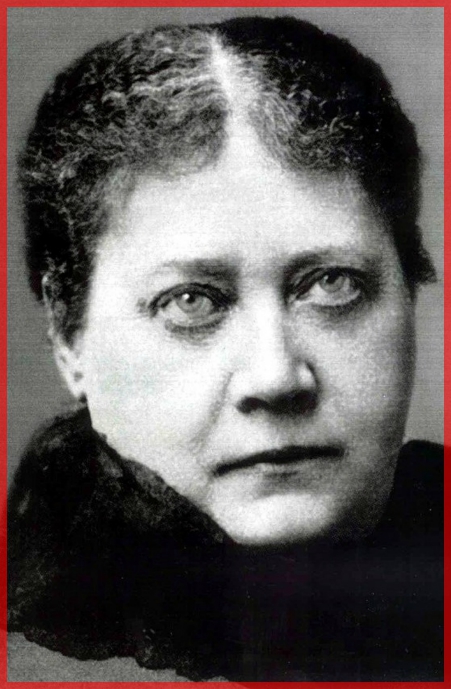 was “Isis Unveiled” which bore the subtitle of “A Master-Key to the Mysteries of Ancient and Modern Science and Theology.”
The second volume of this two volume work is titled “Theology” and deals largely with revealing, over the course of its 640 information-filled pages, many important facts about the origins and nature of Christianity, the Christian Church, and Christian theology. Those facts – backed up in the book by over 1,000 supporting references – are less than favourable towards ecclesiastical Christianity, or “Churchianity” as it is often called.
The doctrine of vicarious atonement – salvation through the blood of Jesus – is today the mainstay of all evangelical Christianity around the world. However, “Peter [i.e. the Apostle Peter] knew nothing of the atonement; and his reverence for the mythical father Adam would never have allowed him to admit that this patriarch had sinned and was accursed. Neither do the Alexandrian theological schools appear to have been cognizant of this doctrine, nor Tertullian; nor was it discussed by any of the earlier Fathers. Philo represents the story of the Fall as symbolical, and Origen regarded it the same way as Paul, as an allegory.” (“Isis Unveiled” Vol. 2, p. 546)
The initial origins of the vicarious atonement doctrine certainly have their origins in several of the scriptures that comprise the New Testament of the Christian Bible, primarily the letters or epistles of the Apostle Paul, but also several statements attributed to Jesus in the Gospels. One cannot justifiably say that the whole idea is merely an “invention” of later theologians. But it also cannot be claimed that what Paul, the Apostle John and others had in mind when speaking of the spiritually sacrificial and regenerative nature of Jesus’ death, was identical to – and as simplistic and unphilosophical as – what Christian fundamentalists of the past few centuries have in mind. Almost the whole of post-Lutheran Protestantism lacks the depth of philosophical and historical awareness needed in order to arrive at accurate and reliable assessments on such points. Never, until just a few centuries ago, did anything ever exist resembling the fundamentalist, evangelical Christianity of today.
Many Christians of today subscribe – without realising it – to the version of the vicarious atonement doctrine formulated by Saint Anselm (1033-1109), Archbishop of Canterbury, while others follow different variants worked out at various periods in history by other theologians and monks. The Bible itself presents a much more vague and less precise picture of the nature and results of the atonement when compared with these later theories. Theosophist Charles Johnston explored the subject in depth in an article titled “Vicarious Atonement and Karma” which can be read online here.
The following excerpts are from pages 541 to 545 of the second volume of “Isis Unveiled,” in the chapter titled “Comparative Results of Buddhism and Christianity.” They are not about the historical background and development of the doctrine so much as about the ethical, psychological, and spiritual ramifications – almost all negative – which arise from accepting and believing in vicarious atonement in the way that so many Christians do. Her arguments are so reasonable, logical, and compelling, that they have caused many to change their perspective.
~ * ~
“With what measure you mete, it shall be measured to you again” [Matthew vii. 2] neither by expression nor implication points to any hope of future mercy or salvation by proxy. . . .
“We have often wondered at the extraordinary ideas of God and His justice that seem to be honestly held by those Christians who blindly rely upon the clergy for their religion, and never upon their own reason. How strangely illogical is this doctrine of the Atonement. We propose to discuss it with the Christians from the Buddhistic stand-point, and show at once by what a series of sophistries, directed toward the one object of tightening the ecclesiastical yoke upon the popular neck, its acceptance as a divine command has been finally effected; also, that it has proved one of the most pernicious and demoralizing of doctrines.
“The clergy say: no matter how enormous our crimes against the laws of God and of man, we have but to believe in the self-sacrifice of Jesus for the salvation of mankind, and His blood will wash out every stain. God’s mercy is boundless and unfathomable. It is impossible to conceive of a human sin so damnable that the price paid in advance for the redemption of the sinner would not wipe it out if a thousandfold worse. And, furthermore, it is never too late to repent. Though the offender wait until the last minute of the last hour of the last day of his mortal life, before his blanched lips utter the confession of faith, he may go to Paradise; the dying thief did it, and so may all others as vile. These are the assumptions of the Church.
“But if we step outside the little circle of creed and consider the universe as a whole balanced by the exquisite adjustment of parts, how all sound logic, how the faintest glimmering sense of Justice revolts against this Vicarious Atonement! If the criminal sinned only against himself, and wronged no one but himself; if by sincere repentance he could cause the obliteration of past events, not only from the memory of man, but also from that imperishable record, which no deity – not even the Supremest of the Supreme – can cause to disappear, then this dogma might not be incomprehensible.
“But to maintain that one may wrong his fellow-man, kill, disturb the equilibrium of society, and the natural order of things, and then – through cowardice, hope, or compulsion, matters not – be forgiven by believing that the spilling of one blood washes out the other blood spilt – this is preposterous! Can the results of a crime be obliterated even though the crime itself should be pardoned? The effects of a cause are never limited to the boundaries of the cause, nor can the results of crime be confined to the offender and his victim. Every good as well as evil action has its effects, as palpably as the stone flung into a calm water. The simile is trite, but it is the best ever conceived, so let us use it. The eddying circles are greater and swifter, as the disturbing object is greater or smaller, but the smallest pebble, nay, the tiniest speck, makes its ripples. And this disturbance is not alone visible and on the surface. Below, unseen, in every direction – outward and downward – drop pushes drop until the sides and bottom are touched by the force. More, the air, above the water is agitated, and this disturbance passes, as the physicists tell us, from stratum to stratum out into space forever and ever; an impulse has been given to matter, and that is never lost, can never be recalled! . . .
“So with crime, and so with its opposite. The action may be instantaneous, the effects are eternal. When, after the stone is once flung into the pond, we can recall it to the hand, roll back the ripples, obliterate the force expended, restore the etheric waves to their previous state of non-being, and wipe out every trace of the act of throwing the missile, so that Time’s record shall not show that it ever happened, then, then we may patiently hear Christians argue for the efficacy of this Atonement.
“The Chicago Times recently printed the hangman’s record of the first half of the present year (1877) – a long and ghastly record of murders and hangings. Nearly every one of these murderers received religious consolation, and many announced that they had received God’s forgiveness through the blood of Jesus, and were going that day to Heaven! Their conversion was effected in prison. See how this ledger-balance of Christian justice (!) stands: These red-handed murderers, urged on by the demons of lust, revenge, cupidity, fanaticism, or mere brutal thirst for blood, slew their victims, in most cases, without giving them time to repent, or call on Jesus to wash them clean with his blood. They, perhaps, died sinful, and, of course, – consistently with theological logic – met the reward of their greater or lesser offenses. But the murderer, overtaken by human justice, is imprisoned, wept over by sentimentalists, prayed with and at, pronounces the charmed words of conversion, and goes to the scaffold a redeemed child of Jesus!
“Except for the murder, he would not have been prayed with, redeemed, pardoned. Clearly this man did well to murder, for thus he gained eternal happiness? And how about the victim, and his or her family, relatives, dependants, social relations – has Justice no recompense for them? Must they suffer in this world and the next, while he who wronged them sits beside the “holy thief” of Calvary and is forever blessed? On this question the clergy keep a prudent silence. . . .
“Away from us such an insulting conception of divine justice as that preached by priests on their own authority. It is fit only for cowards and criminals! If they are backed by a whole array of Fathers and Churchmen, we are supported by the greatest of all authorities, an instinctive and reverential sense of the everlasting and everpresent law of harmony and justice.”
~ * ~
Another name for this “everlasting and everpresent law of harmony and justice” is the Law of Karma. In Christian phraseology it is the principle expressed in the words of Galatians 6:7, “Be not deceived, God is not mocked; for whatsoever a man soweth, that shall he also reap.” Theosophy teaches that it is indeed “mockery” and vain futility for anyone to think that they can ever escape the just consequences and corresponding results of their own actions, be those bad or good. This would be a flagrant denial of the law of cause and effect, action and reaction, which no intelligent or educated person can deny.
Karma, along with its inextricably linked twin of reincarnation, is one of the central and most important teachings of Theosophy. There are a number of articles here on this site which explain it in more depth, such as A Right Understanding of Karma, There is No Injustice, Questions about Karma, Is Karma Merciful and Compassionate?, Blavatsky on Karma, Karma, Justice, and Forgiveness, and Prayer, Karma, and Compassion. More can be seen listed on the Articles page.
Some other articles, relating specifically to Christianity, are Theosophy is ONE with the Christianity of Christ, Jesus, Christos or The Christ Principle, and Christianity, Blavatsky on Hell and Christianity, Reincarnation and Christianity, The Apostle Paul: Initiate and Occultist, and Blavatsky on The Eastern Orthodox Church. As some of those articles clearly show, neither HPB nor Theosophy are opposed to Jesus Christ or his teachings, although they are opposed to the damage wrought by many theologians, priests, ministers, and churches over the course of almost 2,000 years.
Gautama Buddha famously taught in the Dhammapada that “Not in the sky, nor in the depths of the sea, nor in mountain clefts is there a place on earth where man can be to escape the consequences of his evil deed.” According to the teachings of Theosophy, this Law of Karma (known as “the doctrine of responsibility”) is the “Great Adjuster” and is the way, the means, and the method whereby the universe maintains its harmony, balance, and equilibrium.
We cannot close without pointing out that the basic principle of a vicarious atonement does have at least some truth to it, albeit not in the common usage of the term. For example, the Esoteric Philosophy emphasises that just as our every misdeed and negative thought and feeling negatively impacts all beings and the whole of life to some degree or another, our every good deed and unselfish, benevolent thought and feeling has a helpful, elevating effect on the whole. In connection with this, it is said that we who are now evolving in the human kingdom have the task to “raise up the whole mass of manifested matter” to a higher level. Animal, plant, mineral, and elemental monads cannot raise and spiritually elevate themselves but – while they are still in an essentially helpless and inwardly dormant state – we can, and should, do it for them. Is that not a form of “vicarious atonement”? And what about the “Guardian Wall” constituted of myriads of Masters of Wisdom and Compassion and the energy of Their immense personal sacrifices on behalf of all humanity? “The Voice of The Silence” says that this “wall” invisibly protects mankind, intercepting and eliminating some of the very worst Karmic developments which would otherwise befall the human race. This can presumably only mean that in some mysterious, occult way They vicariously take on, on our behalf, certain great suffering, so that we may avoid it. These are just a couple of examples regarding something which is a fact in Nature.
So let us be clear in our minds about what type of vicarious atonement it is which H. P. Blavatsky and her Adept-Teachers view as so harmful in its effects, and not unthinkingly dismiss or condemn the very notion wholesale, for, as Krishna emphasises to Arjuna in the Bhagavad Gita, the whole of life is built upon SACRIFICE.
 T H E O S O P H Y